


A travel guitar for a beginner has one job above the usual list of specs: it has to fit in a bag or an overhead locker and still be a guitar you actually want to pick up. Get the size right and get the playability wrong, and it sits in a cupboard by week three. If you’re not sure the whole idea makes sense for you yet, our honest answer on whether a travel guitar is worth it is worth reading first. If it’s specifically the playability you’re unsure about, our piece on whether travel guitars are harder to play covers what genuinely makes a difference versus what’s just a bad factory setup. And if you’re weighing this up as your first and only guitar rather than a second instrument, we’ve covered when that genuinely works and when it doesn’t. Worried the smaller body means a worse sound too? We’ve answered whether travel guitars sound worse than normal guitars honestly. We went back through every guitar that’s ever been suggested for this search on the site and dropped anything that’s discontinued, out of stock, or was never really a travel guitar in the first place.
A few guitars that turn up on almost every beginner list didn’t make it here. The Yamaha F370, the Washburn HD10S, the Fender CC-60S, the Washburn Bella Tono Novo S9 and the Martin Smith W-100, are full-size dreadnought or concert bodies. They’re fine guitars, but they’re not travel guitars. None of them will fit in an overhead locker any better than the one already at home, so they’re not on this list.
What’s left are five guitars that are genuinely built around being small: two proper 3/4-size acoustics, one acoustic-electric, one full-scale folding-neck oddity that’s smaller than it has any right to be, and one nylon-string hybrid that’s really its own instrument. Prices below use the live Amazon UK buy box figure where Amazon shows one clearly, and a “from” range where it doesn’t, all checked 3 September 2026.
If you want the short version before you scroll: the Yamaha APXT2 is the best all-rounder here, a proper 3/4-size guitar with a real pickup built in, so it doubles as a quiet electric practice guitar too. The Carry-on Mini is the one to buy if budget and true portability matter more than tone. The Yamaha JR1 is the honest, no-electronics 3/4 acoustic for a beginner who doesn’t need to plug in anywhere. The Traveler Guitar Ultra-Light is worth the extra money if you want a genuinely full 24.75 inch scale length in a guitar that’s barely bigger than a violin case. And the Yamaha Guitalele GL1 is the smallest thing on this list by a distance, a nylon-string guitar and ukulele hybrid rather than a full six-string guitar, and it’s only the right choice if packing space matters more than anything else.
Best travel guitars for beginners compared
| Guitar | Scale length | Weight | Electronics | Price band, checked 3 Sep 2026 | Best for |
|---|---|---|---|---|---|
| Yamaha APXT2 | 22.8″ (580mm) | Around 1.5kg | Yes, built-in pickup and tuner | From £199 | Best all-rounder |
| Carry-on Mini | Around 20.7″ (527mm) | Around 1.9kg | No | £115.00 | Best budget pick |
| Yamaha JR1 | 21.25″ (540mm) | Around 2kg | No | Marketplace only, check Amazon | Best if you don’t need electronics |
| Traveler Guitar Ultra-Light | 24.75″ (full scale) | Around 1.3kg | Yes, piezo pickup | £249.00 | Best for a full-scale feel |
| Yamaha Guitalele GL1 | 17″ (432mm) | Around 0.9kg | No | £105.65 | Most packable, not a full guitar |
A word on that table before the detail. Scale length matters more than overall size for a beginner because it decides how cramped the frets feel, not just how big the case is. A 3/4-size guitar with a short scale length is genuinely easier for small hands, it’s not just a smaller version of the same thing. Weight matters for the flight or the walk to lessons, not for tone. And electronics only matter if you actually want to plug into an amp or headphones, they add nothing to how the guitar sounds unplugged.
Yamaha APXT2 3/4-size acoustic-electric guitar
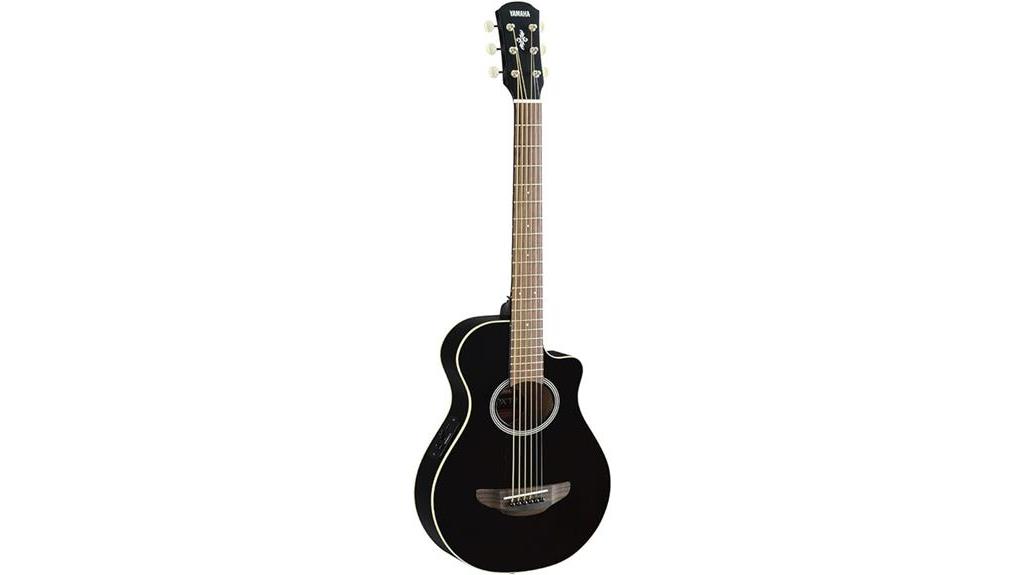
The APXT2 is a 3/4-size version of Yamaha’s APX line, and that lineage is the real reason to pick it over most of the guitars on this page. It’s not a cut-down novelty, it’s a smaller body built to the same design language as a guitar Yamaha has sold by the hundreds of thousands. The built-in pickup and preamp, with an onboard tuner, is the other reason. A beginner practising in a shared house or a hotel room can plug into headphones and keep playing without annoying anyone, which a purely acoustic guitar can’t do.
The trade-off is price. At around £199 and up depending on finish, it’s the most expensive guitar here bar the Traveler. It’s worth it if the electronics get used, and a waste of money if they don’t. If you’re certain you’ll only ever play unplugged, the Yamaha JR1 below does the acoustic side for less. If you’re not sure whether you’ll want to record yourself or run through a headphone amp down the line, the APXT2 is the safer buy of the two, and it pairs naturally with one of the best clip-on tuners for travel guitars as a backup, since a built-in tuner is handy but not something you want to be entirely dependent on. We’ve covered the build, the electronics and the genuine downsides in more depth in our full Yamaha APXT2 review.
Carry-on Mini travel steel string 3/4 acoustic guitar
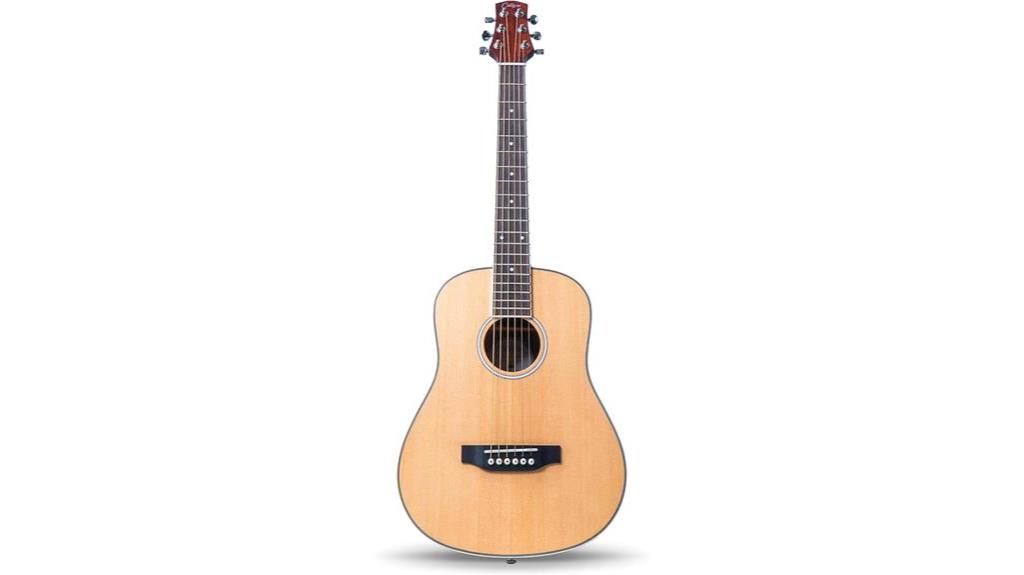
The Carry-on Mini is smaller and lighter to carry than the APXT2, and it’s built from mahogany and spruce rather than laminate throughout, which is unusual at this price. Reviewers consistently mention that it stays in tune better than they expected for something this size, and that’s the actual selling point, a 3/4 guitar that goes sharp every time you pick it up teaches bad habits before it teaches good ones.
Where it loses out to the APXT2 is resonance. A smaller body simply moves less air, so chords sound thinner and less full than a standard-size acoustic, which is true of every guitar on this list to some degree but most noticeable here since there’s no pickup to compensate. It also doesn’t come with a case, so budget for one of the travel guitar cases under £100 alongside it if you’re planning to take it anywhere further than the sofa. At £115.00, it’s the cheapest proper acoustic guitar on this page, and for a beginner who just wants something small, in tune, and genuinely playable, that’s the whole brief answered.
Yamaha JR1 3/4-size acoustic guitar
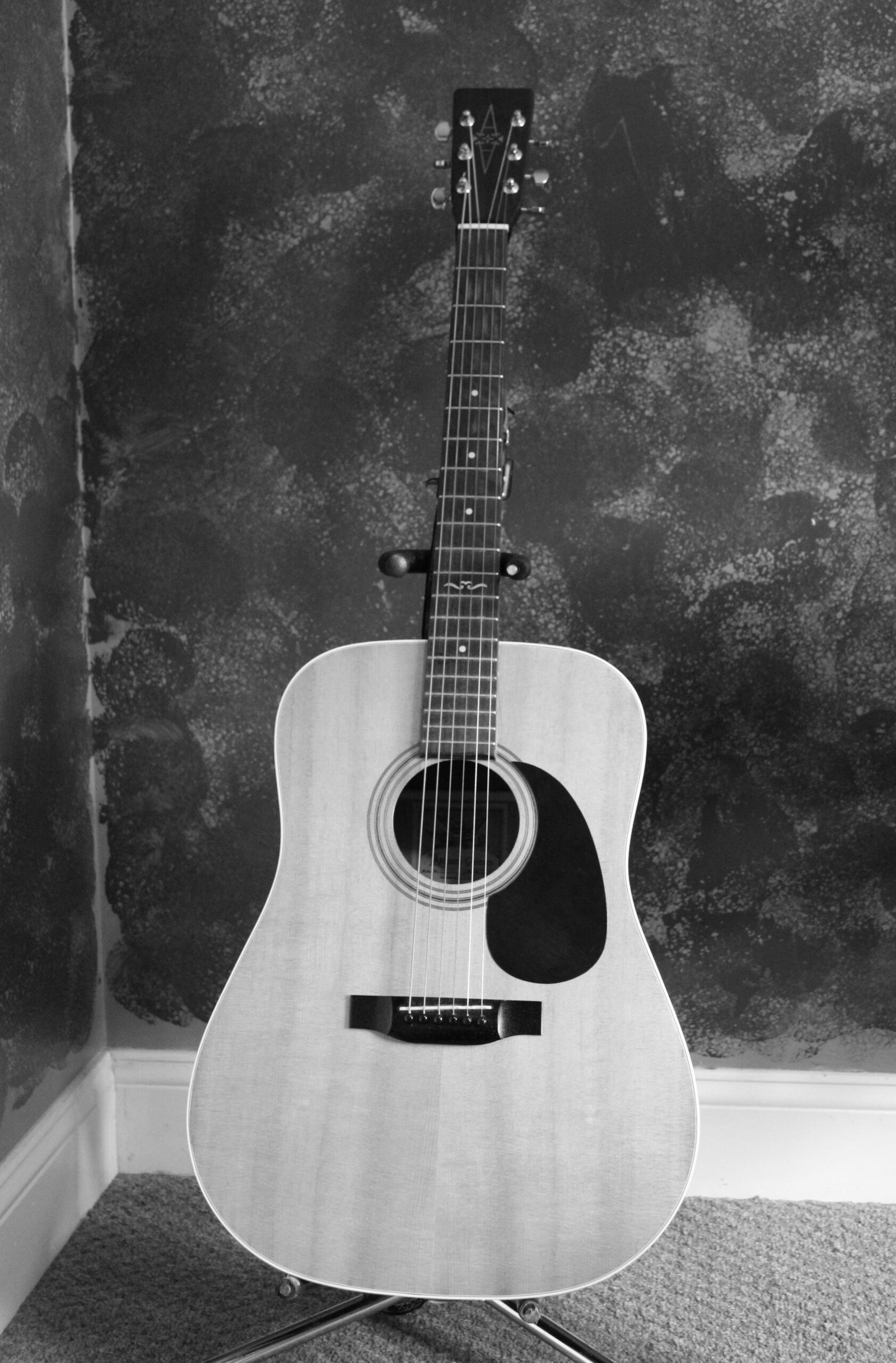
The JR1 is the simpler sibling in Yamaha’s long-running JR series, built to the same 21.25 inch scale length and the same body dimensions, a laminate spruce top over Yamaha’s own locally sourced tonewood back and sides rather than the JR2’s mahogany-pattern finish. The dreadnought-shaped body, just shrunk down, still gives it more projection than its size suggests, and it’s been sitting alongside the JR2 as a standard first-guitar recommendation for years because it’s forgiving to play and doesn’t fall apart.
The saving over the JR2 shows up in finish, not in size or playability. The JR1 comes with a simpler gig bag and a plainer natural finish, and it shares the same cramped fretboard feel that makes fingerstyle playing tight until you’re used to it, so anyone with larger hands might still get on better with the Carry-on Mini despite the similar body size. It’s currently sold through Amazon’s third-party marketplace sellers rather than a single fixed Amazon listing, so the price moves around by seller, check the live listing for the current figure before you buy. If you know you’ll never plug in, that’s still money well saved over the APXT2. Keep a laminate top like this away from radiators and dry cabin air where you can, and if you’re flying with it, our guide on taking a guitar on a plane under UK rules covers what airlines will actually let you carry on.
Traveler Guitar Ultra-Light acoustic-electric guitar
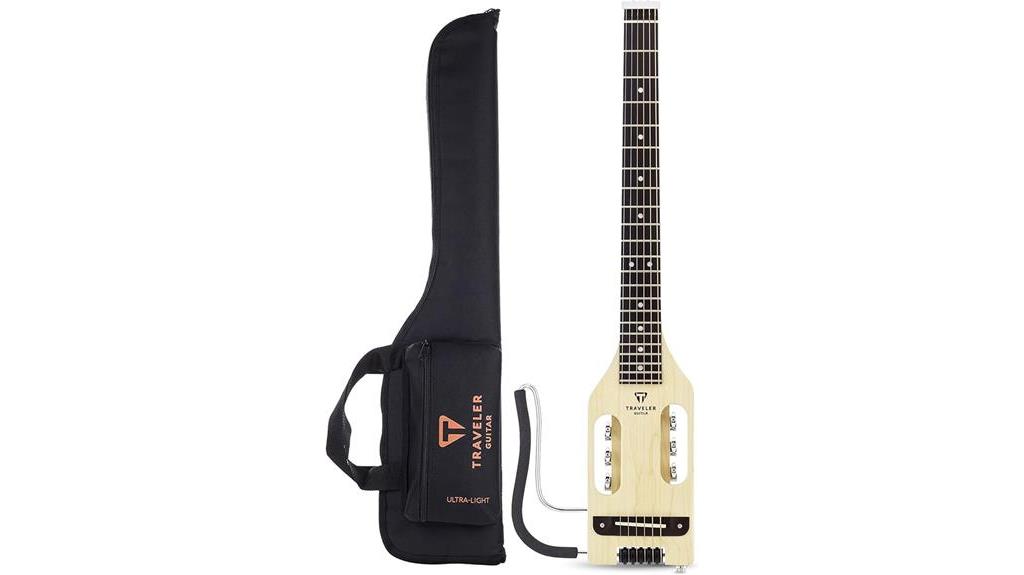
The Ultra-Light looks like nothing else on this list, and that’s the point. It has no headstock at all. The tuning machines sit inside the body, an In-Body Tuning System that lets Traveler Guitar keep a genuine 24.75 inch scale length, the same as a Gibson-style full-size guitar, in a body barely bigger than a violin case. For a beginner who’s found every other 3/4 guitar feels slightly wrong under the fingers, that full scale length is the actual reason to spend the extra money over the APXT2 or the JR1.
It’s not the guitar to buy if you want something that looks and feels like a normal acoustic on your lap. The detachable lap rest helps, but it’s still an odd shape to get used to, and at under 1.3kg it feels almost too light at first, more like holding a large ukulele than a guitar. The piezo pickup and standard quarter-inch output mean it plugs into an amp or interface directly, which the Carry-on Mini and JR1 can’t do. At £249.00, it’s the most expensive guitar here, and it earns that price through the scale length, not through finish or fittings. If you’re the kind of beginner who’s already thinking about how this guitar packs for a flight rather than just where it’ll live at home, it’s worth reading our guide to compact travel guitars for guitarists on the go, since the Ultra-Light sits at the more specialist end of that whole category.
Yamaha Guitalele GL1
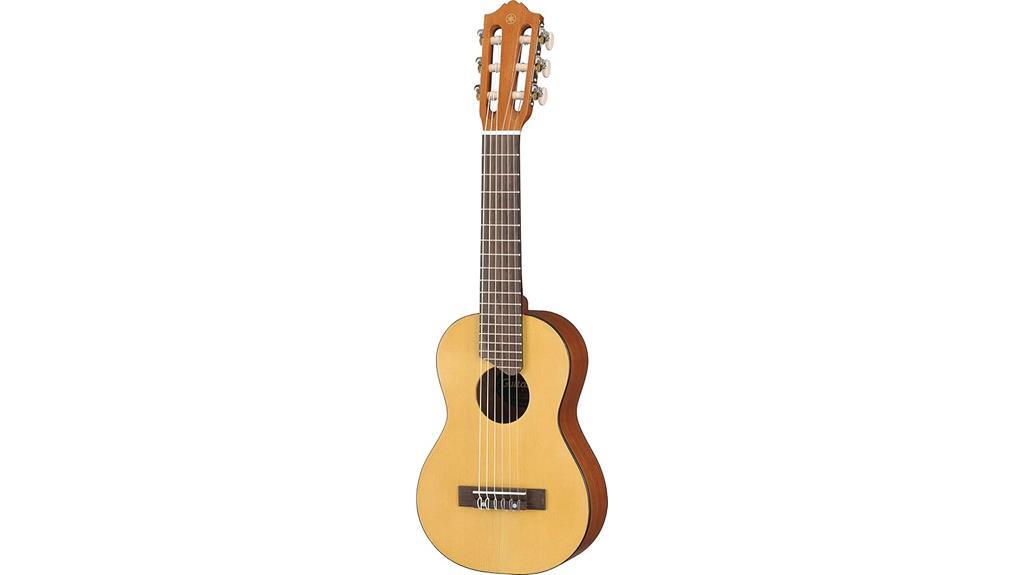
Be honest with yourself before buying this one. The GL1 isn’t a small guitar, it’s a different instrument that happens to use guitar chord shapes. It’s tuned ADGCEA, which is exactly what a standard guitar sounds like with a capo on the fifth fret, so every chord shape you already know still works, just higher and smaller. That’s genuinely useful for a beginner who wants something to noodle on in a hotel room or on a train, and at 17 inches of scale length and well under a kilo, nothing else here comes close for packability.
What it can’t do is prepare you for a standard guitar’s string tension or full scale length, since nylon strings feel completely different under the fingers to steel, and a beginner who learns entirely on a Guitalele will have some readjusting to do on a first proper acoustic. Think of it as a second instrument for the bag, not a replacement for the JR1 or Carry-on Mini as an actual first guitar. At £105.65 it’s easily the cheapest thing on this page, and if you already own a full-size guitar and just want something tiny for travel days, it’s a genuinely good use of that money.
Frequently asked questions
Is a 3/4-size guitar bad for learning on?
No, and for smaller hands it’s often easier than a full-size guitar. The shorter scale length means less stretch between frets. The only real downside is that you’ll eventually want a full-size guitar if you keep playing seriously, so a 3/4 guitar is better thought of as a genuine first instrument and travel companion than a guitar you’ll never grow past.
Do I need a guitar with a built-in pickup as a beginner?
Only if you actually plan to plug in, whether that’s headphones for quiet practice, a small amp, or recording. If you’re happy playing unplugged, the JR1 or Carry-on Mini do the acoustic side just as well for less money, and you can always add a separate pickup or a good clip-on tuner later.
What’s actually different about a travel guitar compared to a normal beginner guitar?
Size and scale length, mostly. A genuine travel guitar is built to fit in an overhead locker or a smaller bag without the compromises of just buying a cheap full-size guitar and hoping it fits. That’s also why we’ve left full-size dreadnoughts like the Yamaha F370 off this list, they’re good beginner guitars, just not travel ones.
Can I take any of these on a plane as hand luggage?
Every airline sets its own cabin baggage rules, and they change, so we won’t make a blanket promise here. Check our guide to taking a guitar on a plane under UK rules before you book, since the smaller guitars here still won’t fit every airline’s sizer.
Is the Yamaha Guitalele a proper substitute for a first guitar?
Not really. It’s a genuinely fun second instrument that uses the same chord shapes as a guitar, but the nylon strings and much shorter scale mean it won’t fully prepare you for a standard acoustic. Buy it alongside a proper first guitar, not instead of one.
Is there a good travel guitar for under £100?
Not right now. The two cheapest options here, the Yamaha Guitalele GL1 (£105.65) and the Carry-on Mini (£115.00), both currently sit just over £100. If you want an actual steel-string guitar rather than a nylon-string hybrid, the Carry-on Mini is the honest floor. Our travel guitars under £300 guide covers that price band properly if budget is the main constraint.
If you’re still weighing up your first travel guitar more broadly, our best travel guitars buyer’s guide runs through every factor worth considering before you commit to one.
If you’re buying specifically because you’re heading off to university, our guide to the best travel guitar for university students covers what actually matters in halls, durability, theft risk, and getting it there without a car, none of which this page focuses on.
The bottom line
For most beginners, the Yamaha APXT2 is the one to buy. It’s a proper 3/4 guitar with real electronics from a brand that’s been making the full-size version for decades, and the extra £70 or so over the Carry-on Mini buys you a lot more flexibility. If that’s more than you want to spend right now, the Carry-on Mini or the Yamaha JR1 will teach you just as well. Keep the Traveler Ultra-Light and the Guitalele GL1 for when you know exactly why you want them, a full scale length in a tiny body, or the smallest possible thing to throw in a bag, rather than as a general first choice. Whichever one you pick, look after the top with a decent guitar humidifier for travel if you’re taking a solid or laminate spruce top through changes in climate, and keep a spare set of strings with it.