


Three hundred quid is the real entry point for a travel guitar. Below that, you’re buying a first guitar, a beater for backpacking, or something to leave at a holiday place without losing sleep over it getting knocked about. Above it, you start getting solid woods, proper electronics, and a setup that’s actually been touched by a technician. Neither is wrong, they’re just doing different jobs.
These are five travel guitars under £300 worth buying right now, all checked against live UK stock before this page went out.
If you only read one paragraph, here it is. The Carry-on Mini is the safest all-rounder, a real steel-string acoustic for around £110. If you want to practise silently through headphones rather than carry an acoustic, the Anygig AGE TE is the one to buy, it’s a proper full-scale electric neck rather than a novelty. If a recognisable brand name and a normal-feeling electric shape matter more than anything built specifically for travel, the Squier Mini Stratocaster is the pick, it’s the closest thing on this page to an ordinary guitar-shop guitar, just built 3/4 size.
How the five compare
| Guitar | Type | Scale/size | Electronics | Price band, checked 29 August 2026 |
|---|---|---|---|---|
| Carry-on Mini | Steel-string acoustic | 3/4 size, short scale | None | £109.25 |
| Anygig AGE TE | Solid-body headless electric | 25.5in, full electric scale | Single humbucker, needs an amp or headphone amp to be heard properly | £199.99 |
| Yamaha GL1 Guitalele | Nylon-string hybrid | Ukulele-length neck, tuned up a fourth | None | From around £89 |
| Vintage Viator (nylon) | Nylon-string acoustic | Compact travel body | None | From around £163 |
| Squier Mini Stratocaster | Solid-body electric | 3/4 size Stratocaster shape | Three single-coils, needs an amp or headphone amp to be heard properly | £139.00 |
Notice what’s missing from that table: none of the three acoustics here have onboard electronics, and the two electrics, the Anygig and the Squier, both need an amp or headphone amp to be heard properly. Nothing here is going to sound like a £600 guitar. That’s not a criticism, it’s honesty about what £300 buys you. If you can stretch further, our travel guitars under £500 roundup covers the next tier up, where solid tops and real preamps start to appear.
Worth knowing if tone is what matters most to you: every solid-top acoustic we checked in this price band, including the guitar we used to recommend in this exact spot, has gone out of stock across Amazon UK and every UK specialist retailer we checked this week. We’d rather tell you that plainly than keep pointing you at something you can’t actually buy. If a solid top matters more than staying under £300, our travel guitars under £500 roundup has options that are genuinely in stock.
Worth knowing before you pick from the five above: if a recognisable brand name matters more to you than any specific feature here, the Fender Redondo Mini is a genuine alternative in the same price band, a simple laminate mini acoustic with Fender’s own six-in-line headstock and no onboard electronics, currently the cheapest guitar with a major brand name on it that we’ve reviewed on this site. Full detail in our Fender Redondo Mini review.
Carry-on Mini: the one to buy if you only buy one
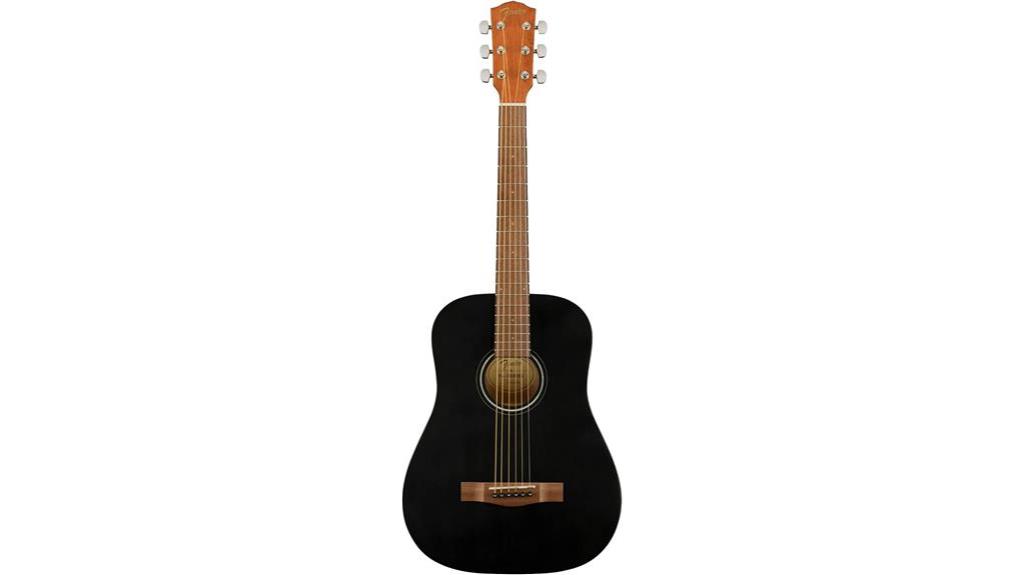
The Carry-on Mini is a mahogany-and-spruce 3/4 steel-string that’s actually built from proper wood throughout rather than laminate front to back. It’s not trying to be clever, it’s just a smaller, honest acoustic shape, and reviewers consistently mention it stays in tune better than you’d expect for something this size, which matters more than any spec sheet at this price.
It’s light, around 1.9kg, and the smaller body suits kids, smaller hands, or anyone who just wants less guitar to wrestle with on a train. The honest downside is resonance: a smaller body moves less air, so it sounds thinner than a full-size acoustic, and no amount of playing in changes that. It doesn’t come with a case either, so budget for one of our travel guitar cases under £100 if you’re taking it further than the sofa. Treat it as a genuine first guitar or a knockabout travel companion, not a guitar you’ll still want in five years.
Anygig AGE TE: the one for silent practice
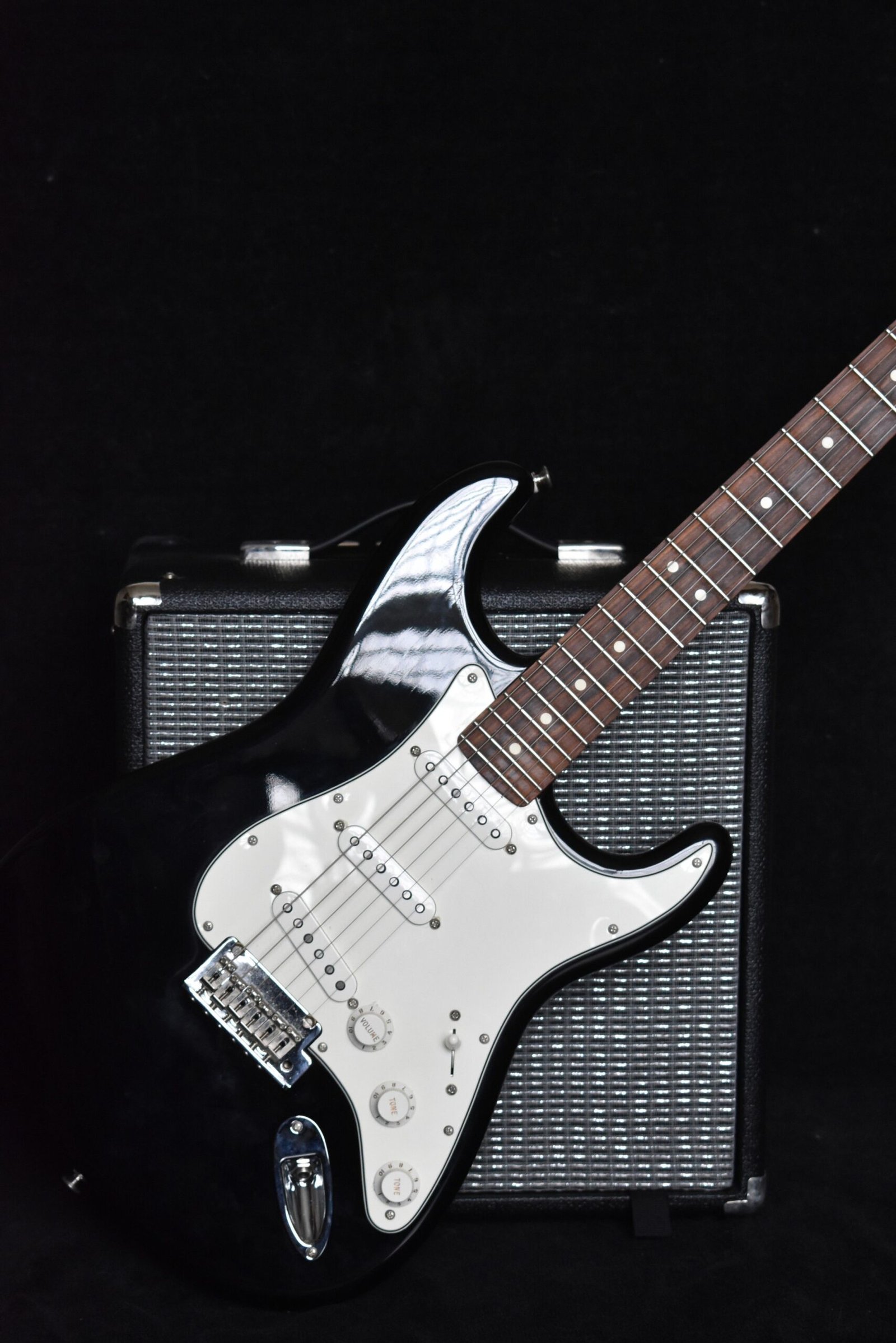
The Anygig AGE TE is a headless solid-body electric with a full 25.5 inch scale and 24 frets. Unlike a shrunk-down travel electric, it feels like a normal electric guitar under your fingers, and it ships with a padded gig bag, a strap, a digital tuner, and a fret guard, so there’s nothing extra to buy before you start playing. We’ve written a full Anygig AGE TE review if you want the detail.
On its own it’s quiet, this is a solid body with no acoustic chamber, so you’ll want a small amp or a headphone amp to actually hear it properly. Pair it with one of the clip-on tuners from our guide to clip-on tuners for travel guitars and a cheap headphone amp, and you’ve got a genuinely usable silent practice rig for a hotel room or a flight, something none of the acoustic guitars on this list can offer.
Worth knowing if you want acoustic-electric flexibility instead of a bare electric: the Sonicake QGT-01 uses a similar detachable-frame idea but keeps a standard headstock and adds a digital preamp with eight built-in body-shape voicings, at a similar UK price to the AGE TE. It trades the AGE TE’s true electric feel for genuine acoustic-electric tone options, worth a look in our full Sonicake QGT-01 review.
Worth knowing if a floating tremolo and real vibrato technique matter more to you than tuning-in-your-sleep simplicity: the Batking Travel Electric Guitar Headless is the only guitar on this site with a genuine double-locking tremolo bridge, at a similar price to the AGE TE. It’s a newer brand with no UK track record yet and the tremolo is fiddlier to keep in tune than the AGE TE’s fixed bridge, so it’s a deliberate trade for dive-bombs and vibrato rather than a straight upgrade. Full detail in our Batking Travel Electric Guitar Headless review.
Worth knowing if a heritage brand name and a normal headstock matter more to you than a headless build: the Hofner Shorty keeps a full 24.7in scale neck on a shortened body instead, from Hofner, the German brand behind Paul McCartney’s Beatles-era bass. It has a documented neck-dive trade-off when played standing that none of the headless options above share. Full detail in our Hofner Shorty review.
Worth knowing if you want an electric that looks and feels like a normal guitar shop Stratocaster rather than a purpose-built travel design: the Squier Mini Stratocaster keeps the full Strat body shape and headstock, just scaled uniformly to 3/4 size, at around £139. It trades some tuning stability for that familiarity, so it’s a different trade to the headless and shortened-body options above rather than a straight upgrade. Full detail in our Squier Mini Stratocaster review.
Worth knowing if price is the only thing that matters to you: the Yamaha JR1 is a plainer 3/4-scale steel-string acoustic with no electronics and no solid tonewoods, and it’s the cheapest named guitar we’ve reviewed on this site, from around £137 when we checked. It’s a genuine downgrade in build quality against the Carry-on Mini, not a hidden upgrade, so treat it as the pick only if you need to spend less and can live with a plainer instrument. Full detail in our Yamaha JR1 review.
Worth knowing if you want humbuckers and a rock-voiced tone instead of the Squier’s single coils: the Ibanez Gio miKro shrinks Ibanez’s own RG-style double-cutaway shape to 3/4 size instead, with two humbuckers and a normal headstock. It’s sold through third-party marketplace sellers rather than an Amazon-direct buy box, from around £187 when we checked, so check the seller and delivery estimate before you order. Full detail in our Ibanez Gio miKro review.
Worth knowing if a recognised brand name matters more to you than anything purpose-built for travel: the Applause AAT96-4S carries Ovation’s affordable sub-brand name on a conventional wood dreadnought body, not Ovation’s signature round bowl-back, from around £235 for the colour we checked. We found no owner reviews anywhere for this specific model, a genuine limitation worth knowing before you buy. Full detail in our Applause AAT96-4S review.
Yamaha GL1 Guitalele: not a guitar, and that’s fine
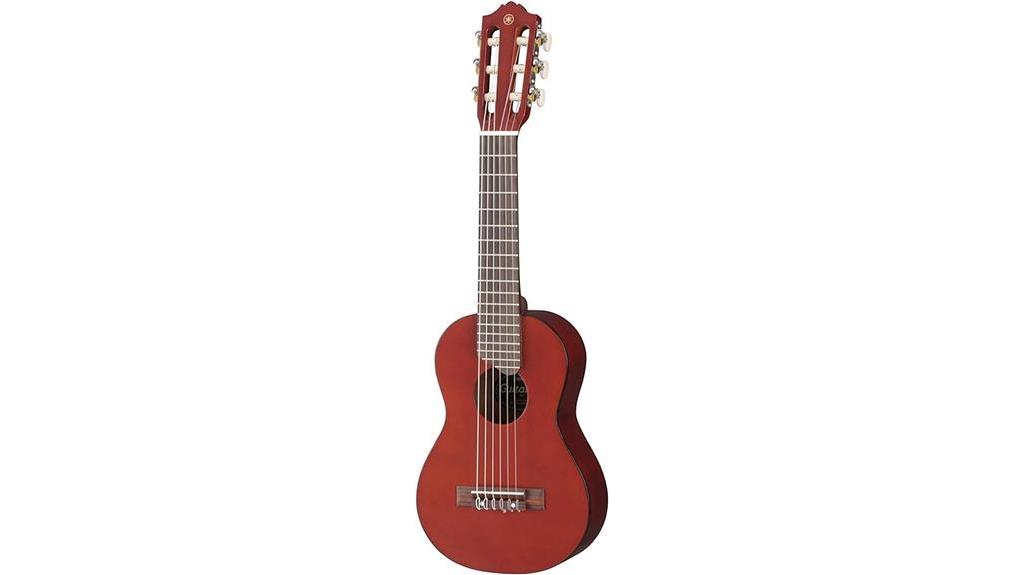
The GL1 is a guitalele, six nylon strings, three plain and three wound, tuned up a fourth from standard guitar tuning, so it sounds and plays like a capo-on-fifth guitar shrunk down to ukulele length. It’s genuinely well made for what it is: Yamaha’s build quality shows in the finish and the tuning stability, and it’s the lightest, most pack-friendly thing on this list by a distance.
The catch is honest and unavoidable: this is not a guitar substitute. The scale is short enough that standard guitar chord shapes feel cramped, and the tuning means you can’t just play along with normal guitar tabs without transposing in your head. If you already play guitar and want something tiny for the garden or a campsite, it’s excellent. If you want your first proper guitar, it isn’t the right shape for that job, look at the Carry-on Mini instead.
Vintage Viator (nylon strung): the classical-feel option

Designed with input from guitarist Paul Brett, the Viator is a proper nylon-string travel acoustic rather than a shrunk-down steel-string. If you learned on a classical guitar, or you find steel strings hard on the fingertips, this is the only guitar on this list built specifically for that feel. The compact body keeps it genuinely portable without the thin, plasticky tone some ultra-budget nylon-strings have.
There’s no electronics on this version, so if you want to plug into an amp you’d need the electro-acoustic model, which costs more and moves this into under-£500 territory instead. As a purely acoustic nylon-string travel guitar, though, it’s the most complete instrument on this list, not just the cheapest way to get six strings on a plane. Read our full review of the Vintage Viator for more on the parlour-style design, who Paul Brett was, and how it compares to a steel-string alternative at a similar price.
Squier Mini Stratocaster: the one for a familiar shape and a known name
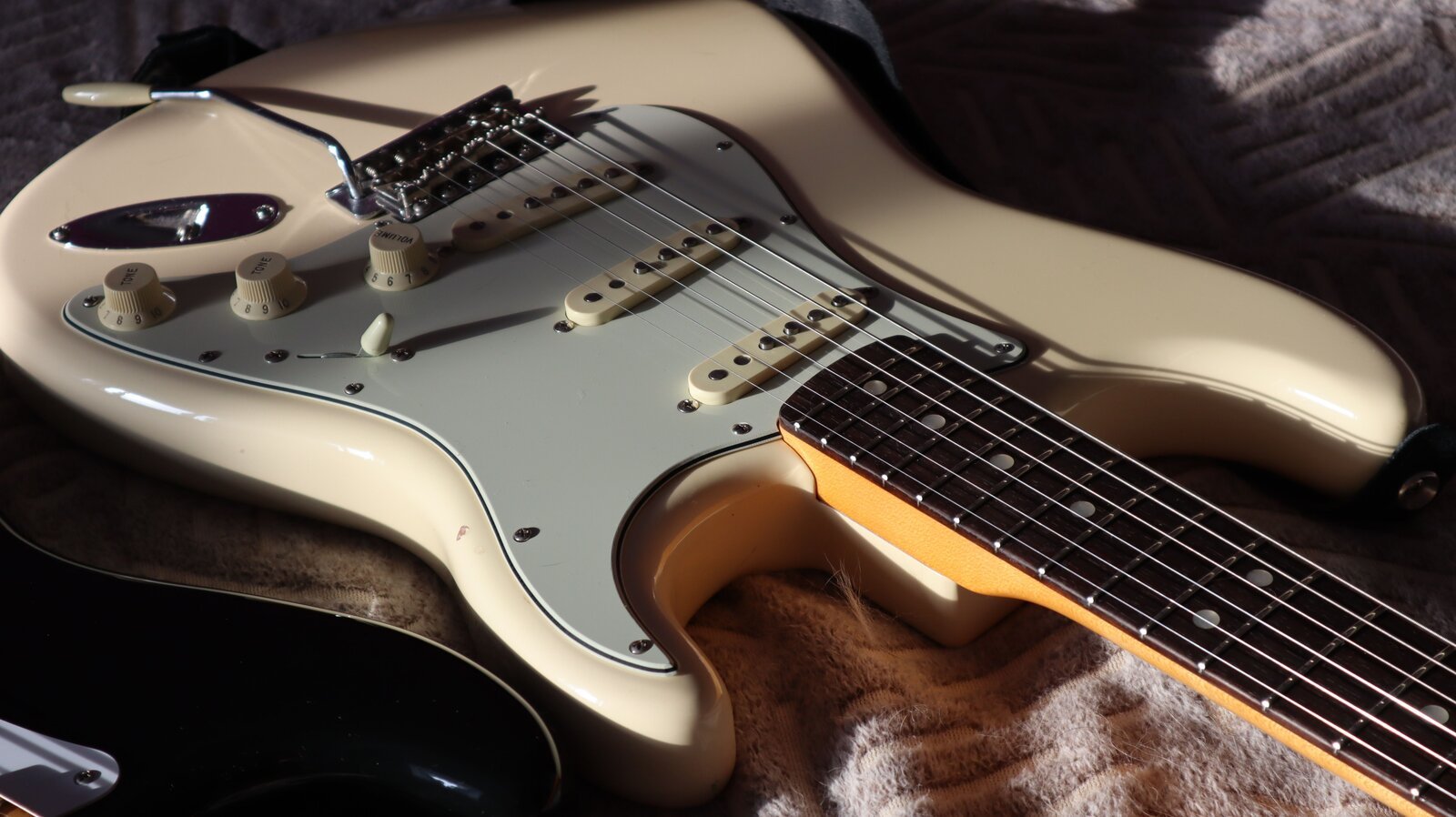
Every other guitar on this page does something to shrink or reshape itself for travel: a headless neck, a shortened body, a hybrid tuning. The Squier Mini Stratocaster doesn’t. It keeps the full Stratocaster body shape, the normal six-in-line headstock, and the classic three-single-coil layout, and just scales the whole thing down to 3/4 size. If you already know what a Strat feels like, this feels like that, only smaller.
It’s an electric, so like the Anygig above it needs an amp or a headphone amp to be heard properly, and Fender’s own brand recognition is doing real work here: it’s the first Fender-family guitar on this list, and for a lot of players that familiarity is worth more than a spec sheet. The honest trade is tuning stability, a guitar this small built around a full-size headstock and hardware doesn’t hold pitch quite as confidently as a purpose-built travel design, though it’s fine for a practice session or a short trip. Full detail in our Squier Mini Stratocaster review.
Frequently asked questions
Is a guitar under £300 good enough to actually learn on?
Yes, the Carry-on Mini and the Squier Mini Stratocaster both play well enough to learn chords, strumming, and basic technique. What you’re giving up is tone and long-term satisfaction, not playability. Plenty of guitarists learned on something no better than these.
Do any of these come with a case?
The Anygig AGE TE includes a gig bag. It’s thin padding, fine for carrying around town, not for checking into an aircraft hold. If you’re flying with any of these, our guide to travel guitar cases under £100 covers sturdier options that won’t cost more than the guitar itself.
Can I take one of these on a plane as hand luggage?
All five are small enough to have a real shot at fitting an overhead bin, but “travel-sized” isn’t a guarantee any airline has to honour. Rules vary by carrier and by how full the flight is. Our guide to flying with a guitar in the UK goes through the actual rules airline by airline rather than assuming.
What if I want something even smaller than these?
All five guitars here are still full acoustic or electric shapes, just scaled down. If you want something that folds, disassembles, or packs into a backpack properly, our roundup of compact travel guitars covers that different category.
Should I just save up for the under-£500 list instead?
If you already know you’ll play regularly for years, yes, the jump to a solid top and better electronics is worth the extra money. If you’re not sure yet, or you need a genuine backup rather than a main instrument, everything on this page is the more sensible spend.
If you’re still not sure this budget band is right for you, our best travel guitars buying guide breaks down how to choose across every price point, not just this one.
The bottom line
The Carry-on Mini is the one to buy if you want a single sensible answer: a real steel-string, honest tone, and nothing to apologise for at this price. The Anygig AGE TE is the pick if silent electric practice matters more to you than an acoustic sound. The Squier Mini Stratocaster is the pick if a familiar Stratocaster shape and a known brand name matter more to you than anything purpose-built for travel.