


Four different posts on this site used to cover almost exactly the same ground: compact travel guitars, guitars for backpacking, guitars for “on the go” musicians, and guitars for tight spaces. We’ve merged them into one, because a reader searching for any of those phrases wants the same honest answer, not four separate listicles that repeat each other.
If you just want the short version: the Traveler Guitar Ultra-Light is the best all-rounder if you actually fly with your guitar often, the Yamaha JR1 is the one to buy if budget matters more than anything else, and the Adam Black O-2TE is the safest choice if you want a genuine electro-acoustic sound from a brand that’s earned its reviews. Here’s why, and what each one is genuinely bad at too.
Quick comparison
| Guitar | Best for | Type | Fits airline overhead bins |
|---|---|---|---|
| Traveler Guitar Ultra-Light | Frequent flyers | Acoustic-electric, headless | Yes, by design |
| Yamaha JR1 3/4 | Tightest budget | Acoustic | Usually, check your airline first |
| Adam Black O-2TE | Genuine electro-acoustic tone | Electro-acoustic | Usually, check your airline first |
| Ibanez PC12MHCE-OPN | Nylon-string players | Grand Concert electro-acoustic | Usually, check your airline first |
None of these are guaranteed cabin baggage on every airline. Only the Traveler Ultra-Light is actually designed around fitting into an overhead bin, the rest are simply small enough that they often will. Always check your specific airline’s musical instrument policy before you fly, don’t take “compact” as a guarantee.
Best overall: Traveler Guitar Ultra-Light Acoustic-Electric
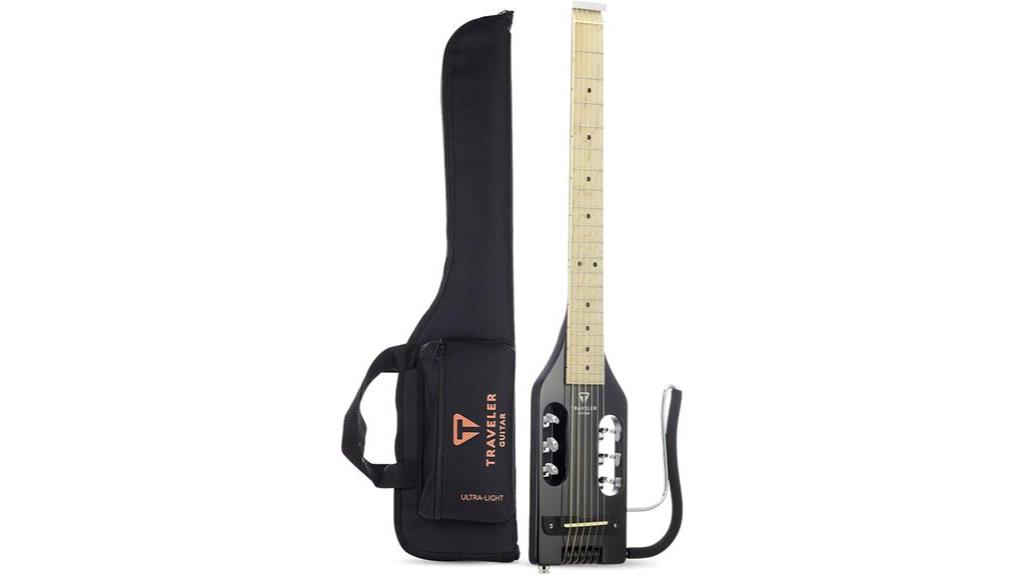
This is the only guitar on this list actually built around the problem of flying, not just small enough to happen to work. It uses Traveler’s In-Body Tuning System, the tuning machines sit inside the body instead of on a headstock, which is how it manages a full 24 3/4 inch scale length at just 28 inches long and under 3lbs. UK reviewers who fly for work several times a year describe it as the first travel guitar that didn’t feel like a compromise once plugged into an amp or headphones.
The catch is price, and it varies more than you’d expect between colour options, we saw one finish priced over £140 higher than another on the same day. Compare the current listings rather than assuming they’re all the same price. It’s also genuinely quiet unplugged, several reviewers use a headphone amp for late-night hotel room practice rather than expecting it to sound like a full-bodied acoustic on its own.
Good for: anyone who flies with a guitar more than once or twice a year and wants to plug into an amp rather than rely on unplugged volume.
Want a solid-body electric instead of an acoustic-electric, with an amp built in for headphone practice? Read our full Traveler Speedster Deluxe review, Traveler’s other travel electric, and the one genuine step up if the Ultra-Light leaves you wanting more.
There’s also the Anygig AGE TE, another headless option worth knowing about, a cheaper electric-only alternative with a full-scale 25.5 inch neck if you don’t need any acoustic voice at all.
Best budget option: Yamaha JR1 3/4 Size Acoustic

Yamaha’s JR1 has been a default recommendation for a compact, reliable acoustic for years, and it’s held up well. It comes with a gig bag, the build quality is consistent, and it’s genuinely playable rather than a toy. Several UK owners note it actually plays closer to a half-size guitar than a true 3/4, so if you have larger hands, try one in a shop first or size up.
It’s a plain acoustic with no electronics, so if you want to plug in, this isn’t the guitar. It’s also not built with flying specifically in mind, it’s just small enough that it often works as hand luggage. A note on stock: this listing didn’t show a single clear Amazon buy box when we last checked, only third-party offers, so if the “check price” link below takes you somewhere unclear, treat that as your cue to compare it against the JR2S in our travel guitars under £300 guide instead.
Good for: beginners, kids, or anyone who wants a genuinely playable small guitar without spending much.
Best genuine electro-acoustic: Adam Black O-2TE
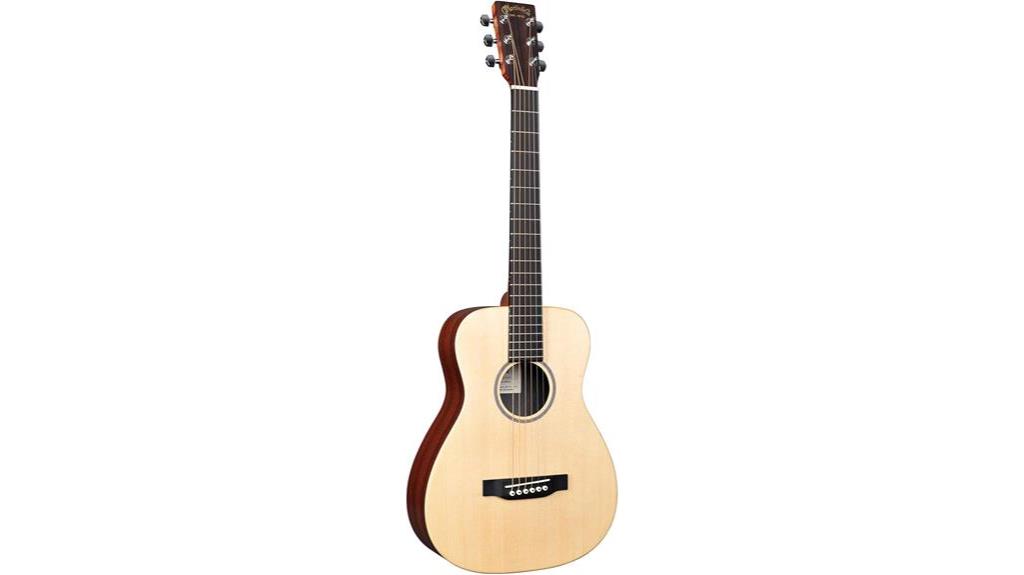
The Martin LX1E that used to hold this spot is no longer showing a working buy box on Amazon UK, so we’ve moved to the Adam Black O-2TE instead. Adam Black doesn’t carry Martin’s name recognition, but the O-2TE is a proper travel electro-acoustic, not a downsized novelty, and it sounds like itself when plugged in rather than thin or quacky. It comes with onboard electronics as standard, so you’re not paying extra to add a pickup later.
It’s quiet unplugged compared to a full-size dreadnought, which is exactly what you’d expect from a small body, so don’t buy this expecting full-size volume around a campfire. Stock has been tight on this one too, only a single unit was showing when we checked, so treat the price link as a starting point and confirm what’s actually available before you commit.
Good for: players who want a genuine plugged-in electro-acoustic sound without paying Martin or Taylor money.
Best for nylon-string players: Ibanez PC12MHCE-OPN Grand Concert
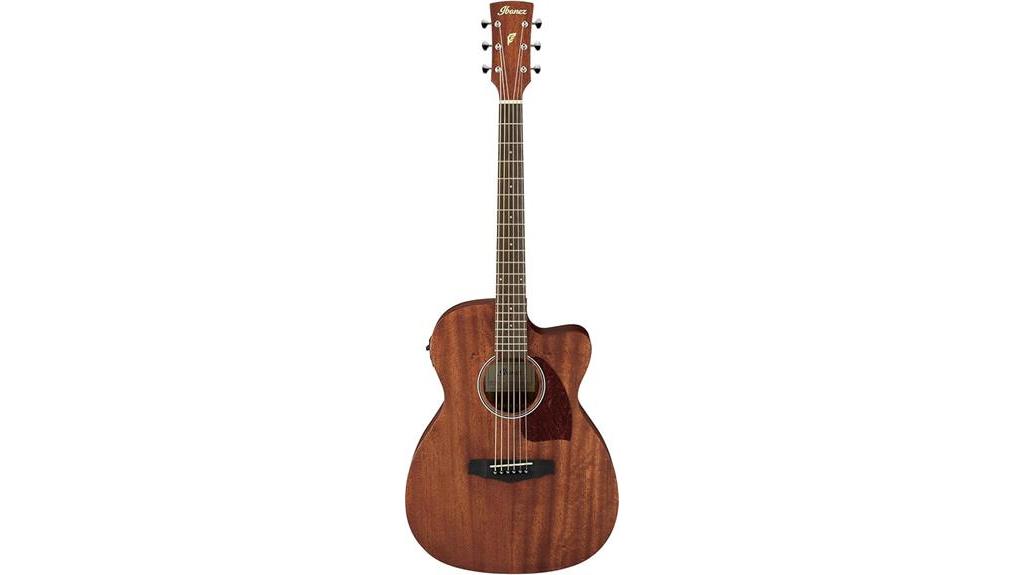
Every other guitar on this list is steel-string. If you play nylon, or you’re coming from classical guitar and want something smaller without switching string tension entirely, the Ibanez Grand Concert is the pick. It’s a genuine electro-acoustic with onboard electronics, not just an acoustic with a soundhole pickup taped in as an afterthought, and it’s well reviewed by UK buyers for the price.
Ibanez isn’t a name people associate with acoustic guitars the way they do with electrics, so it doesn’t carry the same instant trust as Yamaha. Judge it on the reviews and the electronics, not the badge.
Good for: nylon-string and classical players who want a genuinely portable option with real electronics.
Worth knowing: the Taylor GS Mini
If you’ve researched travel guitars anywhere else, you’ve likely seen the Taylor GS Mini recommended, and the reviews back it up: UK owners regularly call it the best-sounding small guitar they’ve played. We’re not making it a full pick here because UK stock has been patchy, at the time of writing one popular finish was listed as unavailable and another was showing a single reseller offer well above its normal price. If you see one at a fair price, it’s worth serious consideration. If you only see inflated one-off listings, wait or look elsewhere rather than overpay.
What else to pack
A guitar this small still needs the usual accessories, and a couple of them matter more on a travel guitar than a full-size one. Bring a clip-on tuner that copes with a small or oddly shaped headstock, since not every tuner sits well on one. If you play with a capo, check our guide to capos for travel guitars before buying one, narrower travel necks don’t always suit a standard fixed-tension capo.
Frequently asked questions
Will any of these definitely fit in the overhead bin on my flight?
Only the Traveler Ultra-Light is actually designed around that problem. The others are small enough that they often fit, but “often” isn’t “always”. Check your airline’s own musical instrument policy before you fly, and see our guide to guitar cases for flying if you’re checking it into the hold instead.
What’s the actual difference between a 3/4 size guitar and a “travel guitar”?
A 3/4 size guitar, like the Yamaha JR1, is simply a smaller version of a standard acoustic, same design, smaller proportions. A dedicated travel guitar like the Traveler Ultra-Light is engineered specifically around portability, often with a shortened or reconfigured body while keeping a full-length neck, so it plays like a full-size instrument despite packing down smaller.
Do I need the electronics, or is a plain acoustic enough?
If you’ll only ever play unplugged in a hotel room or on a train, you don’t need a pickup. If there’s any chance you’ll want to plug into an amp, headphones, or a PA, an electro-acoustic saves you buying a second guitar later.
If you’re still weighing up your options more broadly, our complete UK buyer’s guide to travel guitars runs through every factor worth considering.
The bottom line
Buy the Traveler Ultra-Light if you fly often and want to plug in. Buy the Yamaha JR1 if price is the deciding factor. Buy the Adam Black O-2TE if you want the best plugged-in tone without going as far as Taylor money. Buy the Ibanez if you play nylon-string. Keep an eye on the Taylor GS Mini if you want the best reviews in the category and can find one at a sensible price.