
Most travel guitars solve the portability problem in an unusual way: a collapsible neck, a carbon fibre body, a headless design, a guitar-ukulele hybrid tuned up a fourth. The Taylor GS Mini does none of that. It’s a normal steel-string acoustic, just built smaller, and it’s arguably the single most recommended small guitar in the world. It also features in our compact travel guitars roundup.
Best for: someone who wants a small-bodied acoustic that actually sounds like a proper guitar, not a novelty travel shape. If you specifically need electronics built in, a folding neck for a suitcase, or the cheapest possible mini acoustic, there are better-suited guitars elsewhere on this site.
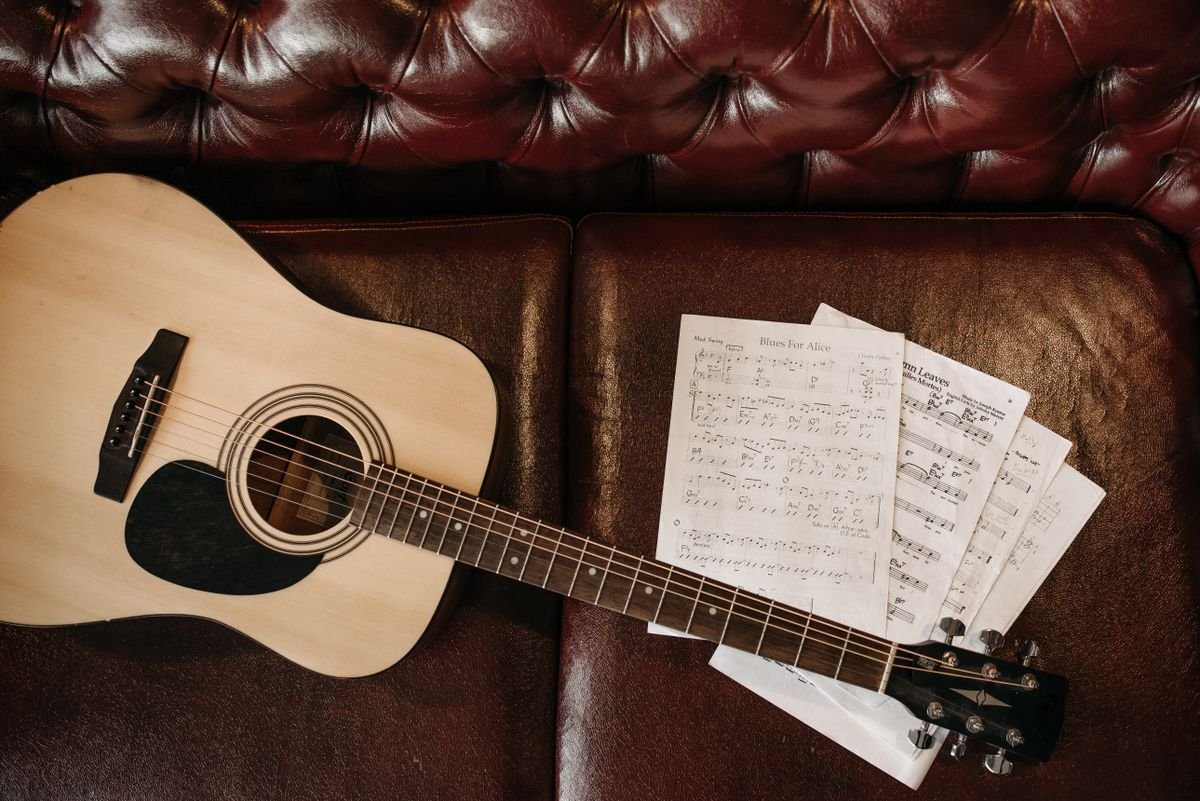
A small-bodied acoustic guitar at home, the kind of everyday setting the GS Mini is built for.
A scaled-down Grand Symphony, not a novelty shape
Taylor didn’t design the GS Mini as a shrunken dreadnought. It’s a scaled-down version of the company’s Grand Symphony body, the same shape behind some of Taylor’s full-size guitars, and that lineage is the whole point. At 14-3/8in wide and roughly 4-7/16in deep, the body is noticeably deeper than Taylor’s own smaller Baby series, close enough to a full-size guitar’s depth that it sits comfortably in your lap rather than feeling like a toy. The whole instrument weighs under 4lb (around 1.8kg), light enough to hold for a long session without your shoulder complaining.
That depth is what separates it from most guitars on this site built purely around portability. The GS Mini isn’t trying to be the smallest or lightest option, it’s trying to be the smallest guitar that still sounds like a real one.
What’s actually inside it, and what’s changed since launch
The standard GS Mini pairs a solid spruce top with layered sapele back and sides. Worth knowing, and something a lot of older write-ups miss: Taylor now builds the standard model with a torrefied spruce top rather than the plain Sitka spruce it launched with in 2010. Torrefaction is a roasting process that ages the wood artificially, aiming for some of the warmth and openness a spruce top would normally only develop after years of playing. Taylor also sells a GS Mini Mahogany, the same body and bracing with a solid mahogany top instead, which trades some of the spruce version’s clarity for a darker, more midrange-forward voice.
Scale length is 23.5in, a full two inches shorter than a standard long-scale acoustic, with a 1-11/16in nut width, X-braced top and a braceless arched back. Neither version has any onboard electronics. If you want to plug in, Taylor sells the GS Mini-e with its own soundhole pickup fitted at the factory, at a noticeably higher price, and it’s worth knowing that going in rather than assuming you can add one cheaply later.

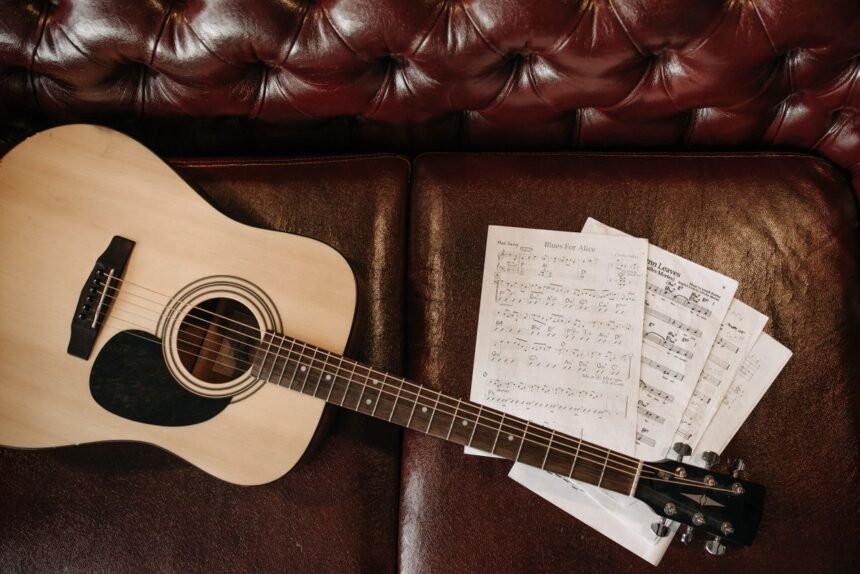
A rehearsal room rather than a studio shoot, the kind of place a small-bodied acoustic like this actually earns its keep.
Where to buy it
The standard GS Mini (torrefied spruce top) costs from around £439. The GS Mini Mahogany is from around £529, and the electronics-equipped GS Mini-e Mahogany is from around £679. Prices at any retailer move, so treat these as a guide.
The Washburn Comfort G-Mini 55 Koa is a comparable size from around £395, and a less well-known alternative.
Taylor GS Mini vs Baby Taylor
The closest genuine rival isn’t another brand, it’s Taylor’s own Baby Taylor, already a pick in our acoustic and electric players roundup and our experienced players roundup. Both are 3/4-size instruments from the same company, but they’re built around different body shapes with a genuinely different sound.
| Taylor GS Mini | Baby Taylor (BT1) | |
|---|---|---|
| Body shape | Scaled-down Grand Symphony | 3/4-size dreadnought |
| Top | Solid torrefied spruce (or solid mahogany) | Solid Sitka spruce |
| Back and sides | Layered sapele | Layered walnut |
| Body depth | Deeper, closer to full-size | Shallower |
| UK price | From around £439 | From around £374 |
The Baby Taylor is the cheaper, shallower-bodied option, and a genuinely good one, but the GS Mini’s extra body depth is exactly why players who’ve tried both usually describe it as the guitar that sounds least like a compromise. If budget is the deciding factor, the Baby Taylor is the sensible choice. If you want the closer thing to a full-size voice in a smaller body, the GS Mini is worth the extra £65.
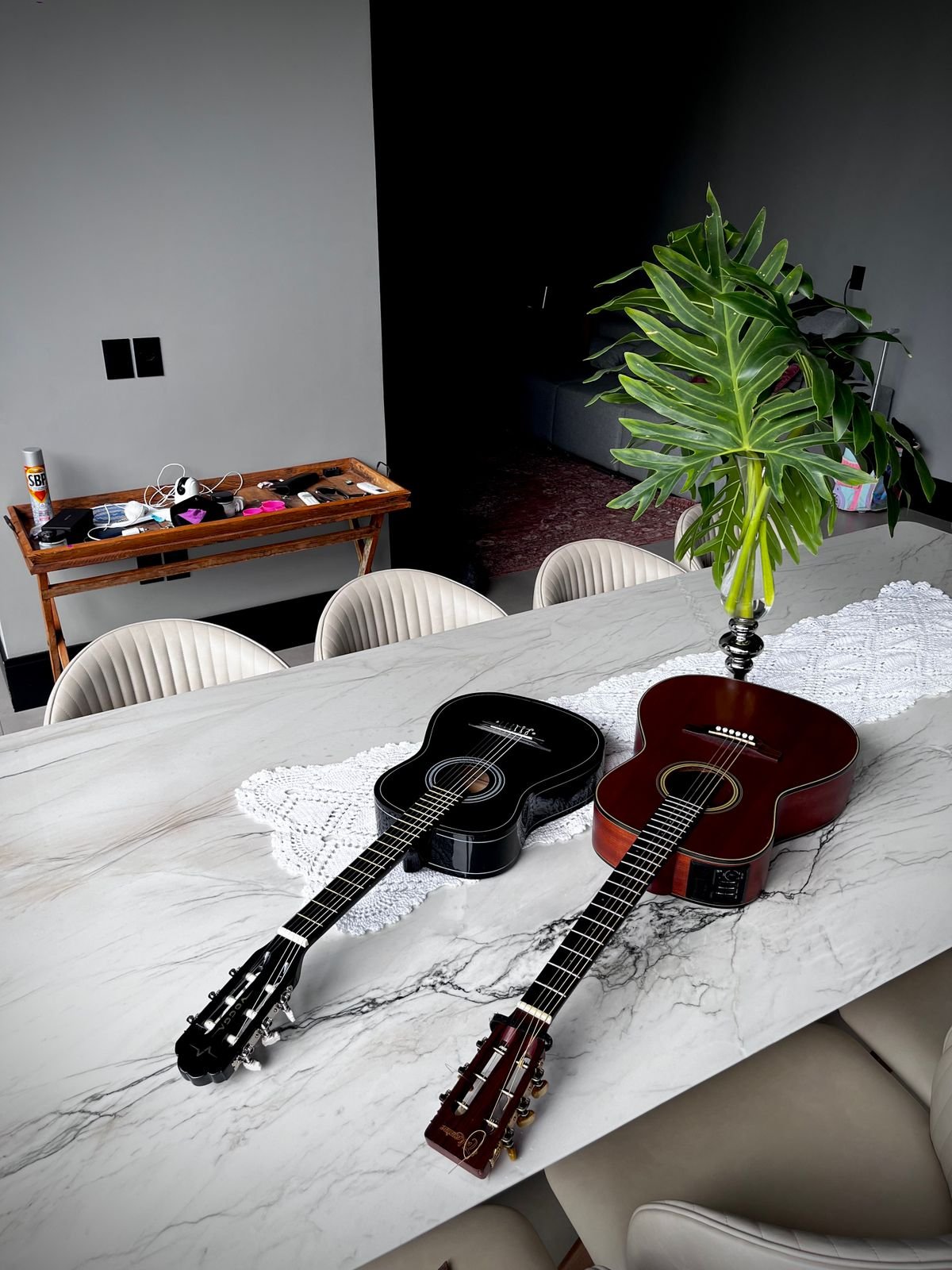
Kept somewhere it’s easy to reach for, which is where a guitar this size tends to end up.
The genuine downside
Acoustic Guitar magazine’s own review of the GS Mini, written by Nicole Solis, is worth taking seriously here since it’s a detailed, professional hands-on test rather than a single buyer’s opinion. Her verdict was mostly glowing, but she was specific about where it runs out: strummed softly or with a medium attack, the tone stays warm and balanced, but with an aggressive attack the sound begins to break up, especially in the bass. Her conclusion was that it suits solo or small-group playing better than single-handedly carrying a bluegrass jam.
That’s a real, useful limitation, not a knock against the guitar generally. A small, deep body with a torrefied top gives you a lot of the tone a full-size guitar would, but it can’t move the same amount of air as one when you’re really digging in. If you mostly strum at home, fingerpick, or play solo, this won’t affect you. If your main use case is cutting through a loud group of other instruments, it’s worth knowing the ceiling is lower than a full-size dreadnought’s before you buy.
If the GS Mini is more than you want to spend, the Gretsch Jim Dandy Deltoluxe Parlor is a genuinely different, much cheaper alternative worth a look, a real vintage parlour body rather than a scaled-down modern shape, and also with no electronics on the base model. It won’t match the GS Mini’s depth or projection, but it’s a characterful option for a lot less money. Full detail in our Gretsch Jim Dandy Deltoluxe Parlor review.
FAQ
Does the Taylor GS Mini have a pickup or electronics?
Not the standard GS Mini reviewed here. Taylor sells a separate GS Mini-e with a factory-fitted soundhole pickup at a higher price, so if you know you want to plug in, budget for that version rather than the base model.
Taylor GS Mini or Baby Taylor, which should I buy?
Budget and body depth are the real differences. The Baby Taylor is around £65 cheaper and has a shallower dreadnought-shaped body. The GS Mini’s deeper Grand Symphony-derived body is the reason most players who’ve tried both say it sounds closest to a full-size guitar. Our acoustic and electric players roundup covers the Baby Taylor in more detail.
Spruce top or mahogany top, which sounds better?
Neither is objectively better, they’re different voices. The torrefied spruce top gives a brighter, clearer tone with more headroom. The mahogany top is darker and more midrange-forward, often described as warmer for fingerstyle playing. If you’re not sure, the spruce version is the more common recommendation and the safer first choice.
Will it fit as hand luggage on a flight?
Its smaller body gives it a better chance than a full-size dreadnought, but no guitar is guaranteed cabin space on every airline, and the included gig bag isn’t hold-luggage protection on its own. Check our guide to flying with a guitar in the UK before assuming it’ll fit.
Does it come with a case?
Yes, every GS Mini ships with a structured gig bag. It’s fine for everyday carrying and most car or train travel, but if you’re checking it into an aircraft hold, our guide to travel guitar cases under £100 covers sturdier options.
The bottom line
Buy the Taylor GS Mini if you want the closest thing to a full-size acoustic voice in a genuinely smaller body. Don’t expect it to replace a full-size dreadnought for hard strumming in a group, and don’t buy the standard model expecting a pickup that isn’t there. For a small-bodied acoustic that plays and sounds like guitarists actually want it to, it’s one of the most consistently recommended instruments in this category anywhere, and it earns that reputation.
Still weighing this up against the rest of the market? Our complete UK buyer’s guide to travel guitars covers how every named model on this site compares.