
This guide covers every travel guitar amp we’ve reviewed, from battery-powered rigs built for busking to compact practice combos that fit in hand luggage. It’s for anyone plugging an electric or acoustic-electric travel guitar into something away from home, whether that’s a hotel room, a park bench or a small gig.
Best travel amp by situation: quick answer
If you already know roughly what you need, start here. Each row links to the full roundup, where the actual comparisons and current prices live.
| Best for | Where to look | Why |
|---|---|---|
| Best overall | Best portable guitar amps for travel | The single best all-rounder if you don’t have a narrower need |
| Busking and outdoor gigs | Best battery-powered amps for busking | Genuine battery life and a mic channel for singing while you play |
| Acoustic-electric players | Best travel amps for acoustic players | Voiced for a piezo pickup rather than a magnetic one, so it doesn’t sound thin or harsh |
| Bluetooth and wireless | Best Bluetooth-enabled travel amps | A real wireless guitar transmitter, not just Bluetooth speaker streaming |
| Tightest budget | Best travel amps under £100 | Genuinely usable tone without paying for features you won’t use |
What actually makes an amp good for travel
A travel amp is judged on different things to an amp that lives permanently in your bedroom or a rehearsal room. Four things decide whether an amp actually earns its place in a bag: how flexible its power source is, how much it weighs and how small it packs down, how much tone-shaping it gives you without a pedalboard, and whether you genuinely need battery power at all or you’re overpaying for a feature you’ll never use.
Power source flexibility is the first fork in the road. Some amps run only on mains power, which is fine if you know you’ll always have a socket nearby, a hotel room, a static practice space, a car boot with an inverter. Others run on AA batteries or an internal rechargeable cell, which is what actually matters the moment you’re somewhere without a plug: a park bench, a train platform, a street corner. A handful do both, batteries when you need them and a mains adapter when you don’t, and that flexibility is worth paying for if you genuinely don’t know in advance where you’ll be plugging in.
Weight and size follow a similar logic to travel guitars themselves. A 3W amp that runs on six AA batteries will comfortably fit in a rucksack alongside the guitar. A 50W combo with a proper speaker cabinet won’t, even if it’s marketed as portable. The wattage figure on the box is a reasonable proxy for how much you’re going to be carrying, and it’s worth being honest with yourself about how much volume you actually need before you pay the weight penalty for headroom you won’t use.
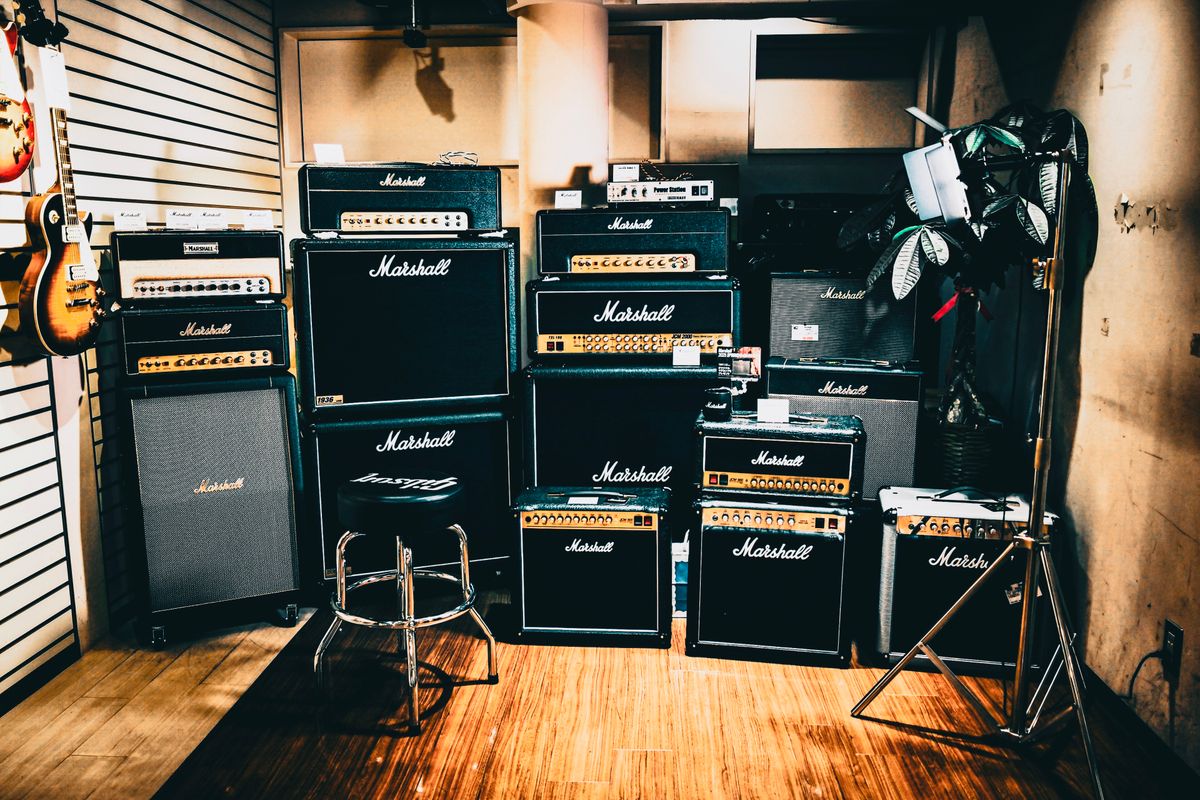
This is what you’re not carrying. A travel amp trades this kind of stacked wattage and headroom for something that fits in a rucksack.
Tone-shaping needs come down to how much of the work you want the amp to do on its own. Some travel amps give you three amp voicings and not much else, which is genuinely enough for most people who just want to practise or noodle through a set of chords. Others pack in dozens of amp models, built-in effects and companion apps, which matters if you play more than one style of music and don’t want to carry pedals as well as an amp. Neither approach is wrong, but paying for a feature-packed amp when you’d only ever use the clean channel is money spent on the wrong thing.
Battery power specifically matters in a narrower set of situations than people assume. If you’re busking, playing outdoors, or practising somewhere with no socket in sight, it’s not a nice-to-have, it’s the whole point of the amp. If you’re mostly practising in a room that already has a plug within reach, mains-only amps often give you more tone and features for the same money, since the manufacturer isn’t spending part of the budget on a battery compartment you’ll rarely use. Work out which category you’re actually in before you pay a premium for battery independence you don’t need.
Speaker size is the part of the spec sheet people tend to skip over, and it explains a lot of the tone difference between amps that look similar on paper. A 5 or 6.5 inch speaker, common on the smallest travel amps, moves less air than an 8 or 10 inch speaker, which is why a lot of budget mini amps sound thinner and more boxy even at the same wattage as a slightly larger combo. It’s not a fault, it’s a direct consequence of the cabinet being small enough to travel with, and it’s worth listening to demo clips of a specific amp rather than assuming two amps with the same wattage figure will sound the same.
Onboard effects and amp modelling are worth weighing against the alternative of just carrying a couple of pedals. An amp with built-in delay, reverb and a handful of amp voicings genuinely replaces a small pedalboard for a lot of players, which matters more when you’re already trying to pack light. But it’s not free: amps with more onboard processing tend to cost more, and some players find they only ever use one or two of the presets anyway. If you already know you like a specific overdrive pedal, don’t assume an amp’s built-in equivalent will replace it exactly, read the specific review for how close the modelling actually gets.
How to choose, by your actual situation
Home practice and quiet spaces
If most of your playing happens in a bedroom, a flat, or anywhere with thin walls and neighbours, the amp that matters most is the one with a headphone output. Low wattage stops being a limitation here and becomes the entire appeal, you’re not trying to fill a room, you’re trying to hear yourself clearly without anyone else in the building hearing you at all. A handful of the amps we cover stream backing tracks over Bluetooth as well, which is a genuinely different use case to gigging Bluetooth, more about jamming along to a playlist through headphones than being heard by anyone else.
This is also the situation where an app-controlled amp genuinely pays for itself. Late at night, with headphones in, being able to switch between a clean practice tone and a heavier overdrive without touching a single physical knob on the amp is a small thing that adds up over months of regular practice. It matters far less if you’re mostly playing during the day with the amp’s speaker actually on, where reaching over and turning a dial is no real hardship.
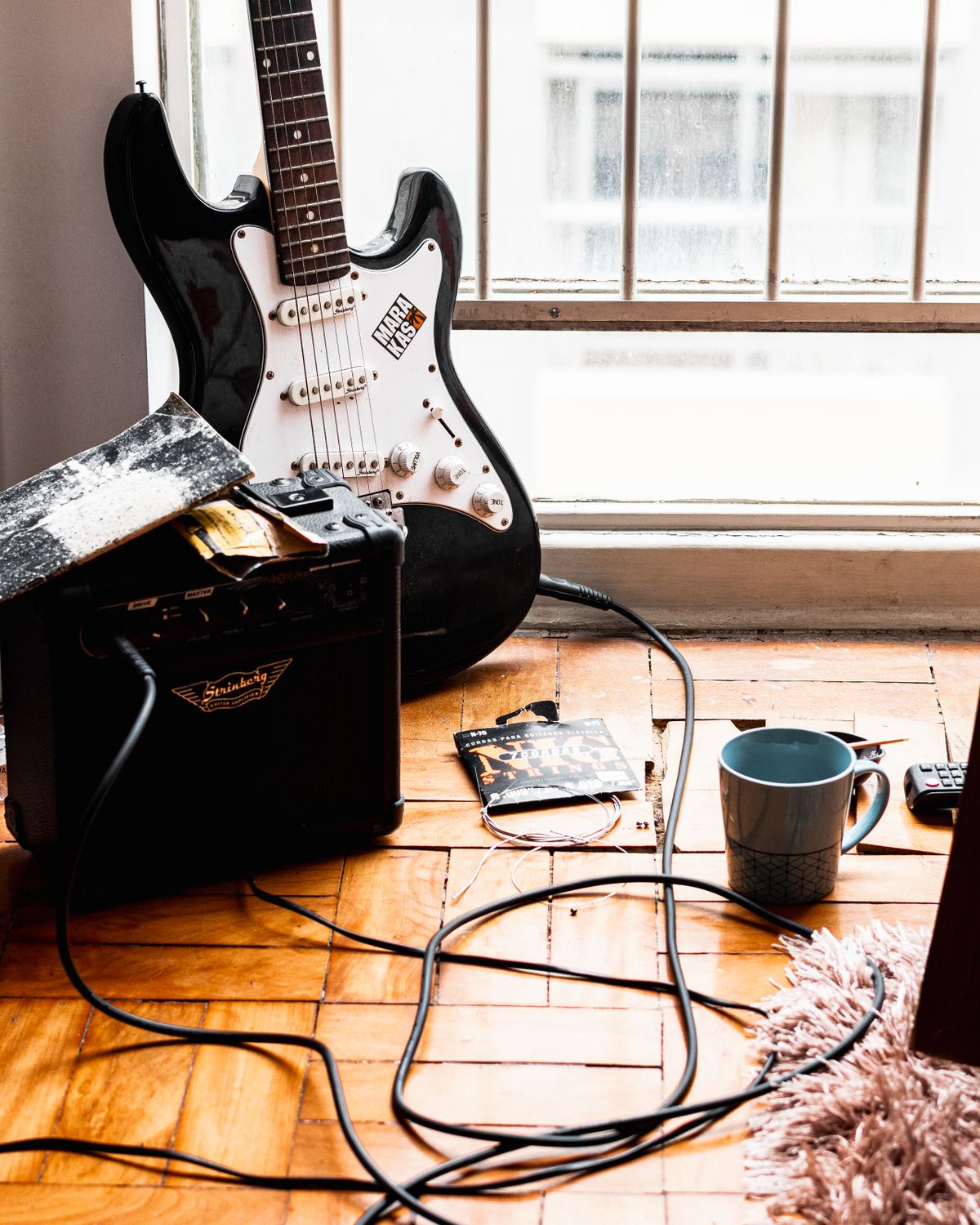
Quiet, low-wattage practice at home is a different job to busking or gigging, and most small travel amps are built with this scenario in mind first.
Busking and outdoor gigs without mains power
Busking is one of the few situations on this page where battery power stops being optional. You need enough charge to get through a set, ideally a mic input if you sing as well as play, and enough volume to hold your own against passing traffic or a busy street. Weight matters more here too, since you’re likely carrying the amp for a whole afternoon rather than setting it down once in a room.
A mic input is worth thinking about even if you’re not sure yet whether you’ll sing while busking. Adding vocals later to an amp that only accepts an instrument cable means buying a second amp or a separate PA, whereas a dual-channel amp with a mic input and its own phantom power covers both from the start. If you know for certain you’ll only ever play guitar, you can save weight and money by skipping this feature entirely rather than paying for a channel you’ll never plug into.

A compact amp with a mic input and real battery life is what actually gets a busker through an afternoon set, not raw wattage on its own.
Acoustic-electric tone
An acoustic-electric guitar plugged into an amp built for electric guitars tends to sound thin, harsh or boomy, because electric amps are voiced for the harmonic content of a magnetic pickup rather than the very different frequency range of a piezo pickup or an internal mic. If you’re playing an acoustic-electric travel guitar, the amp needs a genuinely different EQ curve and, ideally, some form of feedback control so you can turn up without the guitar howling back at you.
Cabinet size and speaker count make a bigger difference here than in most other categories, because a fuller, more natural acoustic tone genuinely needs more air moving than a small single-speaker combo can manage. A larger, bi-amped cabinet gives you a fuller low end at the cost of weight and portability, which is exactly the trade-off worth making if you’re playing a proper gig rather than busking. If portability matters more than the last word in tone, a smaller stereo amp with genuine acoustic voicing will still sound far more natural than an electric amp of the same size, even if it can’t match a larger cabinet’s low-end warmth.
Bluetooth and wireless convenience
Bluetooth on a guitar amp covers two genuinely different things, and it’s worth knowing which one you actually want. Streaming Bluetooth lets you play backing tracks or a playlist through the amp’s speaker while your guitar still plugs in with a normal cable. A dedicated wireless guitar transmitter is a different feature entirely, it removes the cable between your guitar and the amp itself, which matters if you want to move around a room or a small stage without being tethered. Don’t assume a “Bluetooth amp” does both.
Latency is the practical concern most people worry about and it’s less of an issue than you’d expect. Standard Bluetooth audio streaming has enough delay that it would be noticeable if it were carrying your live guitar signal, which is exactly why manufacturers building genuine wireless guitar transmitters use a dedicated low-latency connection rather than off-the-shelf Bluetooth for that job. For streaming a backing track to play along with, ordinary Bluetooth is fine, since a fraction of a second of lag in a pre-recorded track isn’t something you’ll notice while you’re the one playing over the top of it.
Tight budget
You don’t need to spend much to get an amp that’s genuinely usable rather than a toy. The honest trade-off at the cheap end of the market is tone quality and headroom, not whether the amp works at all, and a handful of properly built budget amps hold up fine for learning, practising, and casual playing. Spend more only once your actual use case, gigging, busking, or wanting dozens of onboard effects, genuinely demands it.
Where budget amps most often let you down is overdrive and gain, cheaper circuits tend to get fizzy or thin once you push past halfway on the gain control, in a way a slightly pricier amp usually handles better. If most of your playing is clean or lightly driven chords, this matters far less, and it’s worth weighing against the money saved before assuming you need to spend more.
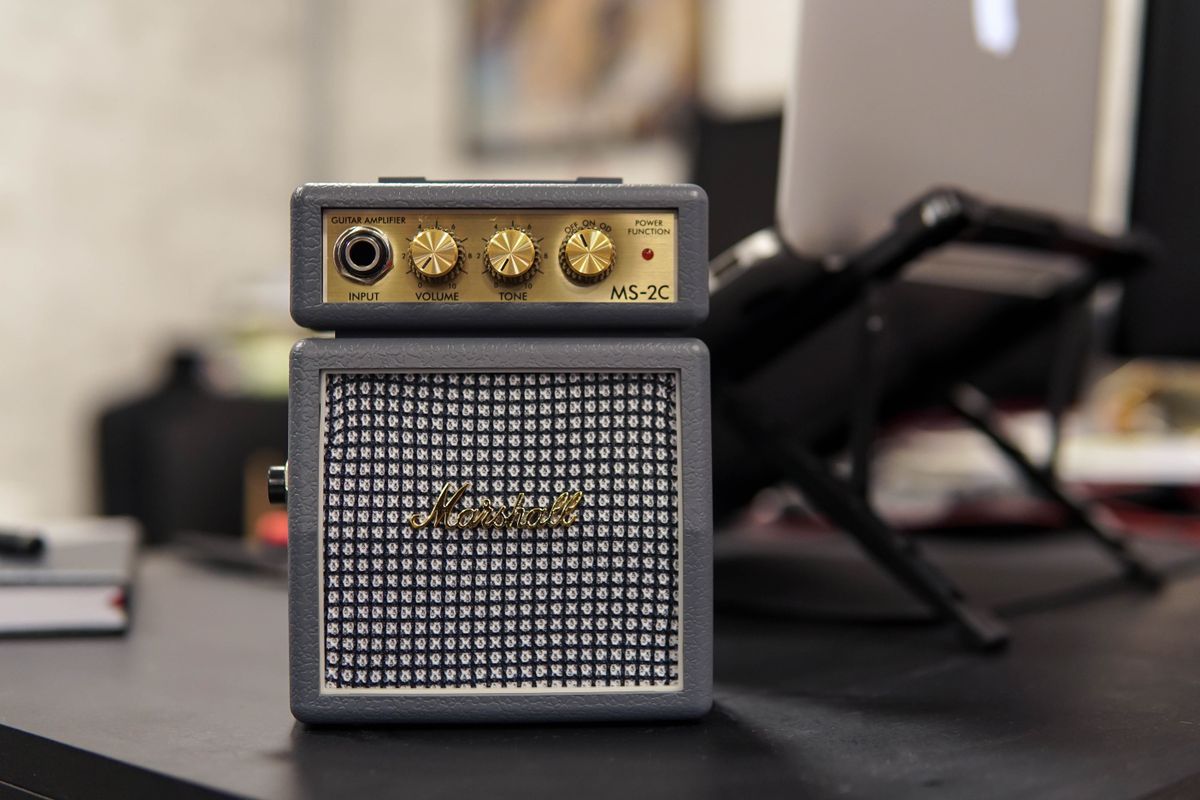
A genuinely usable mini amp doesn’t need to cost much or take up much desk space.
The five amp guides, and who they’re actually for
We’ve split our amp coverage into five guides because the honest answer to “what amp should I buy” depends heavily on where you’ll actually be playing. Here’s the shorthand on each, with an actual opinion on when it’s the right one to read.
Best portable guitar amps for travel is the general-purpose starting point, and the one to read first if you don’t already have a narrower need. The BOSS Katana-Mini is the pick if you want a single amp that runs on AA batteries, fits in a rucksack, and still sounds like a real Katana rather than a toy. If you know you’ll always have mains power and want more tones to play with, the guide’s runner-up, the Fender Mustang LT25, trades battery independence for twenty amp models and twenty-five effects.
Best Bluetooth-enabled travel guitar amps is the guide to read if wireless matters to you specifically, and it’s worth reading closely because “Bluetooth amp” covers two genuinely different features. The BOSS Katana-Air EX is the pick here, pairing a dedicated wireless guitar transmitter with dual speakers in a proper wood cabinet, which frees you from a cable to your guitar rather than just streaming a backing track. Some products marketed as “Bluetooth guitar amps” are actually just Bluetooth speakers with a guitar jack bolted on, not real guitar amps, which tells you something about how carefully “Bluetooth” gets used as a marketing word in this category.
Best battery-powered travel guitar amps for busking and outdoor gigs is aimed squarely at solo street performers. The Roland CUBE Street Mini is the pick, built specifically for busking with a proper microphone channel, Bluetooth for backing tracks, and up to seven hours of battery life, enough to get through a genuine afternoon set. If you need more clean headroom to cut through traffic and don’t mind the extra size, the guide’s alternative pick, the Roland AC-33, has more in reserve.
Best travel guitar amps under £100 is where to look if price is the deciding factor rather than an afterthought. Every amp in that guide costs well under £100, and the Blackstar Fly 3 is the pick, the only one with genuine battery independence and a full-range driver that doesn’t sound boxy at low volume. If silent, headphone-based practice with backing tracks matters more to you than playing out loud through a speaker, the guide’s alternative pick, the Positive Grid Spark GO, is built specifically for that rather than trying to do both jobs at once.
Best travel guitar amps for acoustic players exists because an acoustic-electric through an amp built for electric guitars is a genuinely common mistake. The Roland AC-33 is the pick for most acoustic players, a natural, chorus-enhanced tone with the option of battery or mains power so you’re not forced to choose between quality and portability. If you’re playing proper gigs rather than busking and tone matters more than carrying weight, the guide’s step-up pick, the Fishman Loudbox Artist, is a genuine improvement, though it’s mains-only and heavier than everything else in that guide. If Fishman’s tone is what you want but you need to leave the mains socket behind, our review of the battery-powered Loudbox Mini Charge covers that specific trade-off.
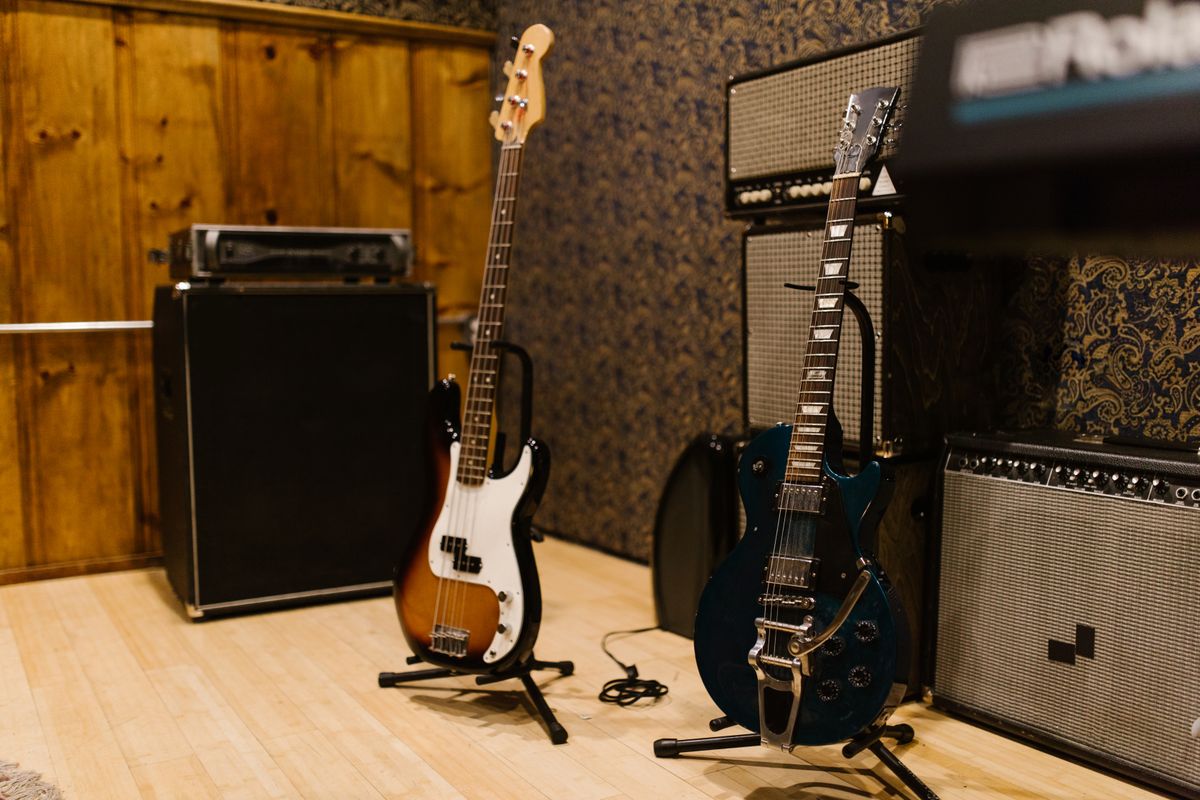
Different instruments and different playing situations call for a genuinely different amp, not just a smaller version of the same one.
Frequently asked questions
Can I use a normal electric guitar amp for my acoustic-electric guitar?
You can plug in, but it won’t sound right. Electric amps are voiced for the harmonic content of a magnetic pickup, not the very different frequency range of a piezo pickup or an internal mic, so an acoustic-electric through an electric amp tends to sound thin, harsh or boomy depending on the settings. Our guide to amps for acoustic players covers amps actually voiced for this.
Do I need mains power or a battery-powered amp?
It depends entirely on where you’ll actually be playing. If you’ll always have a socket nearby, a hotel room, a static practice space, mains-only amps generally give you more tone-shaping and features for the same money. If you need to play somewhere without a plug in sight, a park, a train platform, a street corner, battery power stops being a nice-to-have and becomes the whole point of the amp.
What’s the quietest amp for apartment practice?
Look for a low-wattage amp with a headphone output rather than one built for volume. A 3 to 5W amp is already quiet enough that volume isn’t really the issue, and a headphone jack lets you practise without anyone else in the building hearing anything at all. Our guide to amps under £100 covers several amps built with exactly this kind of quiet practice in mind.
Can Bluetooth amps be used wirelessly with any guitar?
Not automatically, and this is worth understanding before you buy. Most “Bluetooth amps” use Bluetooth only to stream audio, backing tracks or a playlist, while your guitar still plugs in with a normal cable. A genuinely wireless guitar connection needs a dedicated transmitter, the kind BOSS builds into its Katana-Air models, and that’s a separate feature from Bluetooth audio streaming, not something every Bluetooth-enabled amp includes.
What’s the cheapest amp actually worth buying?
The Blackstar Fly 3, covered in our guide to amps under £100, is the amp most working musicians already reach for when they need something cheap, battery-powered and genuinely usable rather than a novelty. Cheaper amps exist below it, but tone quality and usable volume drop off noticeably once you go lower.
Do travel amps sound as good as full-size amps?
Not quite, and it would be dishonest to claim otherwise. A 3 to 10W travel amp won’t match the headroom, low-end weight or clean volume of a full-size combo or stack, because a smaller speaker and cabinet physically can’t move the same amount of air. What the better travel amps do manage is sounding like a genuinely scaled-down version of a real amp rather than a thin, boxy imitation of one, which is the actual bar worth judging them against.
Buying for an electric guitarist? Our guide to gifts for guitar players covers the Blackstar Fly 3 and BOSS Katana Mini alongside other gift ideas.