

Busking and outdoor gigs need a different amp to home practice. You need enough battery life to get through a set, ideally a mic input so you can sing as well as play, and enough volume to cut through street noise.
For the wider picture beyond busking specifically, our complete guide to travel guitar amps covers every scenario in one place.
If you specifically need acoustic-voiced tone rather than raw outdoor volume, our acoustic players guide covers that angle in more depth.
Quick comparison
| Amp | Best for | Power | Mic input | Battery life |
|---|---|---|---|---|
| Roland CUBE Street Mini | Best overall for busking | Stereo, mic + instrument | Yes (XLR/TRS combo) | About 7 hours |
| BOSS AC-22LX | Pairing vocals with guitar | 10W stereo | Yes, with phantom power | About 8 hours (alkaline) |
| Laney MINI-ST-LION-2 | Cheapest stereo battery amp | 6W stereo | No | Not stated, 6xAA |
| Roland AC-33 | Natural acoustic stereo sound | 20W stereo on batteries, 30W on mains | Yes | About 8 hours (alkaline) or mains |
Our verdict: the Roland CUBE Street Mini is the one to buy for busking. It’s the only amp here built specifically for solo street performance, with a proper mic channel, Bluetooth for backing tracks, and enough battery life to get through a two-hour set. If you need more headroom and don’t mind the extra size, the Roland AC-33 has more clean volume in reserve.
Roland CUBE Street Mini
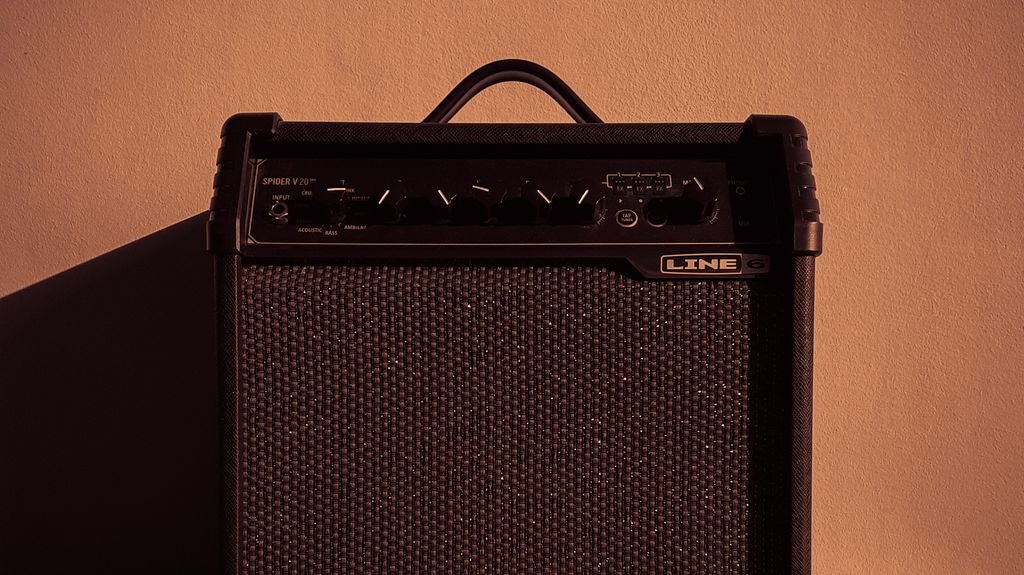
Roland’s original CUBE Street has been a busking staple for years, and the Mini shrinks that formula down without losing the two things that matter most: a proper microphone channel and real battery life. You get a guitar or instrument channel and a separate XLR/TRS mic channel, each with its own effects, reverb and delay on the instrument side, reverb and echo on the mic side, plus an onboard tuner.
Up to seven hours of battery life is genuinely enough to get through an afternoon of playing, and Bluetooth lets you busk along to backing tracks if that’s your thing. It’s the newest amp on this list, and it shows, this is the one we’d actually buy for a first busking rig.
Best For: solo buskers who sing as well as play and want one small box that does both.
Roland rates the CUBE Street Mini at 10 watts (5W per side) through a 5-inch woofer and two small tweeters. It weighs 2.2kg including the strap. It runs from its own rechargeable battery rather than AAs, so charge it before you head out: Roland quotes about seven hours of use and about three hours to charge. The mic channel takes an XLR or a 6.35mm TRS jack, and Bluetooth plays backing tracks through the amp.
The volume is enough for a market or a pedestrian street. On a busy road it will lose to the traffic.
BOSS AC-22LX

BOSS’s Air Feel technology is the real reason to consider the AC-22LX over cheaper options. It’s designed to recreate the sound of a mic’d-up acoustic cabinet rather than just amplifying the pickup signal, and it’s noticeably more three-dimensional than most battery amps at this size.
The dedicated mic channel with phantom power means you can run a condenser mic through it for vocals, which not every amp on this list allows. Eight AA batteries keep it running for a full set. It’s pricier than the Laney below, but if singing alongside your playing matters, it earns the extra cost.
BOSS rates the AC-22LX at 10 watts (5W per side) through two 5-inch twin-cone speakers. It takes eight AA batteries, with about eight hours quoted on alkaline cells and about ten on rechargeable Ni-MH. It weighs 4.0kg without the mains adaptor, so it is a heavier carry than the Roland Mini.
The mic input is XLR with 48V phantom power, and the mic channel has its own two-band EQ and reverb. The guitar channel has three-band EQ with reverb and chorus. That makes it the better choice for a singer who wants to shape the vocal and the guitar separately.
Best For: singer-guitarists who want a fuller, more acoustic sound and don’t mind the extra weight.
Laney MINI-ST-LION-2

The original MINI-ST-LION has been discontinued by Laney, so this is its direct successor, the MINI-ST-LION-2. Same clean and drive channels, same tape-style delay, same Laney Smart Interface cable for tone apps, in the same size and price bracket, still the budget pick here and a genuinely good one. Stereo sound from a battery amp this size and price isn’t something every brand manages, and the clean and drive channels cover most busking needs without an external pedal.
There’s no mic input, so it’s guitar-only, and the smartphone app integration is a nice extra rather than something to build a buying decision around. If you don’t need to sing and want to spend the least amount of money on a battery amp that still sounds like a real amp, this is it.
Laney rates it at 2 x 3 watts RMS through two 3-inch drivers, and it weighs 1.8kg, the lightest amp here. It takes six AA batteries, which aren’t supplied, or a 9V DC adapter. Laney doesn’t publish a battery life figure, so carry a spare set.
There is no mic input. You get a guitar jack, an aux input, a headphone socket and the Laney Smart Insert. If you sing, pick one of the other three.
Best For: guitar-only buskers on quiet pitches who want the lightest rig.
Roland AC-33

Step up to the AC-33 and you get real headroom. Thirty watts across twin speakers is genuinely loud for a battery amp, enough to hold your own against passing traffic or a busy high street, and the dual-channel setup takes a mic alongside your instrument.
The trade-off is size and weight, this isn’t the amp you casually sling over one shoulder for a whole day of walking between pitches. The version covered here is the Rosewood finish, from around £489, functionally identical to the standard black AC-33.
On batteries Roland rates the AC-33 at 10W per side, rising to 15W per side on the mains adaptor, through two 5-inch speakers. Roland quotes about eight hours on eight alkaline AAs, about nine hours on rechargeable AAs and about 16 hours with its optional rechargeable power pack, which is sold separately. At 4.7kg without batteries it is the heaviest amp on this list.
The inputs are a guitar jack and a combined XLR and TRS mic and line input, plus a stereo aux input. It has the most volume of the four, so it suits a duo or a singer-guitarist who plays louder pitches and is happy to carry the weight.
Best For: players who need the most volume and the longest battery option.
How to choose a busking amp
Battery life. Every figure above is a manufacturer estimate for continuous use. Playing loud, working in the cold or running a condenser mic on phantom power will cut it. The BOSS, Laney and Roland AC-33 take AA batteries, so you can swap in a fresh set mid-session. The CUBE Street Mini uses its own rechargeable battery, which means a charge before every session.
Mic input. If you sing while busking, you want a dedicated mic channel with its own volume and reverb, so the vocal doesn’t compete with the guitar. The CUBE Street Mini, BOSS AC-22LX and Roland AC-33 all have one. A dynamic mic works on any of them, and BOSS specifies 48V phantom power on the AC-22LX for condenser mics.
Volume. Watts only tell part of the story when busking. Speaker size matters as much, and an amp with two 5-inch speakers will usually carry further than one with two 3-inch drivers. The Laney suits quiet pitches. The CUBE Street Mini and BOSS suit markets and pedestrian streets. The AC-33 has the most headroom.
Weight. From lightest to heaviest: Laney 1.8kg, Roland CUBE Street Mini 2.2kg, BOSS AC-22LX 4.0kg, Roland AC-33 4.7kg. If you walk to your busking pitch, the extra two to three kilos of the BOSS and AC-33 add up by the end of the day.
Permission. Many councils ask buskers to hold a permit or licence, and some set limits on amplification. Check with your local council before you start busking with an amp.
Frequently asked questions
What’s the best amp for busking?
The Roland CUBE Street Mini. It’s built specifically for solo street performance, with a real mic channel and enough battery life for a full session outdoors.
Do I need a mic input if I only play guitar?
No. If you never sing while busking, the Laney MINI-ST-LION-2 is cheaper and still sounds properly stereo. Save the mic-equipped amps for when you actually need them.
How long will these amps run on batteries?
Roland quotes about seven hours for the CUBE Street Mini and about eight hours on alkaline AAs for the AC-33. BOSS quotes about eight hours on alkaline cells for the AC-22LX. Laney doesn’t publish a figure for the MINI-ST-LION-2. Cold weather and higher volumes will shorten that, so it’s worth carrying spares.
Are these amps loud enough to be heard over traffic?
The Roland AC-33 and BOSS AC-22LX have the most headroom here and will project further. The Roland CUBE Street Mini and Laney MINI-ST-LION-2 are better suited to quieter pitches, parks, markets, and pedestrian areas rather than busy roadsides.
Which busking amp is the lightest to carry?
The Laney MINI-ST-LION-2 at 1.8kg, followed by the Roland CUBE Street Mini at 2.2kg. The BOSS AC-22LX (4.0kg) and Roland AC-33 (4.7kg) are the heavier, louder options.