

Donner’s HUSH range already covers a detachable-frame acoustic-electric, a plain headless electric, and a headless electric with its own detachable speaker. The HUSH-I PRO is the fourth approach: keep the body fixed and put the effort into what happens after the signal leaves the pickup. It’s built around Donner’s most advanced onboard processing yet, 18 effects, 20 cabinet-style impulse response slots and a 5-band EQ, on a guitar that otherwise looks and handles like a normal headless acoustic-electric.
Best for: someone who wants one guitar that already has a genuinely useful effects rig built in, rather than a plain pickup signal you’d need a separate pedal or interface to shape. If you want the smallest possible packed size and are happy with simpler electronics, the HUSH-I EVO2‘s take-the-body-off design suits that better.
The HUSH-I PRO sits at the top of Donner’s HUSH range, the model built around onboard effects rather than pure portability.
A travel guitar built around its own effects rig
Most acoustic-electric travel guitars give you a piezo pickup and a preamp with maybe a tone dial, and leave shaping the sound to whatever you plug into afterwards. The HUSH-I PRO does more of that work itself. Donner’s spec sheet lists 18 onboard effects split across modulation, delay and reverb, plus overdrive, compressor and booster, on top of 8 guitar body tone simulations and 20 IR (impulse response) slots that model the resonance of different acoustic bodies through the same physical instrument.
Underneath that sits an upgraded H1 preamp, Donner’s own algorithm platform, paired with a new YF-01S piezo pickup. Two extra gain stages, Air Boost and Tone Boost, sit alongside a 5-band EQ for shaping the raw tone before any effect gets added. It’s a genuinely different pitch to the rest of the HUSH range: the base HUSH-I only offers a simple high/low tone switch, and the HUSH-X and HUSH X Live don’t list onboard sound-shaping at all beyond their amp modelling.
Headless and quick-disconnect, but the body stays put
Like every other guitar in the HUSH range, the neck is headless, tuning happens at the bridge end rather than a conventional headstock, and the whole thing weighs a genuinely light 2.2kg. Donner’s own listing describes an “upgraded quick-disconnect zinc alloy bracket” for assembly, which reads as a sturdier, faster-fitting hardware update over the base HUSH-I rather than a body you remove entirely the way the HUSH-I EVO2’s thumb-screw frame works. We haven’t had one apart ourselves to confirm exactly how far it comes apart, so treat that distinction as based on the listing rather than hands-on testing.
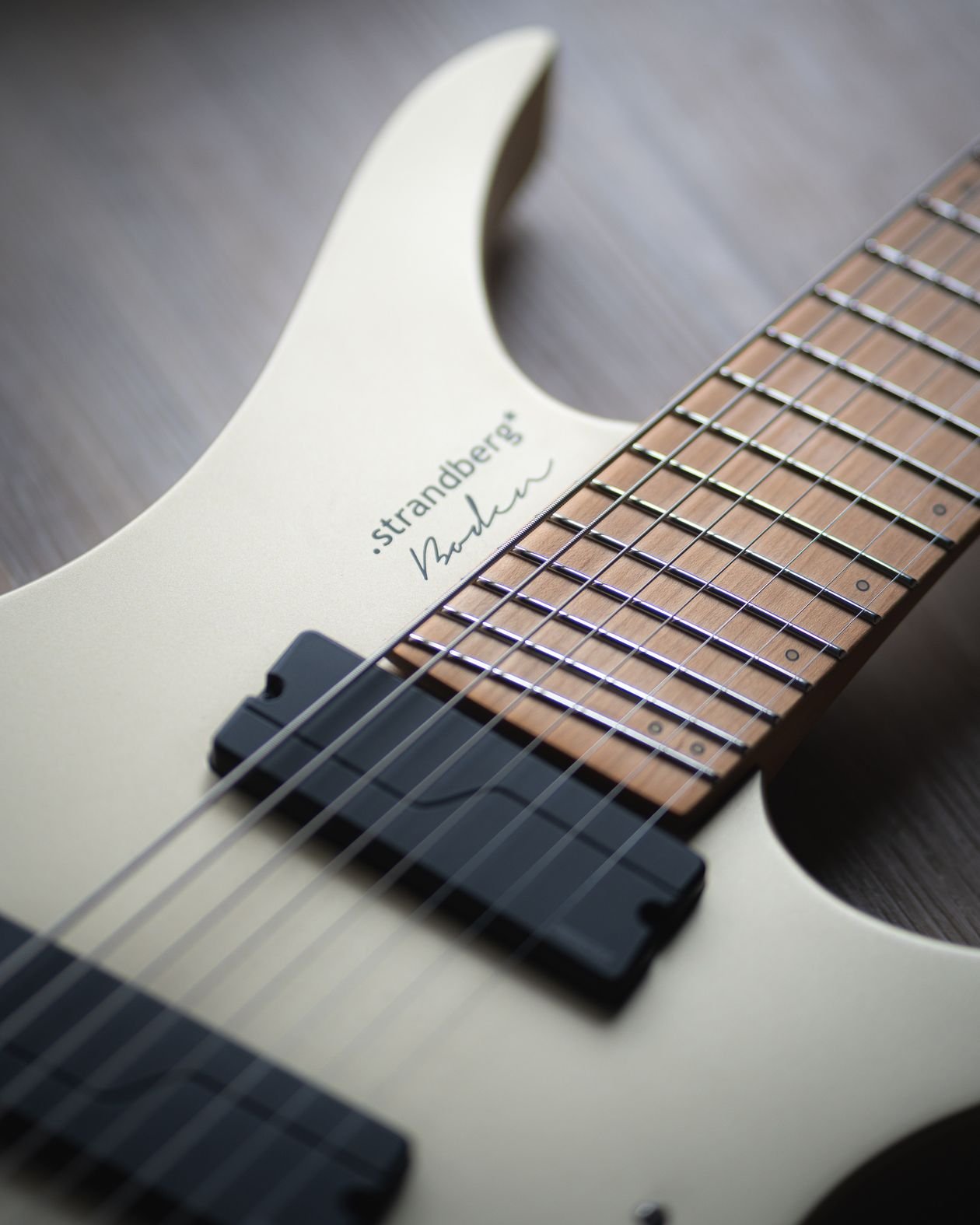
A headless bridge design, tuning happens at the body end rather than a conventional headstock, the same basic idea the HUSH-I PRO uses.
Power comes from a built-in lithium-ion battery charged over USB-C, rather than the single 9V dry battery every cheaper HUSH model uses. Donner quotes 8 hours of battery life. That number is worth treating as a ceiling rather than a promise, see the downside section below. The body is mahogany top and back with a maple fretboard, a 24.75in scale length, and a piezo bridge system feeding that YF-01S pickup.
How it compares to the rest of the HUSH range
All four HUSH guitars solve “how do I pack a guitar” differently. Here’s how the PRO’s onboard-effects approach sits against its siblings, all of which are reviewed individually on this site.
| Model | Approach | Onboard processing | Power | Typical price |
|---|---|---|---|---|
| HUSH-I PRO | Fixed body, headless | 18 effects, 20 IR slots, 5-band EQ | Li-ion, USB-C | £399.99 |
| HUSH-I EVO2 | Detachable frame, headless | Preamp only, no onboard effects | 9V battery | £259.99 |
| HUSH-X | Fixed body, headless electric | Amp modelling via headphone amp | 9V battery | £259.99 |
| HUSH X Live | Fixed body, detachable speaker | Amp modelling plus onboard speaker | Rechargeable | £381.59 |
The EVO2 remains the one to pick if packed size is the priority. If you want an electric voice rather than an acoustic-electric one, the HUSH-X and HUSH X Live cover that. The PRO is the one to reach for if you want the widest range of usable sounds out of a single travel instrument without carrying a separate pedal.
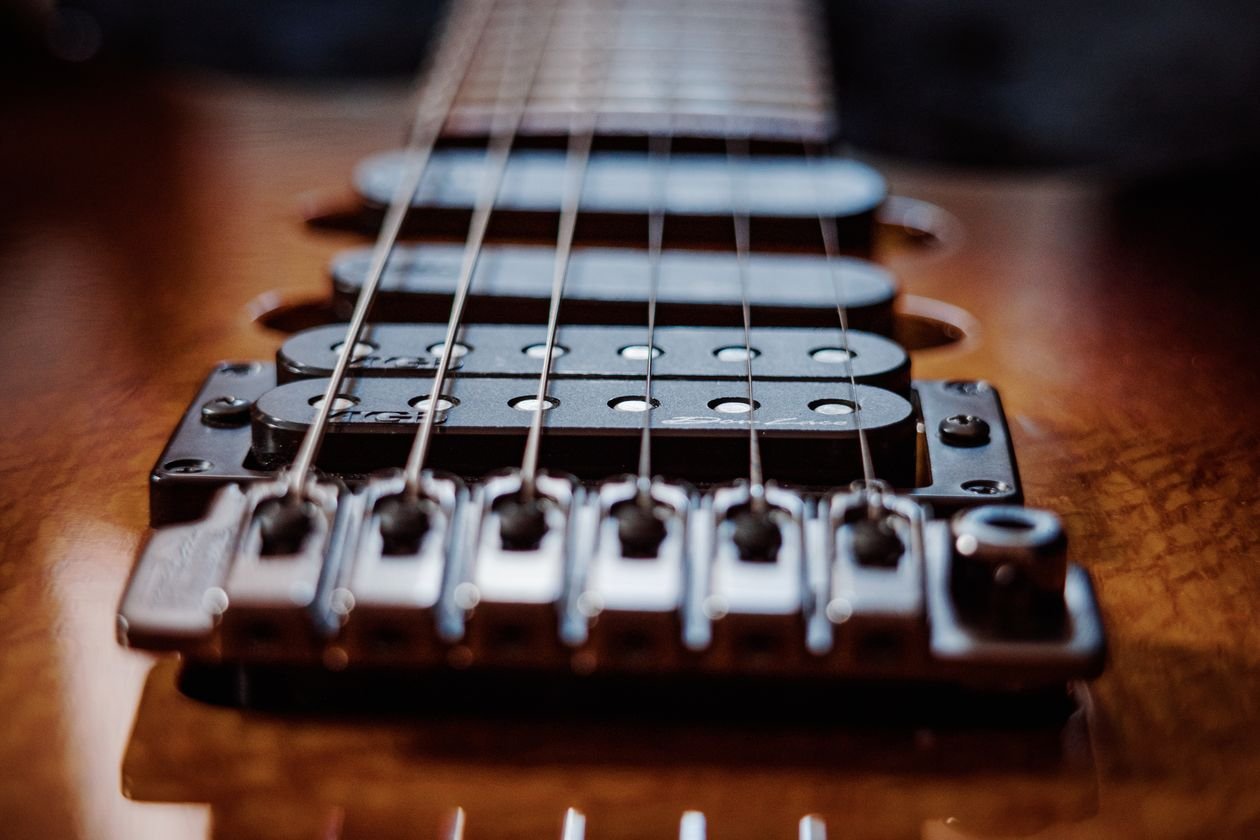
Individually adjustable bridge saddles on a guitar’s pickup assembly, the level of hardware detail Donner has put into the PRO’s upgraded pickup and preamp.
The downside
Donner markets 8 hours of battery life. A verified UK buyer reported it needing a recharge closer to every 4 hours in real use, roughly half the marketed figure. That’s the kind of gap between a spec sheet and daily use that’s worth knowing before you rely on it getting through a full day of practice or a long flight without a charger to hand. USB-C charging at least means you’re not hunting for a specific proprietary cable.
One other thing worth flagging: at least one buyer found the white colour option arrived looking closer to a pale cream than a true white, apparently a batch or photography inconsistency rather than a fault. If colour accuracy matters to you, the natural finish avoids the issue entirely.
Where to buy it
The HUSH-I PRO is sold on Amazon UK, dispatched by Amazon, at £399.99 for the white and natural finishes. Check price on Amazon
Still weighing this up against the rest of the market? Our complete UK buyer’s guide to travel guitars covers how every named model on this site compares.
How we assessed this
We haven’t played this specific guitar hands-on. This review is built from the live Amazon UK listing, checked 31 August 2026 (price, stock, seller and star rating), Donner’s own product bullet points and specification comparison table published on that listing, and verified-purchase owner reviews on the same listing describing real-world battery life and colour accuracy. Where a claim is a listing spec or manufacturer description rather than something we’ve independently tested, we’ve said so rather than presenting it as a hands-on judgement.
FAQ
What’s the real difference between the HUSH-I PRO and the HUSH-I EVO2?
The EVO2 is built around packing size, its whole body frame comes off with hand-tightened thumb screws, but its electronics are a simple preamp with no onboard effects. The HUSH-I PRO keeps a fixed body and puts the effort into processing instead, 18 effects, 20 impulse response slots and a 5-band EQ, powered by a rechargeable battery rather than a 9V. They suit different priorities rather than one simply being an upgrade of the other.
Does the HUSH-I PRO come with a case?
Yes. Donner’s own listing includes a portable gig bag alongside headphones, a USB-C charging cable, a 1/8in cable, a strap and a truss rod wrench.
How long does the battery actually last?
Donner markets 8 hours. At least one verified UK buyer reported needing to recharge closer to every 4 hours in normal use. Treat the marketed figure as a best case rather than a guarantee, and charge it before a long practice session or a flight.
Is it a good choice for silent practice?
Yes, that’s the core use case Donner designed it for. The onboard effects and headphone output mean you can practise with a full, processed sound through headphones without anyone else hearing a note, no separate amp or interface needed.
What’s the scale length and body wood?
24.75 inches, with a mahogany top and back and a maple fretboard, the same scale length as a Gibson-style short-scale electric rather than a full acoustic scale.
Will it fit as hand luggage on a flight?
Its headless design keeps it shorter than a standard acoustic, but the body itself doesn’t come apart the way the HUSH-I EVO2’s does, so it won’t pack down as small. Check our guide to flying with a guitar in the UK before you book anything you’re relying on it fitting into.
The bottom line
The HUSH-I PRO is the Donner HUSH guitar to pick if you want the most usable sound out of a single travel instrument, not the smallest packed size. The onboard effects and IR modelling genuinely replace what would otherwise be a separate pedal or interface, and the rechargeable battery is a real upgrade over the 9V-powered models below it in the range. The trade-off is a fixed body that won’t pack down as small as the EVO2’s removable frame, and a battery life that runs shorter in practice than Donner’s own number suggests. If wide onboard sound-shaping matters more to you than absolute packed size, it’s the right pick in the HUSH range.