

Every acoustic amp on this site so far either runs off mains power or trades battery life for a much smaller footprint. The Fishman Loudbox Mini Charge splits the difference: it’s the same Loudbox Mini that’s built its reputation on natural acoustic tone, with a rechargeable battery bolted on so you’re not tied to a socket. It’s not the cheapest way to get battery-powered acoustic amplification on this site, and it’s not the lightest, but it’s the one built by a company that’s spent 35-plus years doing nothing but acoustic pickups and amplification.
Best for: someone who wants proper Fishman acoustic voicing and genuine gig-level volume, and needs to set up somewhere without a plug socket nearby, a park, a market stall, a hallway with no power point. If you’re gigging a fixed venue and don’t need battery power, the Fishman Loudbox Performer BT reviewed elsewhere on this site is bigger, louder, and cheaper for the same brand of tone. If you want battery power and don’t need Fishman specifically, the Roland AC-33 costs less.
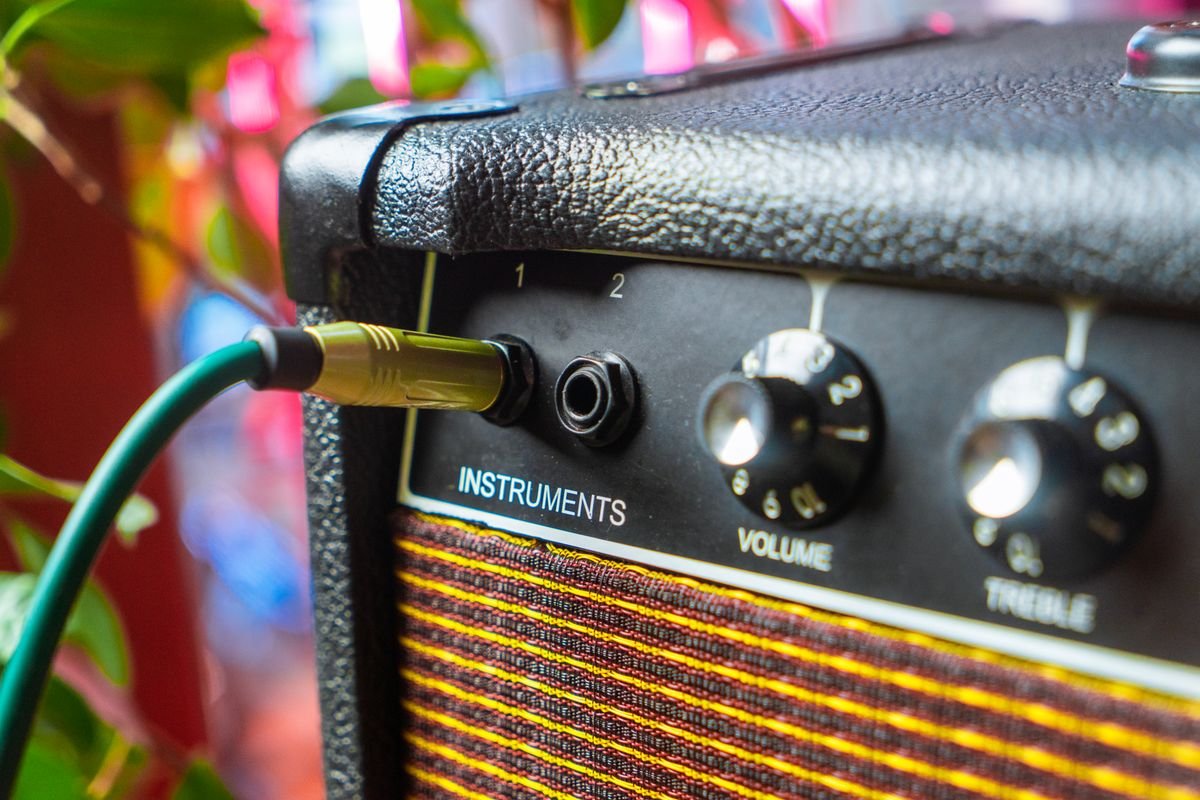
The instrument channel is where a guitar’s pickup or an acoustic-electric’s built-in system plugs in, shown here on a comparable combo amp’s front panel.
What the “Charge” actually adds
Fishman’s regular Loudbox Mini has been a fixture in acoustic amp shortlists for years. The Charge variant is the same 60-watt amp, the same two-channel layout, the same Bluetooth 4.0 connectivity, with one addition: an internal rechargeable battery good for up to 12 hours at average volume, up to 18 hours at low volume, and around 4 hours flat out. A wall charger is included, and a full charge takes about 10 hours, so an overnight charge covers a full day out. That’s the entire pitch. Everything else about the amp, the tone, the controls, the build, is identical to the standard mains-only Loudbox Mini.
Worth knowing before you buy: the standard mains-only Loudbox Mini Bluetooth is currently only available on Amazon UK as a single open-box unit through Amazon Resale, not new stock. If you specifically want the non-battery version, check a UK music retailer directly rather than relying on that listing being there when you look.
Specs that matter
- Power: 60 watts, single channel amp with master volume
- Drivers: 6.5in paper cone woofer, 1in soft dome tweeter
- Output: 108dB SPL at 1 metre
- Frequency response: 80Hz to 20kHz
- Channels: Instrument (phase, gain, low, mid, high, reverb, chorus) and Mic (gain, low, high, reverb)
- Connectivity: Bluetooth 4.0 for backing tracks, 1/8in aux input, balanced XLR Mix D.I. output
- Battery: rechargeable, up to 18 hours (low volume), 12 hours (average), 4 hours (full volume); roughly 10 hours to fully charge; wall charger included
- Weight: 9.6kg
- Dimensions: 33cm deep x 20cm wide x 25cm high
- Price: £519.00 direct from guitarguitar, in stock, checked live on 18 September 2026
- Owner rating: 3.2 out of 5 from 11 ratings on Amazon’s UK listing, which no longer sells this model
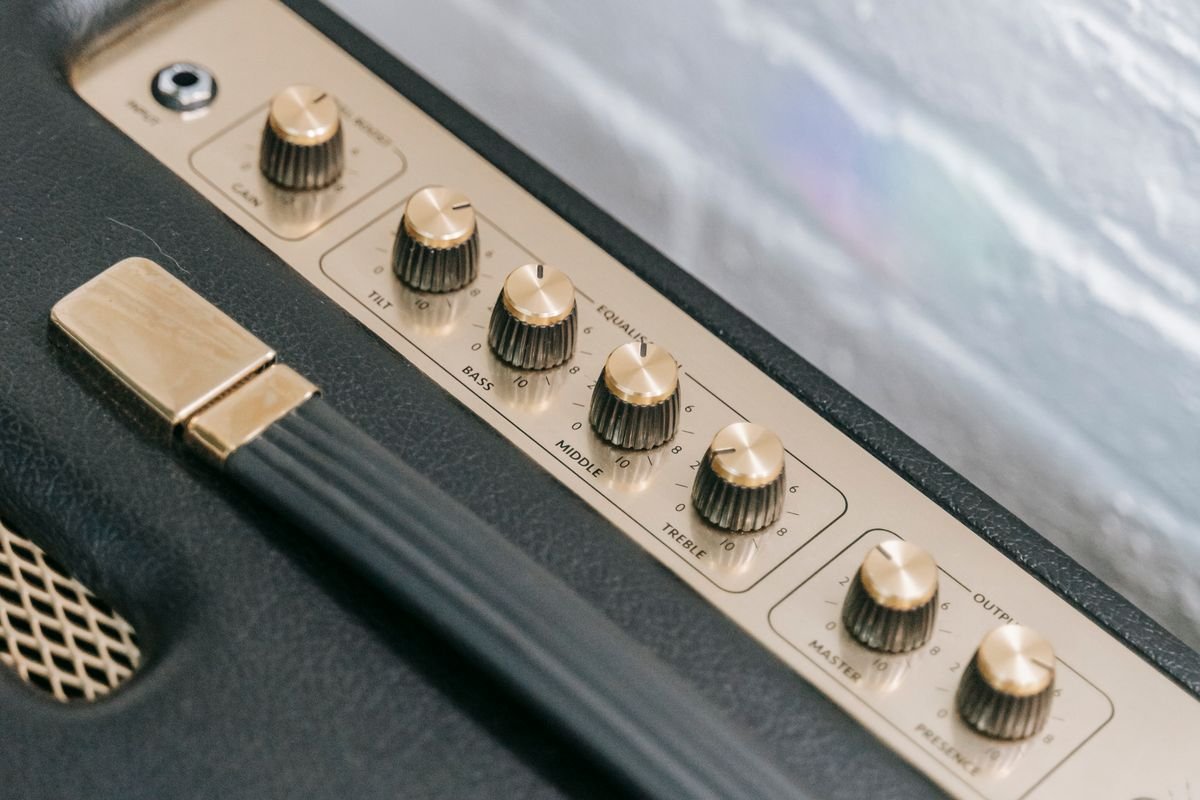
A carry handle and a full set of EQ controls on the front panel, the kind of layout the Loudbox Mini Charge uses.
Sound and what owners actually say
Fishman’s reputation is built on acoustic voicing specifically, not general-purpose guitar amplification, and owner reviews of the Loudbox Mini Charge are consistent on that point. One UK buyer called the sound “great” and said “my guitars sound fabulous,” and another described it as “the best I’ve heard after owning several amps,” specifically praising how naturally it reproduces an acoustic-electric’s tone rather than colouring it. The Bluetooth connection comes up repeatedly too, mostly for pairing a phone to play backing tracks during a set rather than for anything more technical.
The battery is the feature every positive review circles back to. More than one owner says it’s “worth the extra spend” over the plain mains-only Mini specifically because it removes the need to find a socket, whether that’s busking somewhere with no power, playing a garden party, or setting up in a hallway between rooms. That’s the entire case for paying more than the standard Loudbox Mini or a mains-only rival: you’re buying freedom from a plug, not a different sound.
Where to buy it
Amazon UK no longer sells the Loudbox Mini Charge, its listing shows currently unavailable with no restock date. It’s in stock direct from guitarguitar, £519.00, checked live on 18 September 2026. Check price at guitarguitar.
Fishman Loudbox Mini Charge vs Fishman Loudbox Performer BT vs Roland AC-33
Three ways to get a genuinely good acoustic amp, at three different trade-offs between tone, power and portability.
| Fishman Loudbox Mini Charge | Fishman Loudbox Performer BT | Roland AC-33 | |
|---|---|---|---|
| Price (from) | £519 | Sold via third-party marketplace, price varies | £489 |
| Power | 60W | 180W, bi-amped | 30W stereo |
| Runs on | Rechargeable battery or mains | Mains only | 8xAA batteries or mains |
| Weight | 9.6kg | Heaviest of the three | Lighter than both Fishmans |
| Best for | Fishman tone with genuine battery independence | Proper gigs at a fixed venue, tone over portability | An all-rounder that doesn’t force the choice |
The Performer BT is the amp to buy if you’re playing venues with power on tap and want Fishman’s tone at real gig volume, it’s a genuine step up in headroom for less outlay than the Charge. The AC-33 is the amp most acoustic players should buy first, since it doesn’t force a choice between battery power and tone quality the way a cheaper option would. The Loudbox Mini Charge sits between them: Fishman’s specific voicing, at a lower power ceiling than the Performer BT, with the battery independence the AC-33 also offers but from a brand acoustic players already trust.
The genuine downside
The most serious complaint in UK owner reviews isn’t about sound or battery life, it’s about what happens if the amp breaks. One verified UK buyer, reviewing in August 2026, said plainly: “you can’t get it repaired in the UK… Fishman won’t release the schematics to anyone unauthorised repair outlet,” and that they were facing shipping the unit back to the US to get it fixed. A separate review flagged the internal battery degrading noticeably after around a year of use. Neither issue affects day-one sound or usability, but they’re worth knowing before you buy something with a battery and no accessible UK repair path if it develops a fault outside the return window.
How we assessed this
We haven’t played this specific amp hands-on. This review is built from Fishman’s own published specification sheet for the Loudbox Mini Charge, guitarguitar’s current UK listing for price and stock, and verified UK owner reviews left on the amp’s now-unavailable Amazon listing, including the repair and battery-longevity issues described above. Where a claim comes from a specification sheet or an owner review rather than something we’ve independently tested, we’ve said so rather than presenting it as a hands-on judgement.
FAQ
What’s the difference between the Loudbox Mini Charge and the standard Loudbox Mini?
Only the battery. The Charge adds a rechargeable battery good for up to 18 hours at low volume, 12 hours at average volume, or 4 hours flat out, with roughly a 10-hour charge time. The amplifier itself, the tone, the two-channel layout and the Bluetooth connectivity, is otherwise identical.
How does it compare to the Fishman Loudbox Performer BT already reviewed on this site?
The Performer BT is mains-only, 180 watts, and built for gigging a fixed venue. The Loudbox Mini Charge is 60 watts and runs on battery, built for situations where there’s no power socket rather than for maximum volume.
How long does the battery actually last?
Fishman’s own figures are up to 18 hours at low volume, 12 hours at average volume, and around 4 hours at full volume. Owner reviews don’t dispute these figures directly, but do note the battery’s long-term capacity fades after roughly a year of regular use.
Can I get it repaired in the UK if something goes wrong?
Not straightforwardly. At least one verified UK buyer reported that Fishman won’t release repair schematics to unauthorised UK repair shops, meaning a fault outside the warranty period may mean shipping the unit back to the US. Worth factoring in given this amp has a battery, which is one of the more common points of failure on any rechargeable device.
Does it work with an acoustic-electric guitar’s built-in pickup?
Yes. The Instrument channel has its own gain, EQ and reverb/chorus controls suited to a piezo or under-saddle pickup system, separate from the Mic channel, which is set up for a vocal or instrument microphone instead.
Is it worth the extra cost over a mains-only amp if I mostly play at home?
Probably not. The entire value of the Charge over a cheaper mains-only amp is battery independence. If you’re always going to be near a socket, that’s money spent on a feature you won’t use, and the Roland AC-33 or the mains-only Loudbox Mini would do the same job for less.
The bottom line
Buy the Fishman Loudbox Mini Charge if you specifically need Fishman’s acoustic voicing away from a power socket, busking, a garden, anywhere without a plug nearby. Don’t buy it if you’re always going to be near mains power, where a cheaper amp does the same job, or if you’re playing proper gigs and want more headroom, where the Loudbox Performer BT is the better spend.
Weighing this up against the rest of the market? Our complete UK buying guide to travel guitar amps covers how every amp on this site compares.
It also fits alongside our guide to the best travel guitar amps for acoustic players, where the Loudbox Performer BT and Roland AC-33 are covered in full.