

The Traveler Ultra-Light Acoustic-Electric is what happens when a guitar company decides the body is the problem. Most travel acoustics shrink the whole instrument: a smaller box, a shorter scale, a slightly cramped neck. This one keeps the full 24.75in scale of a standard acoustic and takes almost everything else away instead. What’s left is 28in long, weighs under 3lb, and produces so little sound unplugged that Traveler’s own product page describes it as built for private practice rather than genuine acoustic playing.
Best for: someone who wants a proper full-scale neck for practice on the road and doesn’t mind relying on a headphone amp or an interface for volume, because unplugged, there isn’t much here. If you want something you can strum on a park bench without plugging in anywhere, this isn’t that guitar, and neither Traveler nor we would pretend otherwise.
Traveler Guitar has been building this exact shape since 2007, and the Ultra-Light Acoustic is one of the company’s longest-running models, not a recent gimmick. Across nearly 200 ratings on Traveler’s own site it holds an average close to 4.6 out of 5, with owners consistently praising the sound through the pickup and the action out of the box. That track record matters on a guitar this unusual, since there’s no established “normal” to compare it against the way you can with a smaller-bodied acoustic.
What makes it different from a normal travel acoustic
Most of what makes a guitar heavy and long is the resonating body: the depth, the bracing, the air the wood needs to move to make sound. Traveler’s answer with the Ultra-Light Acoustic-Electric is to cut nearly all of that away and lean on a piezo pickup for volume instead of a soundboard. The neck runs straight through the guitar in one piece of American hard maple, and the tuning machines sit inside the body itself rather than on a headstock, what Traveler calls its In-Body Tuning System. It still takes standard strings and standard tuners, so restringing doesn’t need anything special, but there’s no headstock adding length you don’t need.
The result is a guitar that’s 28in long, about the same as a lot of 3/4-size travel acoustics, but with a genuine full-size 24.75in scale rather than a shrunk one. That matters more than it sounds like it should: chord shapes, string spacing and fret reach all feel like your main guitar, not a smaller stand-in for it.

Ultra-Light Acoustic-Electric vs Traveler Speedster Deluxe
Traveler sells several guitars this shape, so it’s worth being clear about which one this is. The Speedster Deluxe is a solid-body electric with a genuine headphone amp built into the body, four tones through a standard headphone jack, no separate amp needed. The Ultra-Light Acoustic-Electric is a different instrument entirely: an acoustic-electric with a piezo pickup instead of a magnetic one, no amp on board at all, and the headless in-body tuning system in place of the Speedster’s standard headstock.
| Spec | Ultra-Light Acoustic-Electric | Speedster Deluxe |
|---|---|---|
| Weight | 1.3kg (2lb 14oz) | 2.15kg (4lb 12oz) |
| Scale length | 24.75in, full scale | 24.75in, full scale |
| Pickup | Passive piezo | Humbucker (magnetic) |
| Headphone amp | None | Yes, 4 channels: clean, boost, overdrive, distortion |
| Tuning system | Headless, in-body | Standard headstock tuners |
| Output | 1/4in jack only | 1/4in jack plus 1/8in headphone and aux |
| UK price | From around £249 | From around £572 |
If you already own an amp, an audio interface, or a headphone amp you’re happy carrying separately, the Ultra-Light Acoustic-Electric gets you an acoustic-electric tone for around £320 less than the Speedster Deluxe’s price. If you’d rather have everything built into one guitar with nothing else to pack, the Speedster earns its higher price through the amp specifically, not through being a better instrument in every other respect.
The two also suit different playing habits. The Speedster Deluxe is built around solo, silent practice, plug in headphones and you’re set. The Ultra-Light Acoustic-Electric assumes you’ll sometimes be playing into a room, a recording setup, or a small PA, not just headphones, since the piezo pickup is built to sound like an amplified acoustic rather than an electric guitar tone. If your travel playing is mostly solo headphone practice, the Speedster’s built-in amp is the more useful feature day to day. If you occasionally play for other people, even informally, the acoustic-electric tone here is the better starting point.
Build and feel
The body reviewed here is American hard maple, the Maple finish Traveler also sells in Antique Brown, Gloss Black and Mahogany, just 1.5in thick and 5.25in wide once you take the lap rest off. That lap rest clips on for a proper seated playing position and unclips into the gig bag’s front pocket in seconds when you want the guitar as small as possible. Neck width at the nut is 1.75in, close to a standard acoustic, and the 22 medium frets carry all the way up without the fingerboard narrowing to a point the way some travel necks do.
Traveler’s own listed weight is 2lb 14oz for the guitar alone, 3lb 12oz packed in its included gig bag. That’s genuinely light, noticeably lighter than the Speedster Deluxe, which carries extra weight from its amp electronics and two AAA batteries.
Hardware is straightforward: chrome closed-gear tuners, a black walnut fretboard on the Maple, Antique Brown and Vintage Red finishes (Gloss Black gets a maple board instead), and a satin finish on every colour except the gloss option. None of it feels like corners have been cut to hit a price point, which is worth flagging given how compact the whole instrument is. D’Addario EJ15 strings come fitted as standard, a sensible light-to-medium set rather than anything unusual you’d struggle to replace on the road.

Plugging in: the piezo pickup and no headphone amp
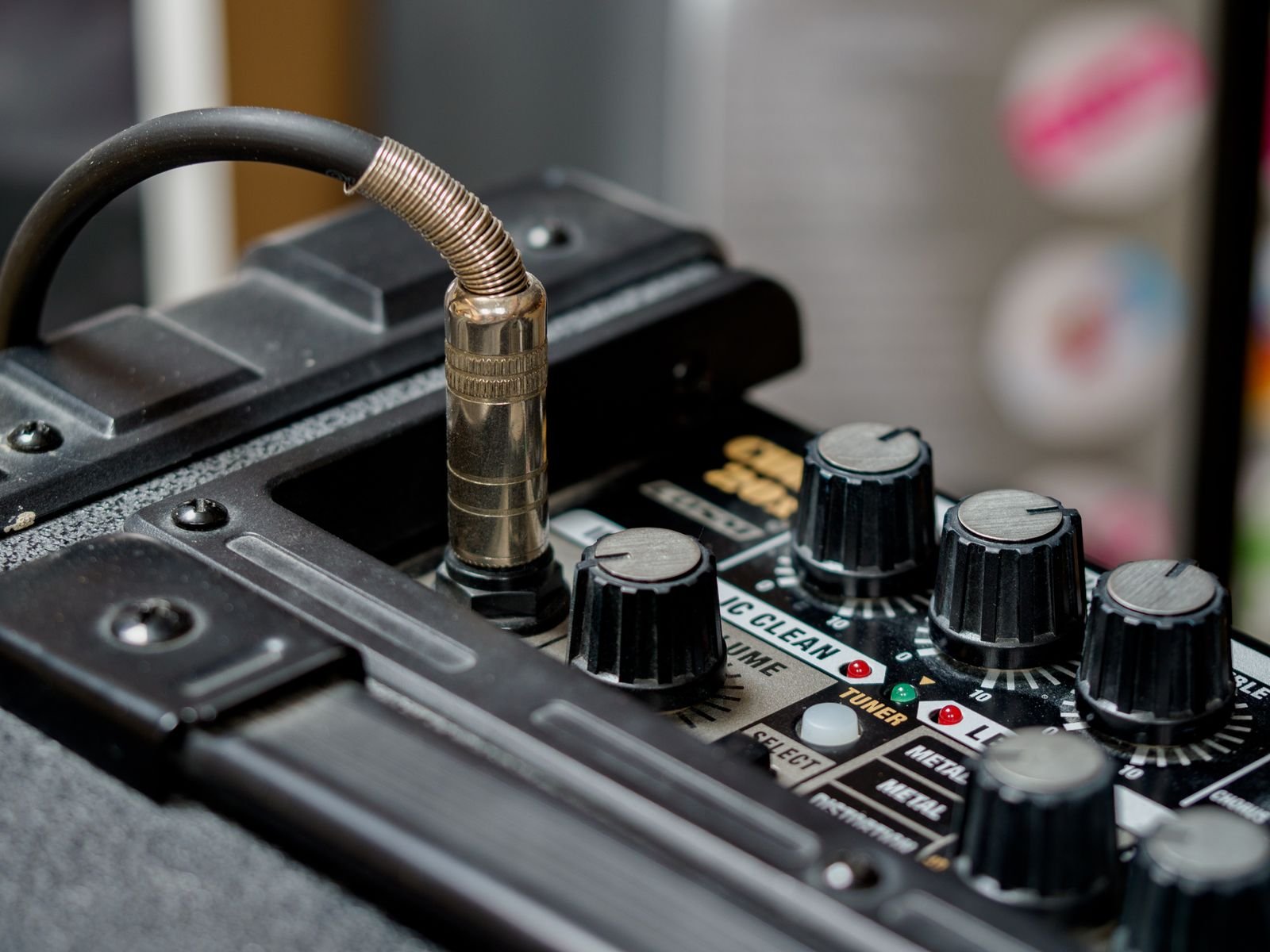
There’s no amp built into this guitar, that’s the whole trade-off against the Speedster Deluxe. What you get instead is a passive Traveler piezo pickup wired to a standard 1/4in output jack, the same connector you’d use on any electric guitar. Check the current price on Amazon and you’ll see it listed with no batteries required, since the electronics are entirely passive. Plug it into a headphone amp, an audio interface, a PA, or a proper acoustic amp and the piezo does a reasonable job of a natural acoustic tone, several owners specifically single out the pickup as better than they expected for the price. Plug into nothing and you’re relying on the almost-nonexistent body to make any sound at all, which is where this guitar earns its private-practice framing rather than genuine unplugged playing.
Where it falls down
Traveler is upfront that this isn’t a loud unplugged guitar, but some owners feel the marketing undersells just how quiet it really is. One detailed owner review on Traveler’s own site put it bluntly: it isn’t really an acoustic in the way that word usually implies, there simply isn’t enough body to move air, and if you’re expecting anything close to normal acoustic volume without plugging in, you’ll be disappointed.
Two more specific, credible complaints turn up repeatedly. The output jack doubles as the strap button, and it’s noticeably larger than a standard strap peg, one owner had to modify a snap-lock strap end just to get it to fit. And because the neck is heavier than what’s left of the body, the guitar tends to nose-dive on a regular strap unless you’re using something with real grip. Neither is a dealbreaker, but both are worth knowing before the guitar turns up rather than after.
Traveler’s own review summary, drawn from nearly 200 ratings, also flags mixed opinions on build quality and the stock strings specifically, alongside genuinely strong marks for sound and playability. Worth keeping in mind rather than assuming five stars straight across the board.
Frequently asked questions
Is this louder than a normal 3/4-size travel acoustic like the Yamaha APXT2?
No, quieter, and by design. The Yamaha APXT2 keeps a proper resonating body, so it’s genuinely playable unplugged even though it sounds smaller than a full-size guitar. The Ultra-Light Acoustic-Electric barely has a body at all, it’s built around plugging in, not around sitting on a sofa without an amp.
What’s the difference between this and the Traveler Ultra-Light Electric?
The Ultra-Light Electric is a solid-body electric with a magnetic pickup and no acoustic pretensions at all, closer in spirit to the Speedster Deluxe minus the headphone amp. This Acoustic-Electric version uses a piezo pickup and is built to sound like an amplified acoustic, not an electric guitar.
How does this compare to the Traveler Pro-Series Standard?
The Pro-Series Standard uses the same In-Body Tuning System and scale length, but adds a second pickup, a magnetic single-coil alongside the piezo, plus a passive Stethophone for silent practice. It weighs slightly more as a result of the extra electronics. UK prices for the two move independently, so compare both before assuming this one is the cheaper.
Does it come with a case?
Yes, a gig bag is included, with its own pocket for the lap rest once you’ve removed it.
Will it fit in an airline overhead bin?
At 28in overall length, it’s designed to, the same footprint as the Speedster Deluxe. Airline cabin baggage rules vary by carrier, so check our guide to flying with a guitar in the UK before you book anything around it.
Is the headless tuning system harder to use than normal tuners?
It takes some getting used to, since the tuning machines sit in the body rather than out on a headstock where you can see them clearly, but it uses standard strings and standard tuners underneath, so restringing doesn’t need anything special.
Is there a nylon-string version of this guitar?
Yes, the Traveler Ultra-Light Nylon. It uses the same headless, in-body-tuning body and the same 24.75in scale, but it’s built and braced specifically for nylon tension and classical playing technique, not a steel-string body with different strings fitted. If you play classical or fingerstyle nylon guitar, that’s the one to look at instead of this one.
Is £249 a lot for a guitar this small?
It’s more than a lot of full-size beginner acoustics, and that’s a fair objection if you’re comparing on size alone. What you’re actually paying for is the full-scale neck-through build, the piezo electronics and the in-body tuning engineering, not just a smaller box. Judged against other full-scale travel electrics rather than against a normal beginner guitar, it sits in a sensible middle ground.
Is there a left-handed version of this guitar?
Yes, Traveler sells a left-handed Ultra-Light Acoustic-Electric (model ULA MPS LH), one of the few genuine left-handed travel guitars available. See our left-handed travel guitars guide for pricing and the other option.
The bottom line
Buy the Ultra-Light Acoustic-Electric if you want a genuinely full-scale neck in the smallest, lightest package Traveler makes, and you’re happy plugging into a headphone amp or an interface rather than relying on unplugged volume. Buy the Speedster Deluxe instead if you’d rather have one guitar with everything built in, including the amp, and don’t mind paying more than double for that convenience. Look at the Yamaha APXT2 instead if unplugged playability actually matters to you day to day.
Still weighing this up against the rest of the market? Our complete UK buyer’s guide to travel guitars covers how every named model on this site compares, including the carbon fibre options that solve the same problem a different way.