


Traveler’s current acoustic-electric range has three real answers to the same travel problem, and picking between the Ultra-Light Acoustic-Electric, the Pro-Series Standard, and the Escape Mark III comes down to what’s built into the electronics, not the body shape. The Ultra-Light is a piezo pickup and nothing else. The Pro-Series Standard adds a second, magnetic pickup you can blend in. The Escape Mark III does something neither of those does: it pairs its piezo pickup with a genuine headphone output and a 1/8in aux-in, so you can plug in headphones to practise silently and plug a phone in alongside it to play along to a backing track, on the same acoustic-electric body.
Best for: someone who wants to practise an acoustic-electric tone silently through headphones, with a backing track playing alongside it, on one instrument. If you’ll always play through a separate amp or interface anyway, the Ultra-Light Acoustic-Electric does the plain piezo job for less money.

Guitars on display in a UK guitar shop, the same crowded field of travel-friendly acoustic-electrics the Escape Mark III competes in.
What’s actually different here
Every current Traveler in this shape uses the same basic idea: cut the resonating body down to almost nothing, run the neck through or bolt it on in one piece, and relocate the tuning machines into the body itself rather than out on a headstock, what Traveler calls its In-Body Tuning System. The Escape Mark III does that too, and it gives the guitar the same headless look as the rest of the range. What sets it apart is the scale length and the electronics. It’s a full 25½in scale, longer than the 24.75in scale every other Traveler guitar reviewed on this site uses, so the string tension and fret spacing sit closer to a standard dreadnought than to the shorter scale on the Ultra-Light or Pro-Series Standard. Traveler pairs that with a Custom Shadow preamp, a piezo pickup wired to a headphone output and an eighth-inch aux-in, plus a built-in chromatic tuner.
The body reviewed here is alder with a bolt-on maple neck, in a natural finish, one of the more common configurations to turn up in stock on Amazon UK. Alder is a common, lightweight tonewood choice on solid-body electrics for a reason: it’s not trying to resonate like a dreadnought’s spruce top would, it’s there to hold the hardware and let the piezo and preamp do the actual work of sounding acoustic. At around 4lb 6oz and about 29.5in long on its own, or about 31.5in packed into the included Deluxe gig bag, it’s a similar footprint to the rest of Traveler’s range, just slightly longer thanks to that extra scale length.
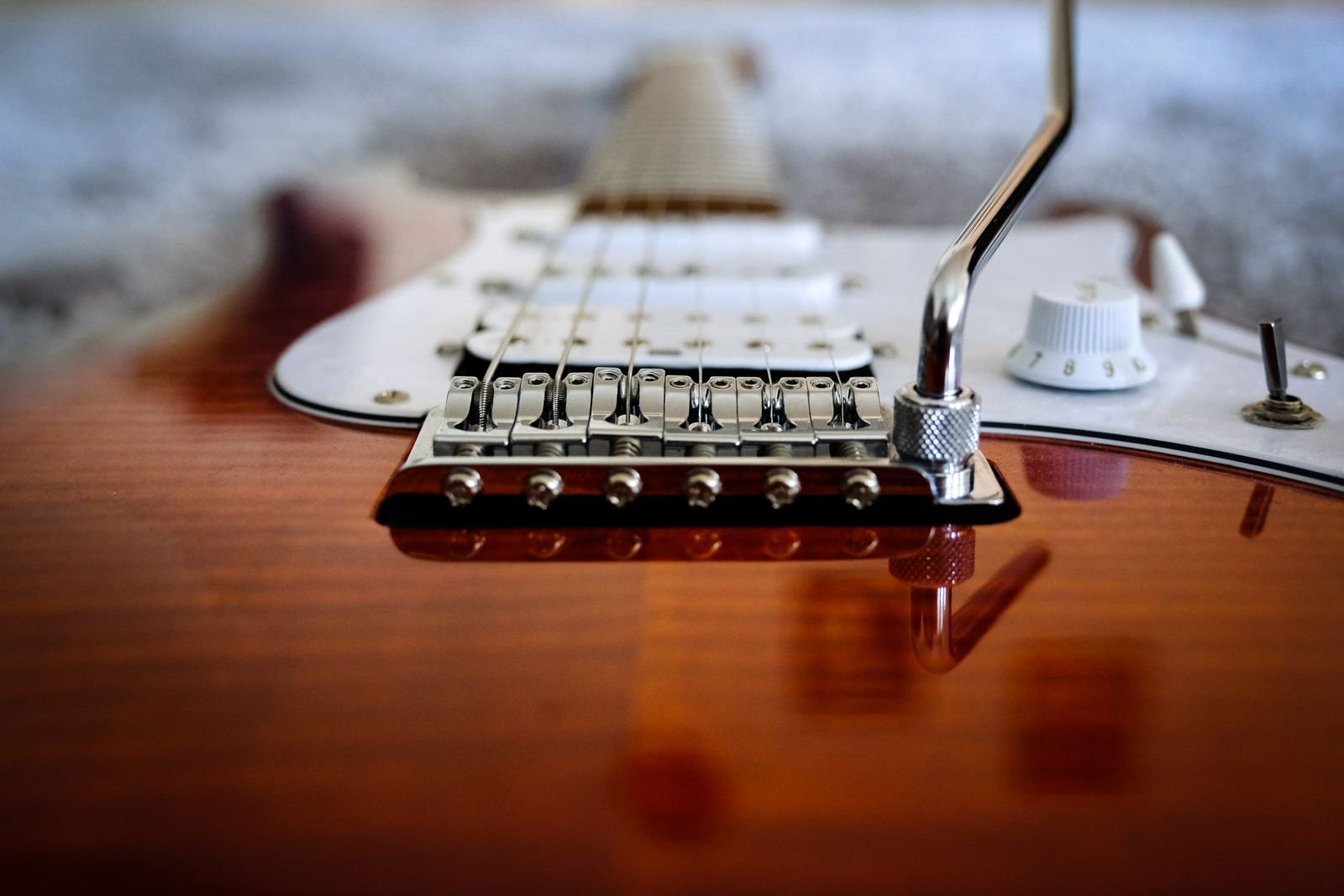
A guitar bridge and six-string steel-string set, the same layout every Escape Mark III variant carries.
Sound and electronics: the headphone output and aux-in
This is the actual reason to pick the Escape Mark III over the Ultra-Light Acoustic-Electric. Both use a passive piezo pickup, but the Ultra-Light stops there, a straight 1/4in jack into whatever amp or interface you own. The Escape Mark III’s Custom Shadow preamp adds a real headphone output on top of that, so you can plug in headphones directly and hear the piezo tone without carrying a separate amp or interface at all. Next to it sits an eighth-inch aux-in, so you can run a phone into the same output and jam along to a backing track through your headphones, something neither the Ultra-Light nor the Pro-Series Standard does. There’s also a built-in chromatic tuner, useful on a guitar with tuning machines you can’t see clearly while you’re turning them.
It’s not the same feature as the Speedster Deluxe’s headphone amp. The Speedster is a solid-body electric with a magnetic humbucker and a genuine modelled amp, four channel tones, clean through distortion. The Escape Mark III’s preamp doesn’t model an amp at all, it’s a piezo preamp built to sound like an amplified acoustic, the same job the Ultra-Light’s plain output jack does, just with headphones and a backing track built in rather than needing a separate box. If distorted electric tones through headphones are what you actually want, the Speedster Deluxe is the guitar for that job, not this one.
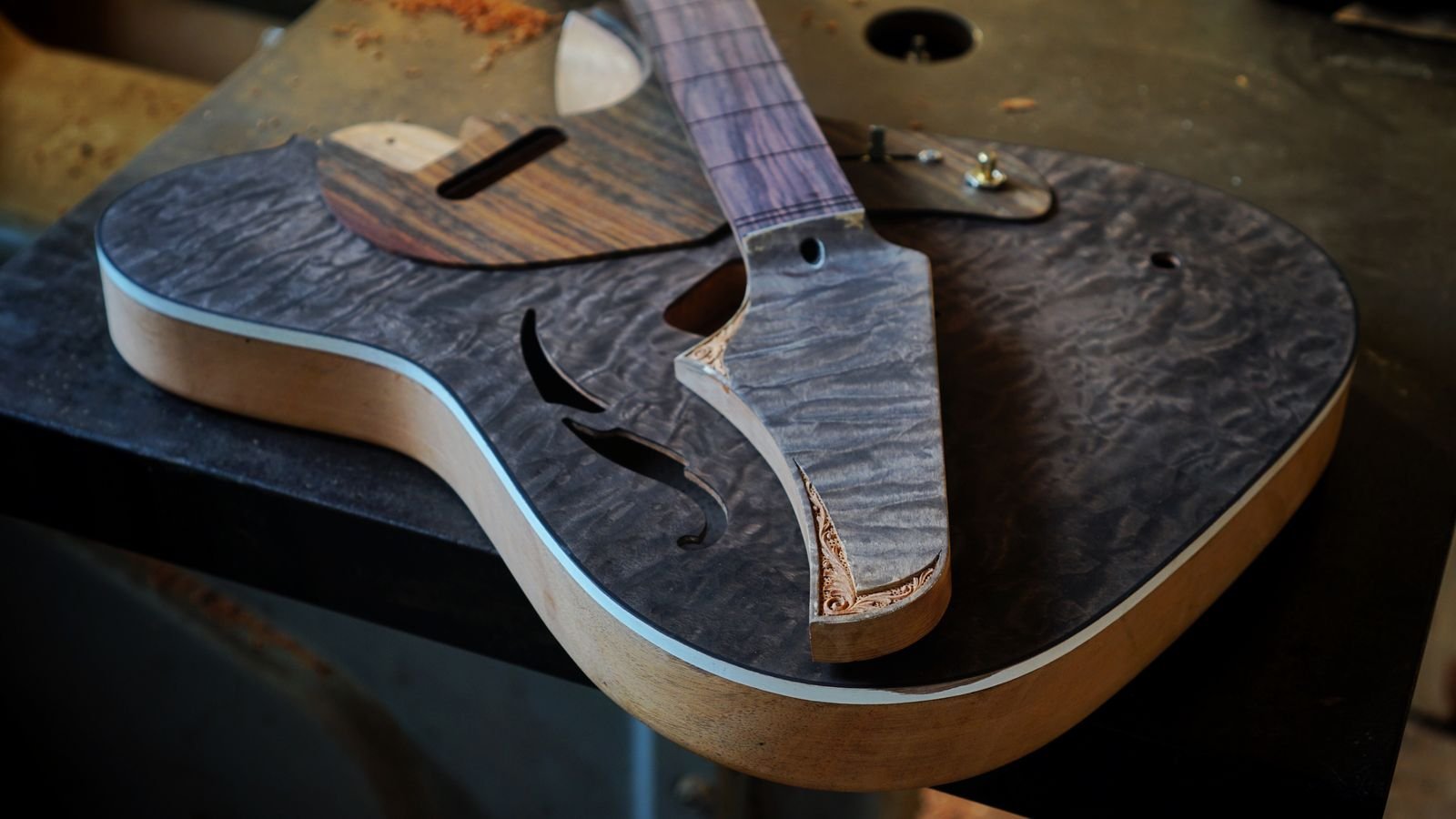
A guitar body and bolt-on neck join in the workshop, the style of construction behind the Escape Mark III’s alder body and maple neck.
Where to buy it
The Escape Mark III (Alder, Natural) is £429.00 on Amazon UK, sold with a genuine Amazon buy box and rated 4 out of 5 from 73 ratings.
Escape Mark III vs the rest of Traveler’s range
All three of these guitars share the same In-Body Tuning System, so the choice comes down to pickups, output and scale length.
| Escape Mark III | Ultra-Light Acoustic-Electric | Pro-Series Standard | |
|---|---|---|---|
| Scale length | 25½in | 24.75in | 24.75in |
| Pickup | Piezo, Custom Shadow preamp | Passive piezo only | Piezo plus Alnico single-coil, blendable |
| Headphone output | Yes, built into the preamp | None | None (passive Stethophone instead) |
| Aux input | Yes, 1/8in | None | None |
| Built-in tuner | Yes, chromatic | None | None |
| Weight | Approx. 4lb 6oz | 1.3kg (2lb 14oz) | 1.59kg (3lb 8oz) |
| Price | £429.00, checked 31 August 2026 | £249, checked 21 July 2026 | £389.00, checked 5 August 2026 |
The Speedster Deluxe sits outside this comparison entirely. It’s a solid-body electric, not an acoustic-electric, with a magnetic humbucker instead of a piezo pickup and a real modelled headphone amp instead of a preamp. If an electric tone through headphones is what you’re after rather than an amplified acoustic one, that’s the guitar to read about instead of this one.
The genuine downside
Traveler’s In-Body Tuning System hides the tuning machines inside the body rather than leaving them exposed on a headstock, which is also where its one real drawback shows up. A published review of the Escape Mark III model family at awkwardsound.com, covering the same in-body tuning system and electronics as the guitar here, found the tuners “will require more cleaning… as their location makes them prone to accumulate more dust on them,” a direct consequence of building the tuning machines into an enclosed cavity rather than leaving them out in the open. It’s not a functional problem, the guitar still tunes and holds tune the way the rest of Traveler’s range does, but it’s genuinely more fiddly to keep clean than a standard headstock, and worth knowing before the guitar turns up rather than after.
How we assessed this
We haven’t played this specific guitar hands-on. This review is built from Traveler Guitar’s own published specifications and product listing, a published review of the Escape Mark III model family at awkwardsound.com for the real-world downside above, and a direct comparison against the Ultra-Light Acoustic-Electric, Pro-Series Standard, and Speedster Deluxe reviews already on this site. Price, rating and stock reflect the current Amazon UK listing. Where a claim comes from a listing or a published review rather than something we’ve independently tested, we’ve said so rather than presenting it as a hands-on judgement.

A wall of full-size guitars, the kind of feel the Escape Mark III’s 25½in scale is built to match rather than a shrunk-down stand-in.
FAQ
What makes the Escape Mark III different from the Ultra-Light Acoustic-Electric?
Both use a passive piezo pickup and the same In-Body Tuning System, but the Escape Mark III adds a genuine headphone output, an eighth-inch aux-in for backing tracks, and a built-in chromatic tuner, none of which the Ultra-Light has. It also runs a longer 25½in scale against the Ultra-Light’s 24.75in.
Does it have a headphone amp like the Speedster Deluxe?
Not the same kind. The Speedster Deluxe is a solid-body electric with a genuine modelled amp, four channel tones through a magnetic humbucker. The Escape Mark III’s headphone output runs through its piezo preamp instead, built to sound like an amplified acoustic rather than a modelled electric tone.
How does it compare to the Pro-Series Standard?
The Pro-Series Standard blends a piezo pickup with a magnetic single-coil and relies on a passive Stethophone for silent practice, with no headphone jack or aux-in. The Escape Mark III sticks to a single piezo pickup but adds a genuine headphone output, an aux-in, and a built-in tuner instead.
What’s the genuine downside?
The in-body tuning machines sit in an enclosed cavity rather than out on a headstock, which a published review of the same model family found makes them collect more dust and need more frequent cleaning than standard exposed tuners.
Does it come with a case?
Yes, Traveler includes a Deluxe gig bag with the guitar.
Will it fit in an airline overhead bin?
At about 29.5in long on its own, similar to the rest of Traveler’s range, it’s designed to. Airline cabin baggage rules vary by carrier, so check our guide to flying with a guitar in the UK before you book anything around it.
The bottom line
Buy the Escape Mark III if you want an acoustic-electric you can practise on silently through headphones, with a backing track playing alongside it, and you don’t mind an in-body tuning system that needs a bit more dusting than a standard headstock. Buy the Ultra-Light Acoustic-Electric instead if you’ll always plug into a separate amp or interface and don’t need the headphone output or aux-in. Buy the Pro-Series Standard instead if you want a genuine electric tone blended in rather than a backing-track jack. Buy the Speedster Deluxe instead if modelled electric amp tones matter more to you than an acoustic-electric voice.
Still weighing this up against the rest of the market? Our complete UK buyer’s guide to travel guitars covers how every named model on this site compares.