
Most things on this site are travel guitars in the strict sense: standard tuning, a shorter scale, a body built to survive hold luggage. The Yamaha GL1 Guitalele isn’t that. It’s a genuinely different instrument, a quarter-size hybrid closer to a ukulele than a guitar, and it has sold well over three thousand units to UK buyers who rate it 4.6 out of 5. That’s not a niche curiosity. It’s one of the best-selling small instruments of its kind, full stop.
Quick verdict: this is best for a guitarist who wants something they’ll actually pick up on a plane, on a sofa, or in a hotel room without a second thought, not someone looking for a lighter version of their main guitar. If you want to sit down and play your normal chord shapes in your normal tuning, look at the Traveler Ultra-Light Acoustic-Electric instead. If you want something the size of a large ukulele that still gives you six strings and real guitar chord shapes, the GL1 is very hard to beat from around £89. Check price on Amazon.
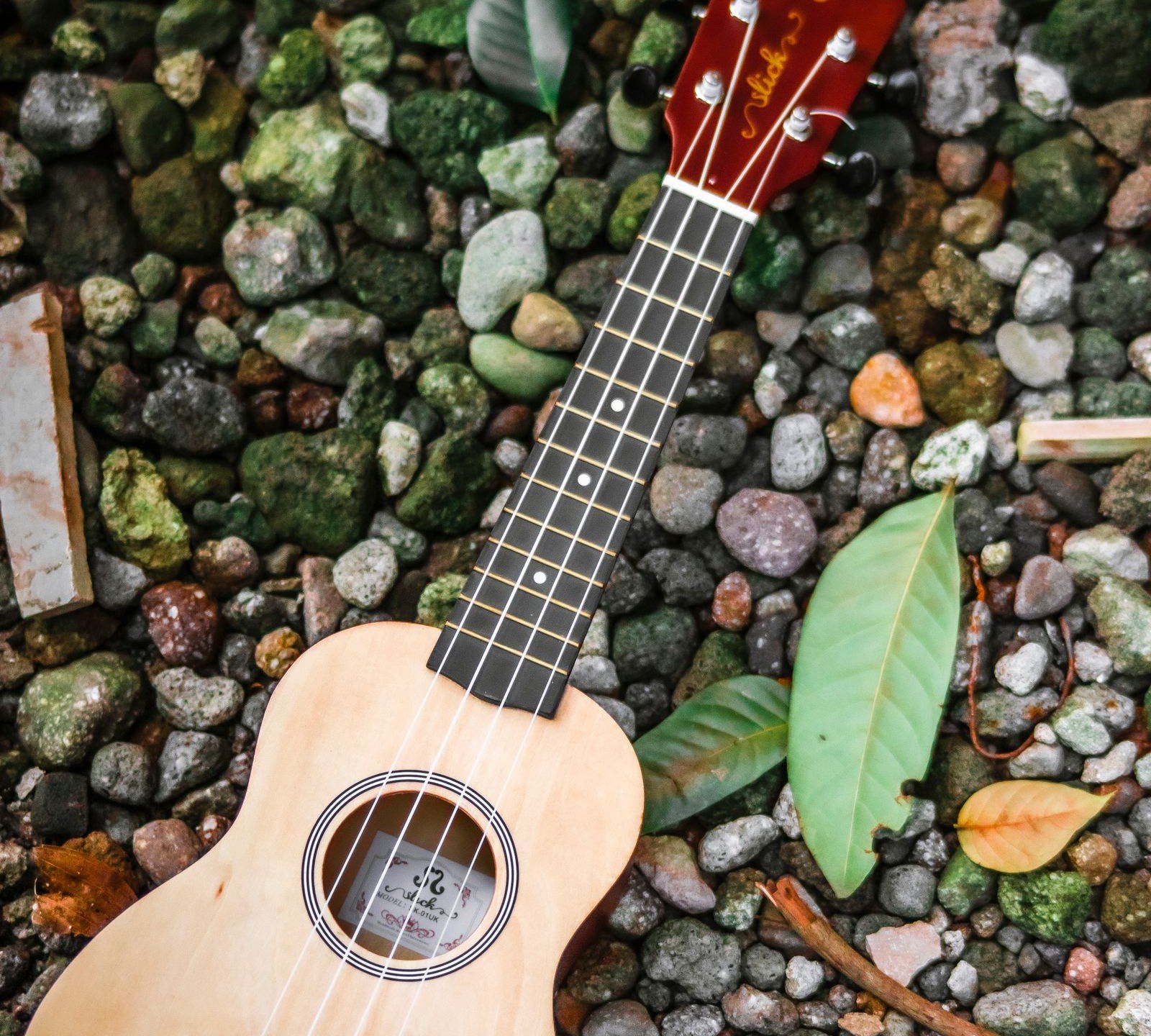
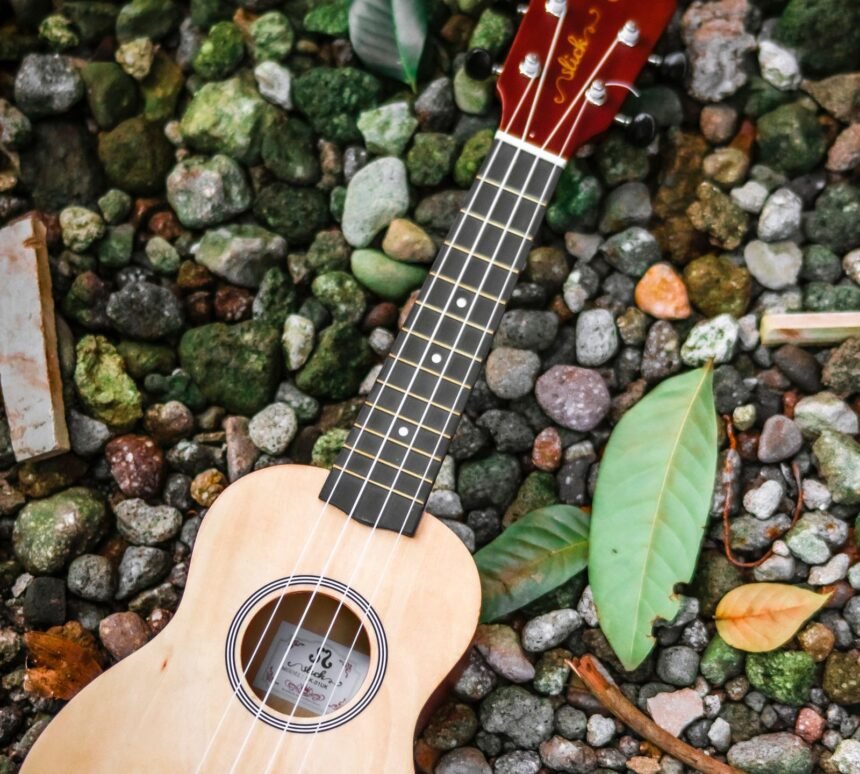
The GL1’s body is closer to a ukulele’s than a full-size guitar’s, which is exactly why it fits in hand luggage.
| Yamaha GL1 Guitalele | Traveler Ultra-Light Acoustic-Electric | |
|---|---|---|
| Price (from) | £89 | £249 |
| Tuning | A D G C E A (a fourth up) | Standard EADGBE |
| Scale length | Short, ukulele-adjacent | Full 24.75in |
| Electronics | None | Piezo pickup |
| Case included | Fitted gig bag | Sold separately |
| Best for | Permanent travel companion, casual play | Practice and light gigging in standard tuning |
What the GL1 actually is
The GL1 is a 70cm, quarter-size instrument with a spruce top, meranti back and sides, and a nato neck with a rosewood fingerboard. It has six strings, three plain nylon and three wound, and no electronics at all. What makes it a guitalele rather than a small guitar is the tuning: A, D, G, C, E, A, a fourth higher than a standard guitar’s E, A, D, G, B, E. That’s the same interval as putting a capo on the fifth fret of a normal guitar, so every chord shape you already know works exactly the same way, you’re just playing it higher up in pitch.
That single fact is the whole story of who this instrument is for. If you can already play guitar, you can pick up a GL1 and be playing recognisable chords within a minute. What you can’t do is sit down next to someone playing a standard-tuned guitar and expect to sound in the same register without transposing in your head, and you can’t restring it for standard EADGBE tuning without real trial and error on tension and intonation. Buyers who’ve tried it generally get further with the standard A tuning than they expect, precisely because the chord shapes transfer straight across.
Where it earns its price
Around £89 for a genuinely well-built instrument from a brand with Yamaha’s guitar pedigree is the actual selling point here, not the novelty of the format. The build quality is consistently the thing reviewers call out: clean fret ends, a proper binding around the body edge, and tuning gears that hold pitch better than the price suggests they should. It comes with a fitted Yamaha gig bag as standard, which most travel guitars in this price bracket don’t include. See latest price on Amazon.
The sound is smaller and brighter than a full-size guitar, more resonant than a plain ukulele lower down the neck, more ukulele-like the further up you play. That’s not a criticism, it’s what a quarter-size, nylon-strung body does. Nobody buying this is expecting dreadnought volume.
The real downside
Fret spacing is the genuine limitation, not the tuning. At 47.5mm neck width on a scale this short, the frets themselves are close together, and several reviewers with larger hands describe it becoming genuinely cramped past the first few frets, particularly for barre chords. If you already struggle on a normal guitar’s neck, this will feel tighter, not easier. It’s also worth knowing before you buy that the stock strings are usable but unremarkable, several long-term owners end up replacing them with a proper classical guitar set for better intonation and tone, which is a fair thing to expect of any nylon-string instrument at this price, not a fault specific to Yamaha.
Guitalele or travel guitar: which one do you actually want?
Buy the GL1 if the honest answer to “will I actually take this with me” matters more than having a like-for-like smaller version of your main guitar. It’s the instrument you leave permanently packed, the one you don’t think twice about checking in a case or wedging into a rucksack, because at this size and price a scuff doesn’t sting the way it would on a proper guitar.
Buy a standard-tuned travel guitar instead, like the Traveler Ultra-Light or anything in our under-£500 roundup, if you want to practise material you’ll play on your main instrument, gig acoustically, or plug into an amp. The GL1 has no pickup and no electronics of any kind, so it’s not a practice tool for anyone who needs to plug in.
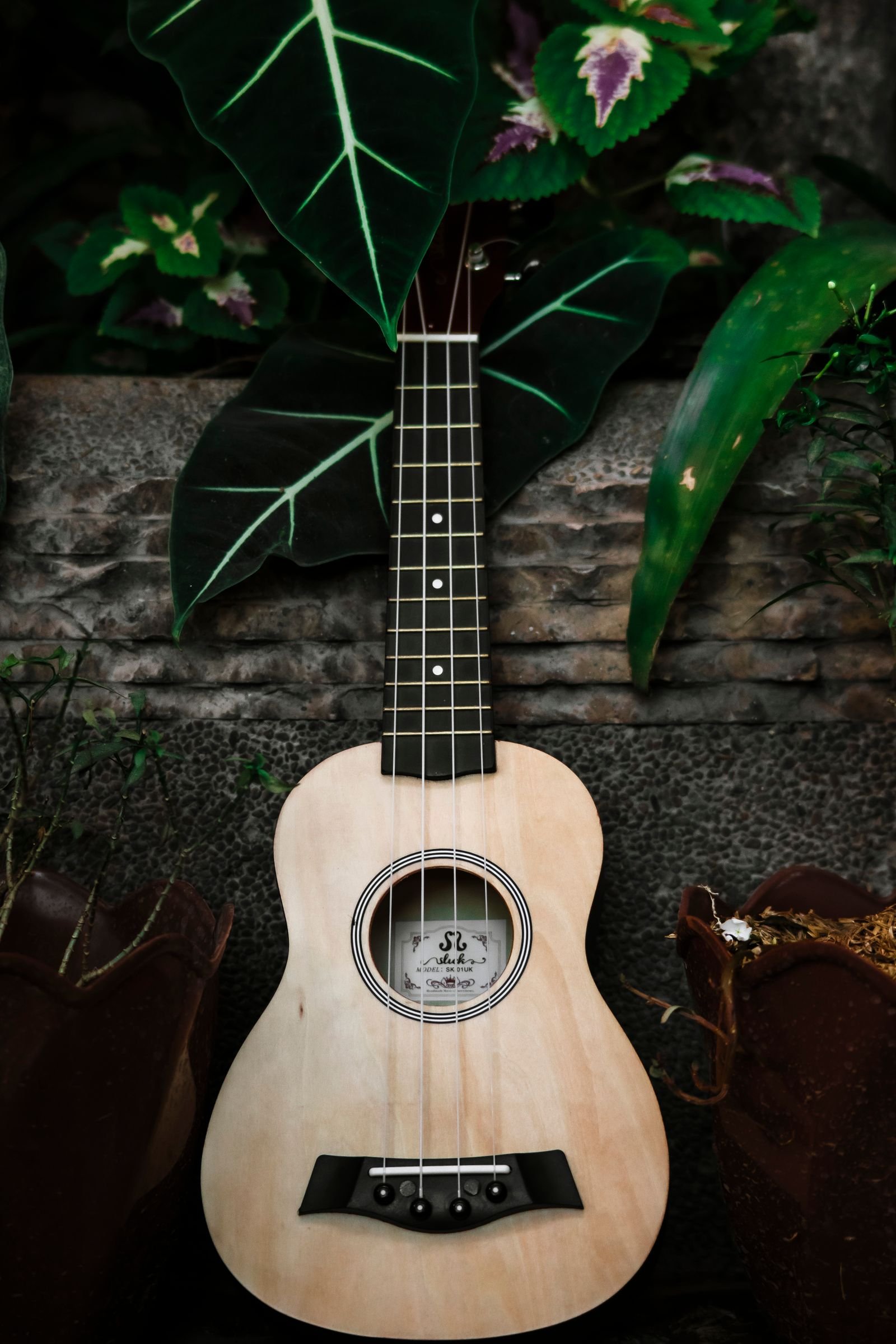
Small enough to travel permanently packed, which is the entire point of a guitalele.
For the full picture of what else is worth considering, see our complete UK buyer’s guide to travel guitars.
FAQ
What is a guitalele?
A guitalele (sometimes “guilele”) is a hybrid instrument, roughly ukulele-sized but strung and playable like a guitar. It has six strings instead of a ukulele’s four, tuned a fourth higher than a standard guitar, so every guitar chord shape still works.
Is a guitalele the same as a travel guitar?
No. A travel guitar is a smaller or foldable version of a standard guitar, usually tuned EADGBE with a shorter scale. A guitalele is a genuinely different, smaller instrument tuned a fourth higher, closer in body size to a large ukulele. Both suit travel, but they solve different problems.
Can I tune the GL1 like a normal guitar?
Some owners restring it for standard E tuning, but Yamaha designs and sells it for A tuning, and the shorter scale means standard tuning puts more tension on the top strings than the instrument is built for. If you want true standard tuning, a short-scale travel guitar is the safer choice.
Is the Yamaha GL1 good for beginners?
It’s a genuinely good first instrument for a young or first-time player who wants something small and unintimidating, and a strong second instrument for an existing guitarist. The narrow fret spacing can be more fiddly for absolute beginners with bigger hands than a full-size neck would be.
Does it come with a case?
Yes, every GL1 ships with a fitted Yamaha gig bag, not a hard case. If you want more protection for checked luggage, budget separately for a hard case sized for a tenor ukulele, since Yamaha doesn’t sell a dedicated hard case for the GL1.
Is there a better-built alternative to the GL1?
Yes, the Ortega RGLE18ACA. It’s the same type of instrument, tuned the same way, but with a solid acacia top instead of laminate and an onboard preamp with tuner so it can actually plug into an amp. It costs roughly four times as much, which is the trade-off: pay more for real tone development and electronics, or stick with the GL1 for a cheap, durable, permanently-packed instrument.