

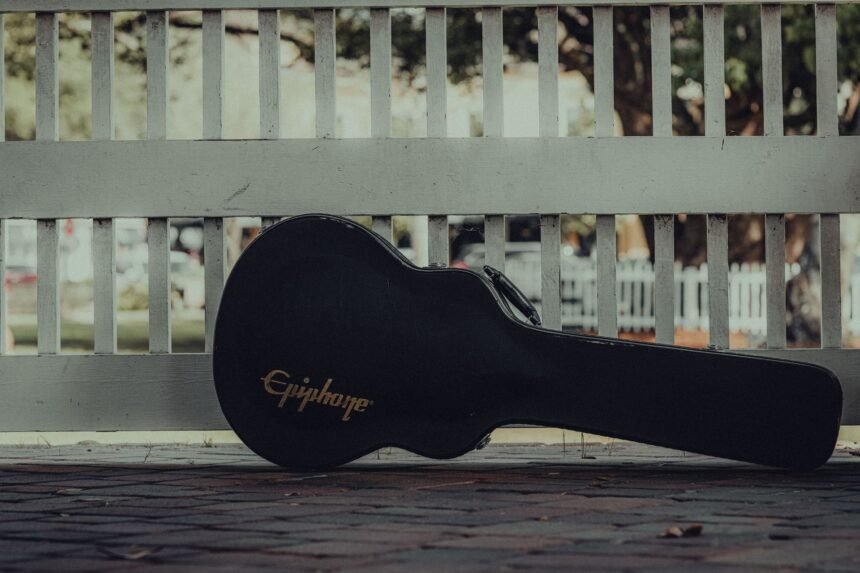
If you’re taking a guitar further than the local open mic, buy a hardshell or heavily padded case built for your instrument’s size, not a generic gig bag. For flying, a proper ABS or moulded hardshell is worth the extra weight and cost. For trains, buses and the tube, a well-padded gig bag with backpack straps does the job just as well, for less money.
Best travel guitar case by situation
Different journeys need different cases. Here’s the quick version, with each pick linking through to the full comparison.
| Situation | What to look for | Full guide |
|---|---|---|
| Acoustic guitars | Toughness and weather resistance for a bulkier body | Best acoustic travel cases |
| Electric guitars | Compact fit and neck support over pure bulk | Best electric travel cases |
| Budget under £100 | Decent padding without paying for a full hardshell | Best cases under £100 |
| Flying and frequent flyers | Genuine hold-ready protection, not marketing claims | Best cases for frequent flyers |
| Bass guitars | Longer body support and reinforced corners | Best bass travel cases |
What actually matters in a travel guitar case
Most of the marketing copy on guitar cases talks about zips, pockets and colour options. None of that decides whether your guitar survives a trip. Four things do: the shell type, the weight, the humidity control, and how much protection your actual travel pattern needs.

A case that’s out and about on the street every week takes a different kind of punishment to one that flies twice a year.
Hardshell vs padded gig bag
A hardshell case has a rigid shell, usually ABS plastic, moulded polyfoam or five-ply plywood under a fabric or PVC skin. It survives being thrown onto an airport conveyor, stacked under other bags in a car boot, or dropped by a baggage handler who’s had a long shift. A padded gig bag is a fabric case with foam padding, usually 10 to 20mm thick. It’s lighter, cheaper and much more comfortable to carry, but it won’t protect a headstock from a hard knock or a body from being crushed under something heavier in a boot or a hold.
The honest answer to “which one do I need” comes down to what happens to the case when you’re not holding it. If it goes into a plane’s hold, gets thrown in a van boot with amps and cables, or gets left leaning against something in a crowded venue, get a hardshell. If it stays on your back or in your hand for the whole journey, a good gig bag is genuinely enough, and the weight saving is worth more to you than protection you won’t need.
There’s a middle option worth knowing about too: semi-rigid cases, sometimes sold as “shaped” gig bags, use an internal frame or dense foam panel instead of a hard shell. They split the difference on weight and protection, and they’re a sensible choice if you’re not sure yet which category you fall into.
Flying and airline hold requirements
There’s no such thing as an officially “airline-approved” guitar case. No certification body tests and stamps cases as safe for flight. What exists instead is a patchwork of individual airline rules on cabin dimensions, hold baggage weight limits and what counts as a musical instrument for check-in purposes, and those rules differ from airline to airline. If a case is marketed as airline-approved, treat that as a phrase with no legal meaning behind it, not a guarantee. Our guide to UK airline guitar rules breaks down what easyJet, Ryanair, British Airways and the rest actually allow.
What you can control is weight and dimensions. Most UK short-haul carriers cap hold baggage at 20 to 23kg per item, and a hardshell acoustic case with the guitar inside will often sit at 6 to 8kg on its own. Weigh your case packed, not empty, before you get to the airport, and check whether your airline treats a guitar case as a standard hold item or as sports/musical equipment, since the allowances and fees can differ.
Weight
Every kilo of case is a kilo you’re carrying through a station or eating out of your hold baggage allowance. A featherweight polyfoam case can weigh under 3kg, while a heavy-duty flight case can top 6kg before you’ve put the guitar in. There’s a genuine trade-off here rather than a single right answer: more shell material means more protection and more weight, every time. If you’re also checking a suitcase on the same trip, do the maths on your combined luggage before you commit to the heaviest case on the market.
Humidity control
Wood moves with moisture. Guitars are happiest at roughly 45 to 55% relative humidity, and a case that swings well outside that range, a hot car boot in summer or a centrally heated flat in a UK winter, will eventually cause cracking, fret sprout or a top that sinks. Cases with a built-in hygrometer or a pocket for a humidipak are worth having if you’re travelling somewhere with a genuinely different climate to home, or storing the guitar through a UK winter with the heating on. For a weekend trip within the UK, it matters far less, and you can usually get away without thinking about it at all.
Case sizing and fit
A case that’s slightly too big for your guitar is nearly as bad as one that’s too small. Loose internal space lets the guitar shift in transit, and repeated small impacts against the case walls do real damage over a few months of regular travel, even without one big drop. Check the internal dimensions against your guitar’s specific body shape, not just its overall length, since a dreadnought, a parlour and a classical guitar all have different profiles even at similar lengths. If you’re between sizes, size down on the case rather than up, and pad the gap with a soft cloth rather than leaving space.
Packing your case for a trip
How you pack the case matters almost as much as the case itself. Loosen the strings slightly before a flight, a full stretch of string tension against a body that’s also being squeezed by cabin pressure changes is one of the more common causes of a cracked bridge or a bowed neck on arrival. Wrap the headstock in a cloth or a section of bubble wrap if your case doesn’t already have dedicated headstock padding, since that’s the part most likely to take a direct hit if the case gets dropped end-first. Fill any genuinely empty internal space with a soft item like a jumper rather than leaving the guitar to move around, and keep small accessories such as capos, picks and spare strings in the case’s accessory compartment rather than loose, where they can rattle against the finish for the whole journey.
How to choose, by your actual situation
Flying with your guitar
If your guitar is going in the hold, you want a genuine hardshell with reinforced corners and, ideally, a case built specifically for flight rather than general storage. Our airline rules guide covers what each major UK carrier allows for cabin and hold, including which routes let you carry a guitar on board as hand luggage if it fits their sizer. Don’t rely on a case’s marketing claims here, check the actual airline’s own policy before you book, and again at the gate if your flight is busy, since gate staff have the final say on the day.

Getting a case to the airport in one piece starts with how comfortably you can actually carry it.
Backpacking and train travel
For rail travel, the tube, or a genuine backpacking trip, weight and carrying comfort matter more than shell rigidity. A padded gig bag with proper backpack straps, ideally padded ones rather than thin webbing, lets you keep both hands free through a busy station. Look for a case with a grab handle as well as straps, since not every platform or train vestibule gives you room to wear a full-size case on your back. If you’re changing trains or connecting through a busy hub, a lighter case also means less strain on your shoulders by the third change.

A train compartment is an easier environment than a plane’s hold, so a well-padded gig bag is usually enough.
Gigging and frequent transport
If you’re loading a guitar in and out of a car boot or a venue’s green room multiple times a week, durability beats weight. A hardshell earns its keep here because it’s the accumulated small knocks, not one big drop, that eventually damage a guitar carried in a gig bag. A case with sturdy latches rather than zips also holds up better to weekly use, and a hard exterior survives being stacked under amps, cable bags and pedalboards in a packed car boot far better than fabric does.
Budget-conscious buyers
You don’t need to spend £150 on a case to protect a guitar that cost £250. Our pick of cases under £100 covers genuinely decent padded options that won’t leave your guitar rattling around inside on the way to a lesson or a rehearsal. Spend the extra money on a case upgrade only once your travel pattern actually demands it, not before. A cheaper case with thick, consistent padding will protect a guitar better than an expensive one with thin padding and a lot of marketing.
The five case categories, and who they’re actually for
We’ve split our full case reviews into five categories because the honest advice for an acoustic player is different to the honest advice for someone gigging on bass. Here’s the shorthand on each.
Acoustic travel cases are the category where the case matters most. An acoustic’s larger, less rigid body is more vulnerable to a knock or a squeeze than a solid-body electric, and the wood top can crack under pressure that a hardshell would have absorbed. If you own one decent acoustic and it’s leaving the house more than a couple of times a month, this is where to spend your money. We cover everything from full hardshell protection down to lighter backpack-style bags for players who mostly walk rather than fly.
Electric travel cases can afford to be more compact, since a solid body takes a knock better than a hollow acoustic top. The priority here is a snug fit around the body and proper neck support, because a loose-fitting case lets the guitar shift and bang against the walls in transit, which is often what actually damages an electric rather than a single big drop. This category suits gigging players who need something that survives a car boot week in, week out.
Cases under £100 exist because not everyone needs, or can justify, a £150 hardshell. This category is for players whose guitar mostly travels between the house, a lesson and a friend’s living room. The padding thickness varies a lot at this price point, so this is worth reading properly rather than buying whatever’s cheapest on the page.
Cases for frequent flyers is aimed at players who put a guitar through an airport more than once or twice a year. There’s no such thing as a certified airline-approved case, so what this category actually tests is real-world hold survivability: reinforced corners, a genuinely rigid shell and dimensions that don’t push you into an oversize baggage charge. We also flag where a case’s marketing overstates what it can actually promise.
Bass travel cases need to support a longer, heavier body than a standard guitar case is built for. A case designed for a six-string guitar and simply scaled up often leaves the neck under-supported at bass length, so this category is specifically about cases built to bass proportions rather than stretched guitar cases with an unsupported gap at the headstock end.

Backpacking with a guitar puts weight and carrying comfort ahead of shell rigidity.
Frequently asked questions
Can I take a guitar case as hand luggage in the UK?
Sometimes, depending on the airline and how full the flight is. Most UK carriers allow a guitar in a soft or slimline case as cabin baggage if it fits their sizer, though it’s often the first thing gate staff ask to gate-check when the overhead lockers fill up.
Do all guitar cases fit in a plane’s hold?
No. Hold baggage has weight and dimension limits set by each airline, typically 20 to 23kg and roughly 190cm combined dimensions on UK short-haul carriers. A packed hardshell case can get close to those limits on its own, so check your specific case’s weight before booking.
Is a hard case worth the extra weight?
Yes, if your guitar goes through an airport hold, a van boot, or repeated gig transport. No, if it mostly travels on your back between home, lessons and rehearsals, where a well-padded gig bag does the job for less weight and less money.
How do I stop my guitar getting too dry or too humid while travelling?
Use a case with a hygrometer or a humidipak pocket, and aim to keep the guitar around 45 to 55% relative humidity. This matters most when you’re travelling somewhere with a very different climate to home, or storing the guitar through a UK winter with the central heating running.
What’s the difference between a gig bag and a flight case?
A gig bag is soft-sided fabric with foam padding, built for carrying comfort rather than impact resistance. A flight case has a genuinely rigid shell, usually ABS or moulded polyfoam, built to survive being handled by people who aren’t thinking about what’s inside it.
Do I need a different case for a classical or nylon-string guitar?
Not a different category, but pay attention to the internal shape. Classical guitars have a different body profile to steel-string acoustics, and a case cut for a dreadnought won’t properly support a classical body’s curves even if the overall length is similar.
Can I insure a guitar case and guitar separately for travel?
Yes, and it’s worth checking before you fly with anything valuable. Most UK home contents insurance caps single-item cover well below what a decent guitar and case are worth, so a specific musical instrument policy or an add-on to your travel insurance is usually the better route for anything you’d genuinely miss if it went missing.
If you haven’t picked a travel guitar yet, our guide to choosing a travel guitar is a better place to start, since the right case depends partly on the guitar you end up with.