

The honest answer is: it depends which airline you’re flying with. There’s no single UK rule for taking a guitar on a plane, and no case is universally “airline-approved”, whatever the marketing on some case listings claims. Every airline sets its own musical instrument policy, and the details genuinely differ enough that assuming one airline’s rule applies to another could leave you stuck at check-in.
We checked the current musical instrument policy directly on each airline’s own website, rather than copying a forum thread or another blog’s summary, because guitars get treated differently, sometimes very differently, from one UK carrier to the next. Below is a quick comparison of the seven biggest UK airlines, then the full detail for each one.
All the figures below came from British Airways, easyJet, Ryanair, Jet2, TUI Airways, Virgin Atlantic and Wizz Air’s own websites, checked in July 2026. Airlines update baggage rules often, so treat this as a starting point and confirm directly with your airline before you book, especially for anything involving an extra seat or a hold fee.

Guitar on a plane: quick comparison
| Airline | Cabin allowed? | Size/weight limit | Extra seat option | Hold cost if known |
|---|---|---|---|---|
| British Airways | Not as standard hand baggage, cabin cut-off is 80cm | 80 x 45 x 25cm for hand baggage, extra seat up to 140 x 46 x 46cm | Yes, book at least 48 hours ahead by phone or travel agent | Not published, hard case required for the hold, ask when booking |
| easyJet | Sometimes, if the case is under 117cm and you’ve booked an Upfront or Extra Legroom seat | Small bag 45 x 36 x 20cm, large bag 56 x 45 x 25cm, or up to 30 x 117 x 38cm with a large-bag seat | Yes for cases over 117cm, max 75kg, window seat only | Not published, ask when booking |
| Ryanair | Only if it fits the standard cabin bag allowance | Standard cabin bag allowance, most guitars don’t fit | Yes, booked as “EXTRA ITEM SEAT”, no baggage allowance included | Fee applies, check Ryanair’s own Table of Fees for the current figure |
| Jet2 | Only if under 56 x 45 x 25cm and 10kg | 56 x 45 x 25cm, 10kg | Yes, non-emergency exit window seat, max 65kg | £30, confirmed on Jet2’s own page (checked July 2026), 22kg allowance |
| TUI Airways | Only if under 55 x 40 x 20cm | 55 x 40 x 20cm | Not advertised on TUI’s own page, call to confirm | Not published, book via Flight Extras in advance |
| Virgin Atlantic | Only if under 23 x 36 x 56cm and 10 to 12kg | 23 x 36 x 56cm, 10kg Economy/Premium, 12kg Upper Class | Yes, up to two instrument seats, window only, max 75kg, contact Virgin Atlantic directly | Not published, ask when booking |
| Wizz Air | Only with WIZZ Priority and a case under 80 x 40 x 23cm | 80 x 40 x 23cm, 10kg, counts as your only cabin bag | Yes, booked as “EXST”, window seat only, not exit rows or the first row | Not published, Limited Release tag applied to larger items |
British Airways
BA draws the cabin cut-off at 80cm. Instruments in a case up to 80 x 45 x 25cm count as your second piece of hand baggage and travel free in the cabin. A standard guitar case is longer than that, so BA is clear that your guitar can’t go into the cabin as ordinary hand baggage.
Instead, you’ve got two options. You can check it into the hold, where BA insists on a hard or rigid case, it won’t accept a guitar in a soft gig bag for the hold. Or you can buy your guitar its own seat, as long as the case is no bigger than 140 x 46 x 46cm. That seat has to be booked at least 48 hours before you fly, and BA won’t let you do it online, you need to call or go through a travel agent.
If you’re flying Club World or First on a direct long-haul route, BA says it may sometimes let you bring your guitar in place of your larger cabin bag, but it’s not guaranteed and depends on space on the day.
BA doesn’t publish a fixed price for the extra seat or for checking a guitar into the hold on its own baggage page, so check the current cost when you book.
easyJet
easyJet’s rule depends entirely on your seat type. With a Standard seat or no seat selected, your instrument has to fit the small cabin bag allowance of 45 x 36 x 20cm, which rules out almost every guitar. Book an Upfront or Extra Legroom seat instead, and you get the large cabin bag allowance of 56 x 45 x 25cm, still too small for most guitar cases.
easyJet will also let a case up to 30 x 117 x 38cm travel in the cabin in place of your large cabin bag, provided you’ve booked that Upfront or Extra Legroom seat, a detail that’s easy to miss. A lot of gig-bag-sized acoustic and electric cases fall under 117cm in length, so it’s worth measuring your case exactly before assuming you need to pay for an extra seat.
For anything bigger than that, you need to buy a separate seat for the instrument. easyJet’s rules for that seat are specific: maximum 75kg, a case with a handle you can pass a seatbelt through, it can’t protrude more than 30cm above the seat back, and it has to go in a window seat, not an exit row or the row next to one. You book it by adding a passenger called “Mr Musical Instrument” to your booking.
Seats bought for an instrument don’t come with any baggage allowance of their own. If you’d rather not pay for a seat, you can check the guitar into the hold instead.
Ryanair
Ryanair’s page is short: your instrument travels free if it fits inside your normal cabin bag allowance, which in practice means only the smallest travel guitars qualify.
For anything bigger, you’ve got the same two choices as most airlines. Buy an extra seat, which Ryanair books under the name “EXTRA ITEM SEAT”, though that seat comes with no baggage allowance of its own. Or check the guitar in as hold baggage for a fee. Ryanair’s help page points to its own Table of Fees for the exact cost rather than stating a figure on the instrument page itself, so we’re not repeating a price here we can’t confirm is current, check that page directly before booking. Anything over the standard 20kg hold allowance is charged at Ryanair’s normal excess baggage rate per kilo.
Jet2
If your instrument and its case are under 56 x 45 x 25cm and weigh less than 10kg, it counts as your one piece of hand luggage and flies free. Most guitars are bigger than that.
For a full-size guitar, Jet2 offers a dedicated paid seat. It has to be a non-emergency exit window seat, the instrument can’t weigh more than 65kg, and it can’t stick up more than 30cm above the seat back.
Checking it into the hold instead costs £30, confirmed directly on Jet2’s own FAQ page when we checked it in July 2026, with a 22kg weight allowance before excess baggage charges apply. Jet2 asks you to book sports equipment and instruments in advance, either online or by calling 0333 300 0042, since space is limited and not guaranteed if you turn up without booking.
TUI Airways
TUI’s cabin allowance for instruments is the tightest of the seven airlines here: under 55 x 40 x 20cm. That rules out essentially every standard guitar.
What’s notably different about TUI compared with the other airlines on this list is that its own baggage FAQ doesn’t advertise an extra-seat option for a large instrument, the way BA, easyJet, Jet2 and Wizz Air do. Its page only covers checking the instrument into the hold, which you book through the Flight Extras website, ideally at least two months before you fly since space is limited, and at the latest up to 90 days before your return flight.
TUI’s page also mentions a route for “delicate” instruments that don’t suit the hold and don’t meet the hand baggage size limit either: it says these will only be carried in the cabin with advance notice and TUI’s permission, possibly for a separate fee. If you need a guaranteed cabin seat for a full-size guitar with TUI, call them directly to confirm rather than assuming the extra-seat pattern from other airlines applies here too.
Virgin Atlantic
Virgin Atlantic’s hand baggage limit for an instrument is 23 x 36 x 56cm, and it has to fit in the overhead locker unaided. The weight limit is 10kg in Economy or Premium, or 12kg in Upper Class. That’s tight enough to rule out a standard-size guitar in most cases.
For a larger guitar, Virgin Atlantic lets you buy up to two instrument seats per booking. Each one has to go in a window seat, not an emergency exit row, the instrument can’t exceed 75kg, and you need to contact Virgin Atlantic directly to book it rather than doing it online.
Alternatively, your guitar can travel in the hold as part of your standard checked baggage allowance, or for an extra fee if you’ve already used that allowance. Virgin Atlantic recommends carrying the case through to the airport security checkpoint yourself rather than handing it over at check-in, to cut down on handling before it reaches the hold.
Wizz Air
Wizz Air only allows a musical instrument in the cabin if you’ve added WIZZ Priority to your booking. Even then, the case can’t be bigger than 80 x 40 x 23cm and 10kg, and it counts as your only cabin bag, you can’t bring anything else. Most full-size guitar cases are longer than 80cm, so this option suits smaller travel guitars more than a standard dreadnought or Strat-shaped case.
For anything larger, Wizz Air offers a paid extra seat, booked by entering “EXST” as the first name on the booking. That seat has to be a window seat, and it can’t be in an exit row or the first row. The alternative is checking the guitar in as hold baggage, where Wizz Air adds a “Limited Release” tag to instruments larger than a cello.
Wizz Air doesn’t publish a fixed fee for either the extra seat or hold check-in on its own baggage page, so confirm the current cost when you book.
Why a hard case matters if your guitar goes in the hold
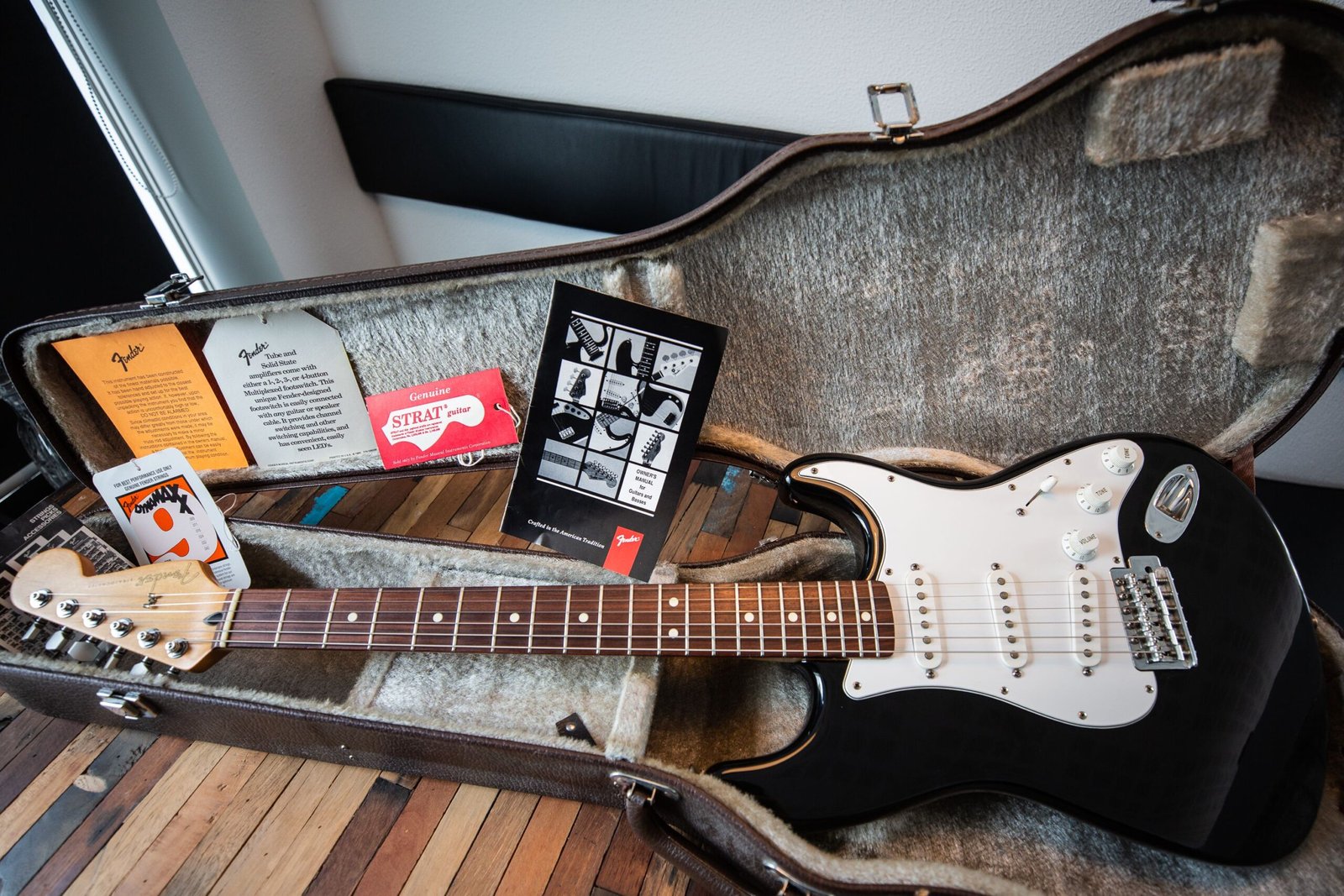
Look back through those seven policies and a pattern shows up. Several airlines, British Airways especially, explicitly won’t accept a guitar in a soft gig bag for the hold. Baggage handlers don’t know or can’t tell what’s inside a soft case, and a gig bag offers almost no protection against being stacked under heavier luggage.
If there’s any chance your guitar is travelling in the hold rather than the cabin, on any airline, a hard case is the sensible baseline rather than an optional extra. We’ve covered which cases actually hold up to hold baggage in more detail, along with separate guides for acoustic, electric and bass guitar cases. If you want the full picture before choosing between them, hardshell vs gig bag, weight, humidity and how much protection you actually need, our complete guide to travel guitar cases covers it in one place.
For a full-size dreadnought going into the hold, the CAHAYA ABS Hard Case is a reasonable option, an ABS shell built for 41-inch acoustics with six catches and 1.5cm of padding holding it shut. Measure your guitar’s body length against the case’s internal dimensions before ordering, since fit is the thing to get right on a case like this.
A hard case only solves the impact side of hold baggage. Cargo holds also swing through wider humidity and temperature changes than a guitar ever sees at home, and that swing happens fast, which is exactly the condition that cracks a solid top or warps a neck. If your guitar is going in the hold on any of these airlines, it’s worth packing a case humidifier built for travel alongside the hard case itself.
Frequently asked questions
What if my guitar case is too big for the airline’s normal cabin allowance?
You’ve got two realistic options: buy an extra seat for the instrument if the airline offers one, or check it into the hold in a hard case. Every airline in this guide offers at least one of those two routes. Don’t assume you can carry an oversized case onto the plane and sort it out at the gate, that’s the scenario most likely to end with your guitar going in the hold anyway, unprotected if it’s in a soft case.
Do I need to tell the airline in advance?
Usually yes, and it’s worth doing regardless of what’s technically required. Extra seats for instruments generally can’t be booked online, BA and Wizz Air both require you to contact them directly, and several airlines flag limited space for checked instruments and sports equipment. Jet2 and TUI Airways both specifically recommend booking ahead rather than turning up and hoping there’s room.
What happens if they refuse it at the gate?
This is the outcome you’re trying to avoid by checking policy and booking ahead. If gate staff decide your guitar doesn’t meet the cabin requirements you assumed applied, and you haven’t paid for a seat or booked hold space, you could be asked to check it in as an oversized item at the gate, at whatever fee applies on the day, or in rare cases left with the choice of leaving it behind. Airline staff have final discretion over what’s safe to carry, whatever a case listing or a policy page says.
Does travel insurance cover a damaged guitar?
Only if you’ve specifically got cover for it. Standard travel insurance often excludes or caps musical instruments, or treats them as valuables needing separate declaration. Check your policy’s instrument or valuables clause before you fly, and consider specialist instrument insurance if your guitar is expensive enough to matter.
Would a smaller travel guitar avoid all of this?
Often, yes. A genuine travel-size or 3/4-scale guitar in a compact case is far more likely to fit inside a standard cabin bag allowance than a full-size dreadnought or Strat-shaped case. It’s not a guarantee on every airline, Wizz Air’s 80cm cabin limit and easyJet’s small-bag allowance still rule out plenty of compact cases, but it meaningfully improves your odds of skipping the extra seat or hold baggage question altogether.
Once you’ve worked out what your airline allows, our complete UK buyer’s guide to travel guitars covers how to pick the guitar and case to match, budget, playing style and all.
The bottom line
There’s no single answer to “can you take a guitar on a plane” that holds across every UK airline. British Airways and Wizz Air both offer a paid extra seat with fairly specific conditions. easyJet’s large cabin bag allowance quietly covers some guitar cases up to 117cm without needing a seat at all. TUI Airways is the outlier here, with no advertised extra-seat option on its own page. Check your specific airline’s current policy before you book, not just this comparison, since these rules do change.
Sorting the guitar is only half the job. For more travel advice and deals, Flight Tribe covers flights, hotels and deals across the UK.